Jeep Recon EV Delivers Disappointing 160-Mile Real-World Highway Range
Jeep's rugged electric off-roader, the Recon EV, delivered a mere 160 miles in a recent real-world highway range test, significantly underperforming its advertised efficiency and raising concerns for adventurous EV buyers.
✨ This content was summarized and interpreted by AI; it may contain errors — please verify accuracy with the original sources. Learn more
Listen to this story
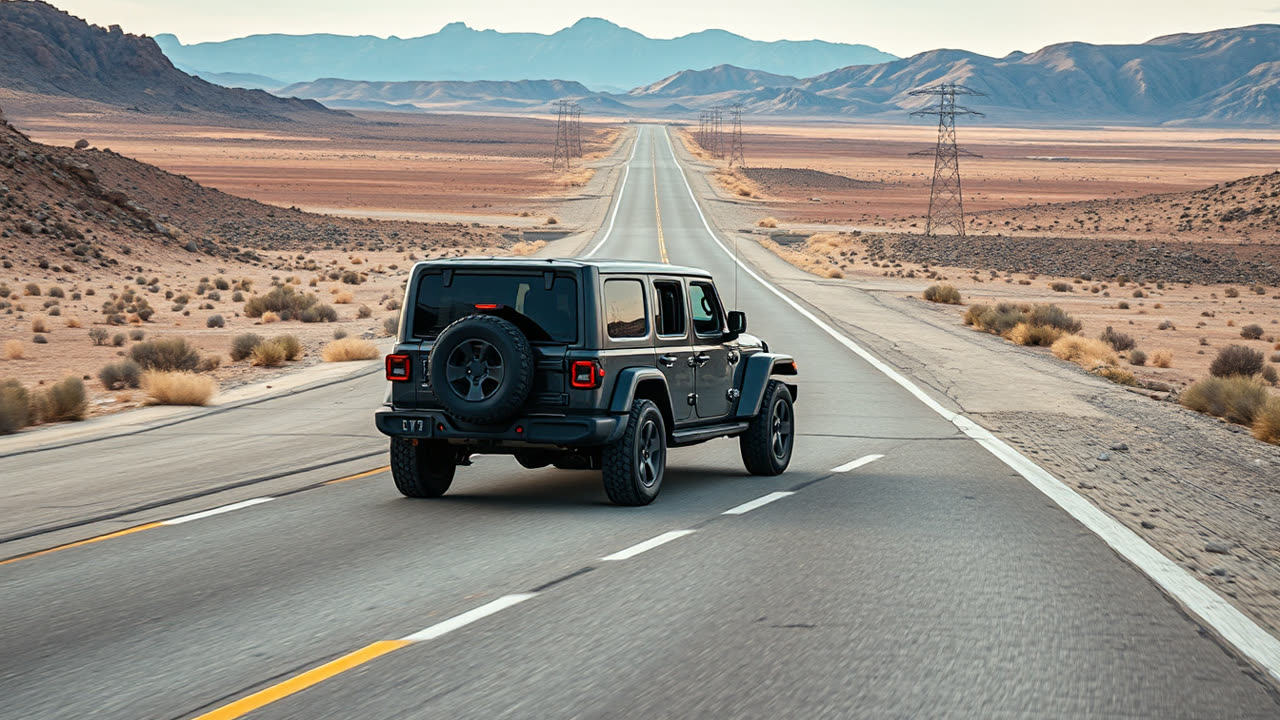
The Jeep Recon EV, positioned as a rugged electric off-roader, delivered a disappointing 160 miles in a recent real-world highway range test, significantly underperforming its advertised efficiency. This stark contrast between expectation and reality immediately casts a shadow over the vehicle's promise, despite its impressive 670 horsepower combined output and segment-defining removable doors. The test, reportedly conducted by Electrek, highlights a critical challenge for electric vehicles designed for demanding applications: translating impressive specifications into practical, everyday (or off-road) usability.
This performance deficit matters immensely for several reasons, impacting both potential users and the broader EV industry. For consumers drawn to the Recon's adventure-ready ethos, a 160-mile highway range introduces severe limitations, particularly for a vehicle intended to explore remote areas where charging infrastructure is scarce or non-existent. Range anxiety, a persistent concern for EV adoption, is exacerbated for off-road enthusiasts who often venture far from urban charging networks. A round trip to a popular trail could easily exceed this range, forcing meticulous trip planning, reliance on slow Level 2 charging in isolated towns, or even towing a generator – all of which undermine the core appeal of an electric adventure vehicle. This directly impacts the vehicle's utility and could deter potential buyers who prioritize uncompromised exploration.
From an industry perspective, the Recon's range result underscores the inherent trade-offs in designing rugged electric vehicles. While the 670 horsepower combined output suggests formidable capability, the power required for off-road prowess, combined with the aerodynamic challenges of a boxy, high-clearance design and the weight of a large battery pack, inherently reduces efficiency compared to sleek road-focused EVs. Jeep had previously targeted an estimated range of over 300 miles on a full charge for the Recon, a figure that now appears to be based on more optimistic EPA estimates rather than real-world highway conditions. The discrepancy between the advertised and tested range could erode consumer trust in manufacturers' range claims, pushing for more transparent and standardized real-world testing protocols across the industry.
The Recon enters a burgeoning, yet competitive, electric off-road SUV segment. Rivals like the Rivian R1S, for example, boast EPA-estimated ranges exceeding 300 miles, with real-world tests often confirming substantial highway performance, albeit with some reduction. The R1S, with its quad-motor setup and sophisticated air suspension, has set a high bar for both range and capability, demonstrating that robust off-road performance doesn't necessarily preclude respectable range. Even the more extreme Hummer EV SUV, while prioritizing raw power and off-road features, offers a larger battery pack for a more substantial range. The Mercedes-Benz EQG, expected to hit markets in late 2026, is also anticipated to offer competitive range figures, leveraging advanced battery technology and a focus on luxury off-roading. Compared to its own internal combustion predecessor, the Wrangler, which offers far greater range through gasoline refills, the Recon’s 160 miles represents a significant paradigm shift that demands a different user mindset.
Looking ahead, Jeep and other manufacturers in this niche will need to address the efficiency conundrum head-on. This could involve several strategies. Firstly, optimizing battery chemistry and density to pack more energy into the same or smaller footprint will be crucial. Secondly, advancements in electric motor efficiency and power electronics could yield gains. Thirdly, while maintaining its rugged aesthetic, subtle aerodynamic improvements without compromising off-road angles might be explored. Enhanced fast-charging capabilities, allowing for rapid replenishment of the battery even in remote areas, could also mitigate range anxiety. Jeep might also consider offering multiple battery pack options, allowing consumers to choose between a lighter, more affordable option or a larger, longer-range pack for dedicated adventurers. The market for electric off-road vehicles is still nascent, but consumer expectations, driven by mainstream EV advancements, demand a balance of power, durability, and practical range. The Recon's initial real-world range test serves as a critical early indicator that for true off-road electrification to flourish, addressing the efficiency gap will be paramount for widespread adoption and sustained market success.