Joby Aviation Completes First-Ever Fully Autonomous Transcontinental Flight Across U.S.
Joby Aviation's converted Cessna Caravan successfully flew 3,199 miles from California to North Carolina without manual input, redefining advanced air mobility.
✨ This content was summarized and interpreted by AI; it may contain errors — please verify accuracy with the original sources. Learn more
Listen to this story
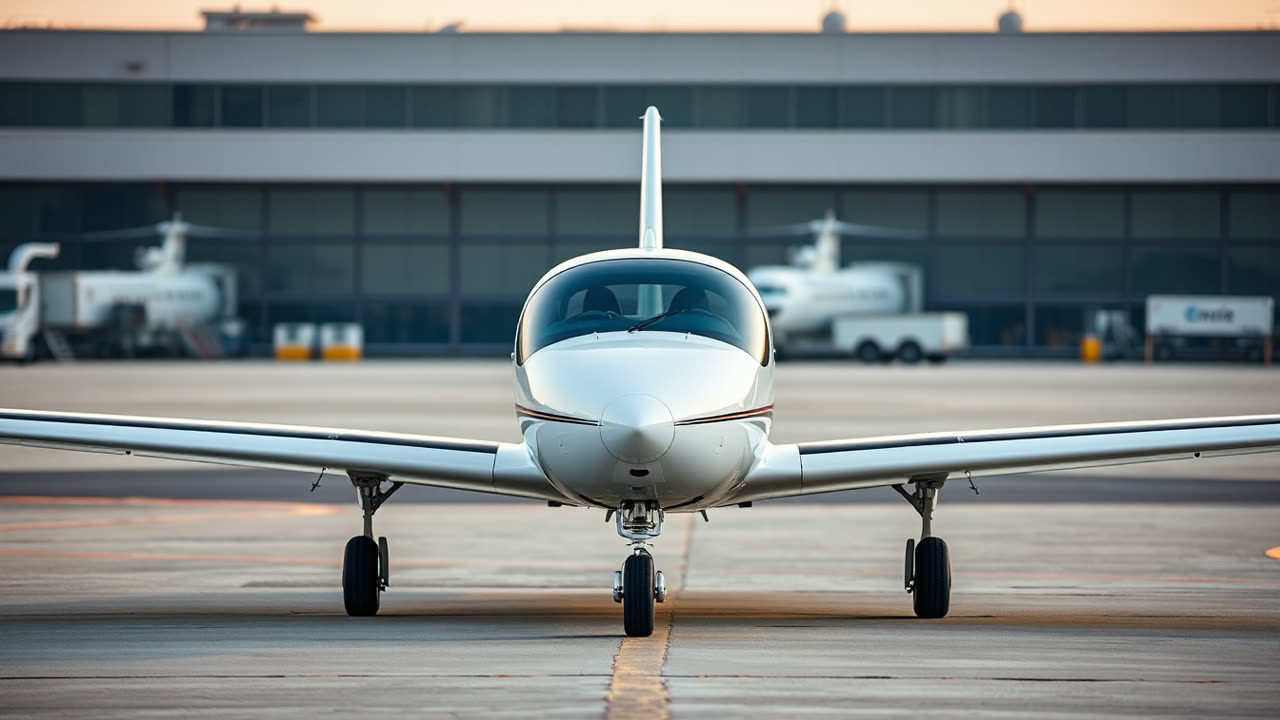
Joby Aviation has achieved a monumental milestone, completing the first-ever fully autonomous flight across the United States, a 3,199-mile journey from California to North Carolina's Outer Banks. This groundbreaking flight, which commenced from Concord, California, on September 8th and concluded on September 16th, 2026, saw a converted Cessna Caravan, equipped with Joby's proprietary autonomy technology, execute every phase of flight—taxiing, takeoff, route navigation, and landing—without any manual control inputs from an onboard safety pilot. Remote supervision was maintained from Joby's California headquarters and Shaw Air Force Base in South Carolina, at distances reaching up to 2,323 miles away. The aircraft even demonstrated its ability to integrate into busy airspace, navigating Phoenix Deer Valley Airport, one of the nation's most active general aviation hubs, and autonomously rerouting to avoid severe weather in real-time.
This transcontinental autonomous flight fundamentally redefines Joby Aviation's trajectory and, by extension, the entire Advanced Air Mobility (AAM) industry. While Joby is widely recognized for its piloted, five-seater electric vertical takeoff and landing (eVTOL) air taxis designed for urban mobility with a typical range of 100-150 miles, this demonstration unequivocally signals a strategic pivot towards broader, more complex applications. The 3,199-mile range shatters the conventional perception of eVTOL limitations, hinting at a future where autonomous aircraft, potentially leveraging hybrid or hydrogen-electric propulsion systems beyond the standard lithium-ion batteries of their urban models, can compete with traditional regional and even commercial airlines. This expansion beyond the "air taxi" box unlocks significant market opportunities in commercial freight, medical transport, disaster response, and defense logistics – sectors where the cost-efficiency, continuous operation, and enhanced safety of autonomous flight offer profound advantages.
The implications for the industry are vast. Autonomy at this scale drastically alters the economic calculus of long-distance aviation. Removing the need for an active pilot during flight reduces operational costs significantly, while the absence of mandatory crew rest periods allows for continuous 24/7 operation, pausing only for refueling or maintenance. Furthermore, an autonomous design frees up space and weight typically allocated for pilot controls, life support, and seating, enabling greater payload capacity for cargo or even more passengers in future designs. Joby's autonomous technology, which has logged over 400 flights and 800 automated flight hours in both controlled and uncontrolled airspace since its acquisition from Xwing in 2024, is clearly maturing rapidly. This is not a nascent technology; it's a proven system that has been rigorously tested, including in three major U.S. military exercises and the 2025 REFORPAC military exercise, where a Cessna 208 equipped with Joby's "Superpilot" autonomy stack flew over 7,000 miles autonomously.
Compared to rivals, many eVTOL developers are still heavily focused on achieving piloted type certification for urban air taxi services. While Joby is also pursuing this, having cleared FAA Stage 4 certification in March 2026 for its S4 eVTOL and expecting Type Certificate issuance by late 2026, its aggressive push into long-range autonomous capabilities sets it apart. Companies like Archer Aviation and Beta Technologies, while also part of the FAA's eVTOL Integration Pilot Program (eIPP) for demonstration flights, are primarily showcasing piloted operations for urban and regional transport, cargo, and medical logistics. Joby's strategy of integrating its autonomy system onto an already-certified conventional airframe (the Cessna Caravan) provides a scalable and potentially faster path to autonomous air logistics compared to developing a completely new autonomous eVTOL from scratch for such missions. This approach allows Joby to demonstrate the operational maturity and dual-use utility of its autonomy technology in real-world scenarios, building crucial data and regulatory confidence for future applications.
Looking ahead, this achievement portends a significant shift in aviation. The successful cross-country flight validates the robustness of Joby's autonomy stack, Superpilot, which utilizes sensor fusion from LiDAR, radar, and cameras for environmental awareness and navigation, along with a digital data link for remote command and control. The ongoing westbound return journey with planned stops in cities like Raleigh, Salt Lake City, and Portland will further gather critical operational data. This expanded operational envelope beyond short urban hops positions Joby to capitalize on lucrative defense contracts, building on its existing partnerships with the U.S. Department of Defense and collaborations with L3Harris Technologies to develop autonomous hybrid VTOL aircraft for military applications like contested logistics and surveillance. The U.S. government's prioritization of resilient, autonomous, and hybrid aircraft, with over $9 billion requested in the FY26 budget for next-generation platforms, underscores the strategic importance of Joby's advancements. While initial autonomous passenger operations are generally anticipated by 2028-2030, with wider regulatory approval by 2032-2035, Joby's demonstration accelerates the timeline for autonomous cargo and specialized missions. This landmark flight is not merely a technical achievement; it is a declaration of intent, signaling Joby's ambition to become a dominant force not just in urban air mobility, but across the entire spectrum of advanced autonomous aviation.