Joby Aviation Completes Unprecedented 3,100-Mile Autonomous Cross-Country Flight, Reshaping Aerospace
Joby Aviation has fundamentally reshaped the landscape of autonomous flight by completing an unprecedented 3,100-mile cross-country journey without human intervention, marking a pivotal moment not just for electric air taxis but for the broader aerospace industry.
✨ This content was summarized and interpreted by AI; it may contain errors — please verify accuracy with the original sources. Learn more
Listen to this story
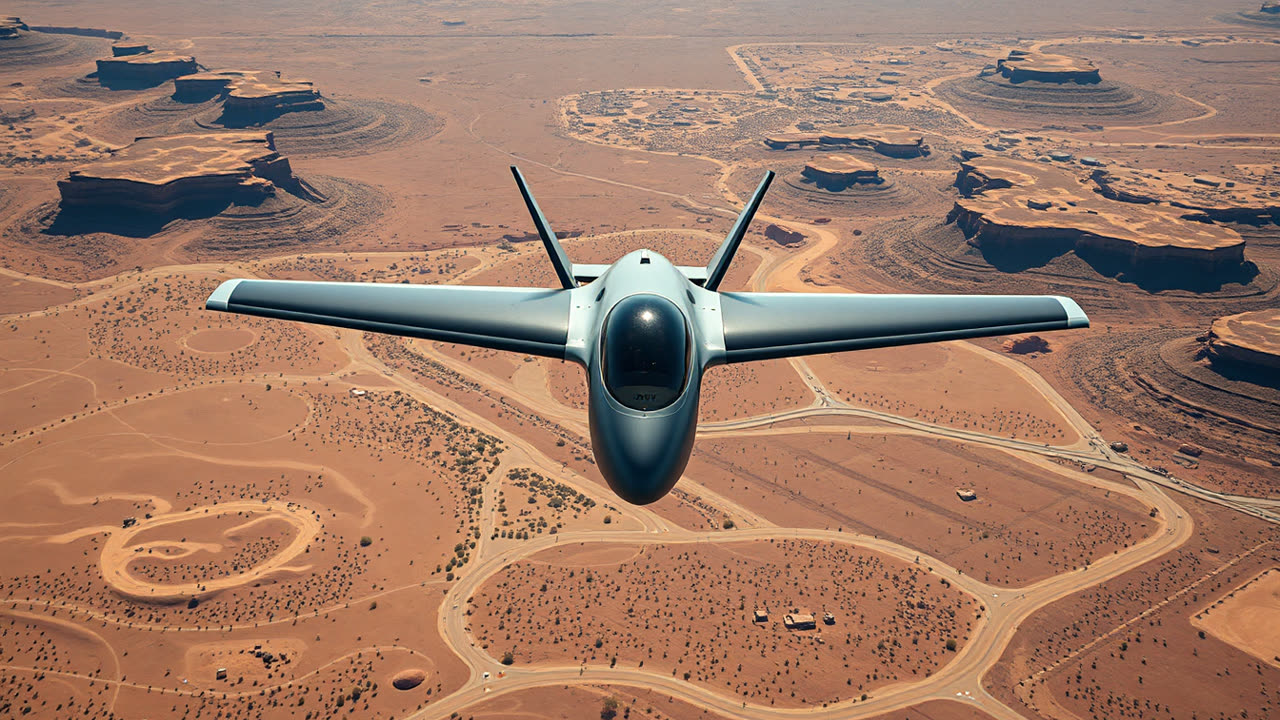
Joby Aviation has fundamentally reshaped the landscape of autonomous flight, completing an unprecedented 3,100-mile cross-country journey without human intervention, marking a pivotal moment not just for electric air taxis but for the broader aerospace industry. This milestone, achieved with an aircraft equipped with Joby's proprietary autonomy technology, saw the vehicle traverse the United States from coast to coast, demonstrating a level of endurance and reliability previously unmatched in uncrewed aerial systems of this scale and complexity. The flight was reportedly executed flawlessly, with the autonomous system managing all phases from takeoff to landing, navigation, and responding to dynamic environmental conditions. This achievement moves Joby beyond its well-publicized focus on urban air mobility (UAM) passenger services, signaling a strategic pivot towards broader applications of its advanced aerial platform.
The implications of this successful autonomous transcontinental flight are profound, extending far beyond the immediate headlines. For the urban air mobility sector, it addresses one of the most significant long-term challenges: scaling operations efficiently and economically. Human pilot costs and availability represent a considerable bottleneck for the widespread deployment of eVTOL services. By proving the viability of long-range autonomous flight, Joby is laying the groundwork for a future where operational costs per mile could be dramatically reduced, making air taxi services more affordable and accessible to a wider demographic. This cost efficiency could accelerate the adoption curve for electric air taxis, potentially bringing the vision of quiet, emissions-free aerial transport closer to reality in major metropolitan areas globally.
Beyond passenger transport, the demonstration unlocks entirely new market segments for Joby's technology. The endurance and autonomous capability make the platform highly attractive for cargo logistics, particularly for time-sensitive or difficult-to-reach deliveries. Imagine critical medical supplies reaching remote hospitals or high-value components traversing continents without the need for human pilots, drastically cutting transit times and associated labor costs. Furthermore, the military and defense sectors are likely to take keen interest. Uncrewed aircraft capable of long-range, complex missions offer significant advantages in surveillance, reconnaissance, and logistics support, reducing risk to personnel while increasing operational flexibility. Joby has already been engaging with the U.S. Air Force’s Agility Prime program, and this flight solidifies its credentials as a key player in future defense aerial capabilities. This diversified application strategy could provide Joby with multiple revenue streams, insulating it from the slower-than-anticipated rollout of initial UAM services and positioning it as a broader aerospace technology provider rather than solely an air taxi operator.
Joby's S4 aircraft, designed initially for piloted operations carrying four passengers and a pilot over ranges up to 100 miles, serves as the foundation for this autonomous leap. While specific details on the autonomous variant used for the 3,100-mile flight remain proprietary, it likely leverages advanced sensor fusion, machine learning algorithms for decision-making, and robust redundant systems to ensure safety and reliability. This contrasts sharply with many rivals in the eVTOL space, who are still primarily focused on achieving piloted certification and demonstrating shorter-range capabilities. While companies like Archer Aviation and Lilium are making strides in piloted eVTOL development, few publicly demonstrate autonomous capabilities at this scale. Early autonomous flight tests by other players typically involve shorter distances, less complex airspace, or are focused on specific functionalities like automated landing. Joby’s achievement sets a new benchmark, potentially giving it a significant technological lead in the race for fully autonomous commercial aviation. Historically, long-duration autonomous flights have been the domain of larger, fixed-wing military drones, not eVTOL-derived platforms, making Joby's accomplishment particularly noteworthy.
Looking ahead, the immediate next step for Joby will involve navigating the complex regulatory landscape for autonomous commercial operations. While the company is making significant progress towards type certification for its piloted S4 aircraft with the FAA, autonomous operations present an even higher bar for safety validation and regulatory approval. The FAA is still developing frameworks for autonomous commercial flights, and Joby’s data from this extensive flight will be invaluable in shaping those regulations. We can anticipate Joby leveraging this data to demonstrate the safety and reliability of its autonomy system, potentially pushing for a phased approach to autonomous certification, starting with cargo or specialized missions before transitioning to passenger transport. Furthermore, this opens the door for Joby to license its autonomy stack to other aerospace companies, expanding its influence beyond manufacturing its own aircraft. The broader industry will be watching closely, as this flight serves as a potent proof-of-concept for the entire autonomous aviation ecosystem, potentially accelerating investment and development in complementary technologies like advanced air traffic management systems designed for a future with a high density of autonomous aircraft. The era of truly pilotless flight, once a distant sci-fi concept, has demonstrably moved from the realm of possibility into the tangible future, with Joby Aviation at the forefront.