Kia EV3 Launches in US at Under $30,000 with 321-Mile Range, Reshaping Affordable EV Market
Kia's aggressive pricing for the 2027 EV3, starting at $29,890 with an EPA-estimated 321-mile range, fundamentally challenges the cost barrier and range anxiety in the mass-market electric vehicle segment.
✨ This content was summarized and interpreted by AI; it may contain errors — please verify accuracy with the original sources. Learn more
Listen to this story
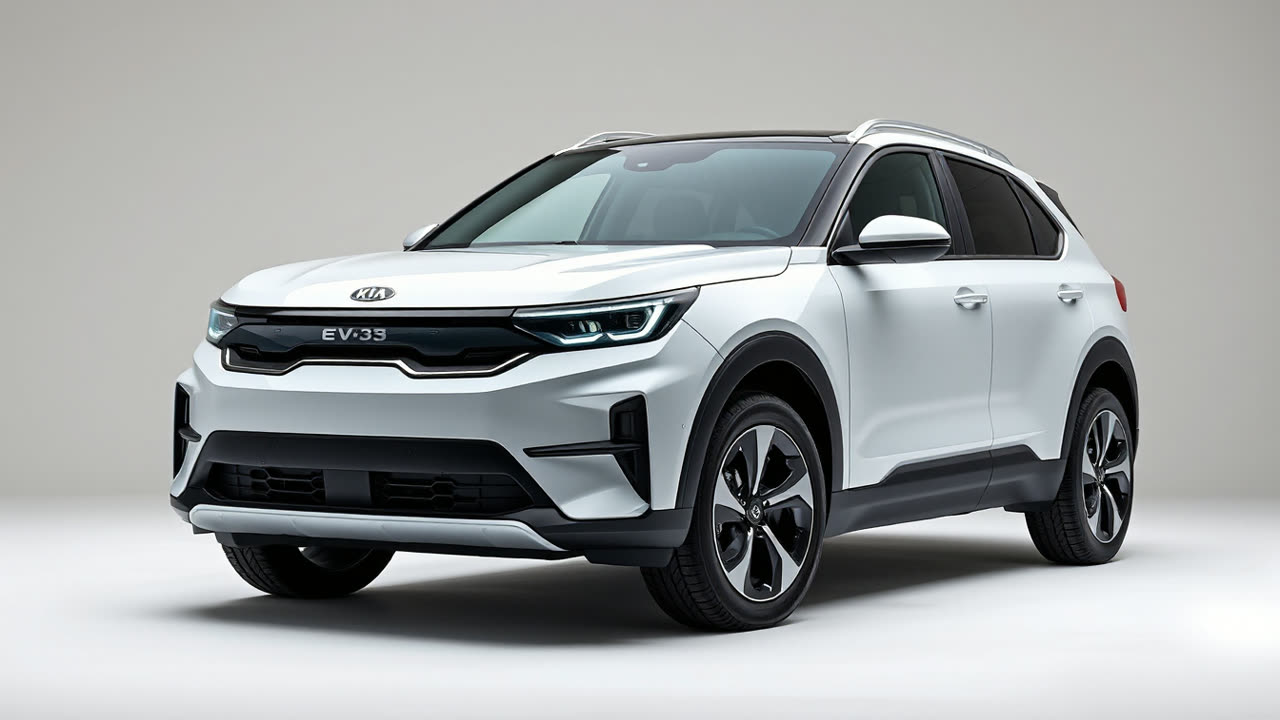
The 2027 Kia EV3 has officially entered the US market with a striking starting price of $29,890, paired with an impressive EPA-estimated driving range of up to 321 miles, fundamentally reshaping the landscape of affordable electric vehicles. This aggressive positioning by Kia, revealed in early August 2026, marks a pivotal moment, signaling a serious intent to democratize EV ownership and challenge established perceptions of entry-level electric mobility. The EV3’s sub-$30,000 baseline, before any potential federal tax credits, directly addresses one of the most significant barriers to mass EV adoption: cost.
This move is far more than just another model launch; it's a strategic declaration in the burgeoning EV segment. For users, the EV3 represents a compelling blend of practicality and accessibility. A 321-mile range is not merely adequate; it comfortably exceeds the average daily driving needs for most Americans and diminishes range anxiety, a critical psychological hurdle for prospective EV buyers. Coupled with its SUV form factor, which caters to the strong consumer preference for crossovers, the EV3 offers a versatile package suitable for families and urban dwellers alike. Its compact dimensions, yet potentially spacious interior owing to a dedicated EV platform, promise a user experience that doesn't compromise on utility despite its accessible price point. The inclusion of features like a 12.3-inch infotainment screen and a 12.3-inch digital instrument cluster, along with advanced driver-assistance systems (ADAS) as standard, further elevates its value proposition, moving beyond basic transportation to offer a modern, connected driving experience.
From an industry perspective, the EV3's pricing and range are a direct challenge to competitors, particularly those vying for market share in the sub-$40,000 EV segment. While vehicles like the Chevrolet Bolt EUV (now discontinued but a benchmark for affordability) and the Hyundai Kona Electric offered lower price points, their ranges typically hovered around 250-260 miles. The EV3 surpasses these with a significantly longer range, effectively raising the bar for what consumers should expect from an affordable EV. It also puts pressure on upcoming rivals like the Volvo EX30, which, while offering a premium experience, starts at a higher price point, closer to $35,000, and has a slightly lower estimated range of 275 miles for its single-motor extended range variant. Even the entry-level Tesla Model 3 Rear-Wheel Drive, currently priced around $39,000, offers a comparable range but at a significantly higher cost and in a sedan form factor, making the EV3 a more direct threat to the broader compact SUV market.
The EV3 leverages Kia's E-GMP platform, albeit likely a more cost-optimized version than seen in the larger EV6 and EV9, which supports its impressive efficiency and charging capabilities. While specific charging speeds for the EV3 are yet to be fully detailed for the US market, the platform's inherent 400V or 800V architecture suggests the potential for competitive fast-charging times, further enhancing its practicality. This strategic use of a dedicated EV architecture, rather than adapting an internal combustion engine platform, allows for optimized battery packaging, interior space, and driving dynamics, distinguishing it from some earlier "compliance car" EVs. This commitment to purpose-built EVs is a cornerstone of Kia’s "Plan S" strategy, aiming for 1.6 million annual EV sales globally by 2030, with the EV3 playing a crucial role in expanding market reach and volume.
Looking ahead, the Kia EV3 is poised to accelerate the transition to electric vehicles by making them a more viable option for a wider segment of the population. Its success could force other manufacturers to re-evaluate their pricing strategies and accelerate their own plans for affordable, long-range EVs. We can anticipate a renewed focus on cost-cutting innovations in battery technology and manufacturing processes across the industry as rivals scramble to compete with the EV3’s value proposition. Furthermore, the EV3's entry reinforces the trend of electric SUVs becoming the dominant form factor for mass-market EVs, driven by consumer demand for versatility and elevated ride height. The immediate future will likely see a surge in pre-orders for the EV3, and its real-world performance will be closely watched. Ultimately, Kia's bold move with the EV3 sets a new benchmark for affordability and range, signaling that the era of truly accessible and practical electric vehicles has not just arrived, but is now firmly in the mainstream.