Kia EV3 Poised to Reshape Entry-Level EV Market with Aggressive Pricing
Kia's new EV3 is set to revolutionize the entry-level EV market by launching at a price point that matches its Niro Hybrid sibling and is nearly $10,000 cheaper than the retired Niro EV, a strategic move that will ignite intense competition and accelerate mass-market electric vehicle adoption by directly addressing cost barriers.
✨ This content was summarized and interpreted by AI; it may contain errors — please verify accuracy with the original sources. Learn more
Listen to this story
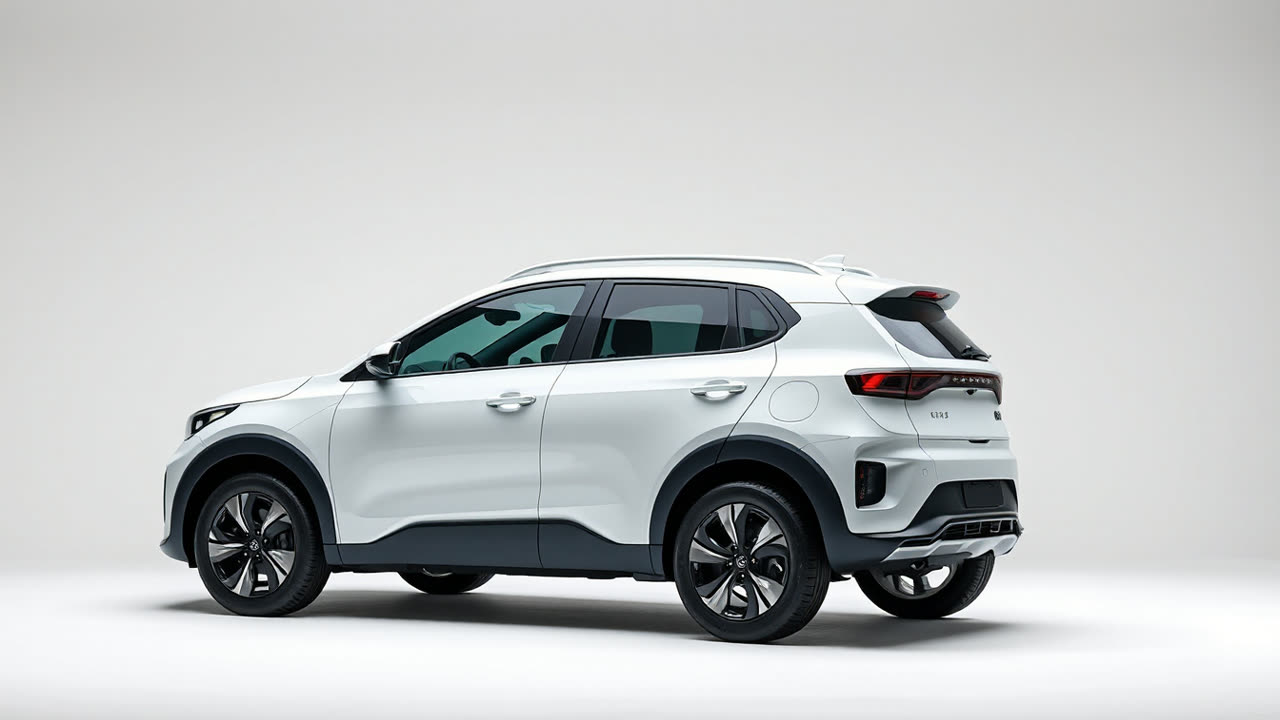
Kia’s new EV3 is poised to dramatically reshape the entry-level electric vehicle market, launching with a starting price that mirrors the Niro Hybrid and undercuts the recently retired Niro EV by nearly $10,000, signaling an aggressive push towards mass-market EV adoption. This strategic pricing, confirmed by Electrek on August 27, 2026, positions the EV3 as a compelling proposition for consumers previously hesitant to embrace full electrification due to cost barriers. The EV3, essentially an upgraded successor to the Niro EV, is not merely cheaper but offers enhanced features and a dedicated EV platform, presenting a significant value proposition that could accelerate the transition away from internal combustion engine (ICE) vehicles and even hybrids.
This pricing strategy is a profound statement on Kia’s commitment to making EVs accessible, directly tackling one of the primary inhibitors to widespread adoption: upfront cost. By aligning the EV3’s price with a popular hybrid model, Kia effectively removes the financial penalty often associated with going fully electric, making the decision less about budget and more about preference for powertrain technology. For consumers, this translates into an opportunity to access a modern EV with superior performance metrics and lower running costs over its lifetime, without paying a premium over a less technologically advanced hybrid. The EV3 is built on Kia’s dedicated E-GMP platform, a significant upgrade from the Niro EV's multi-energy platform, promising improved efficiency, packaging, and driving dynamics. This architectural shift allows for faster charging, better battery integration, and potentially more interior space, directly addressing common criticisms of earlier, platform-compromised EVs.
The impact on the automotive industry extends beyond just sales figures; it forces competitors to re-evaluate their own entry-level EV strategies. For years, the electric vehicle market has been characterized by a “premium first” approach, with manufacturers initially targeting higher-margin segments. Kia’s move with the EV3, following the success of its EV6 and EV9, demonstrates a pivot to volume, leveraging economies of scale and advanced battery technology to drive down costs. This could ignite a price war in the compact EV segment, pushing rivals like Hyundai (with its Kona Electric), Chevrolet (Bolt EUV successor), and even European manufacturers like Volkswagen (ID.3/ID.2all concept) to offer more competitive pricing or risk losing significant market share. The EV3's projected range of over 300 miles on a single charge for its long-range variant, combined with rapid charging capabilities, further enhances its appeal against competitors that might offer less range or slower charging at a similar price point.
Compared to the outgoing Niro EV, which retailed closer to $40,000, the EV3’s sub-$30,000 estimated starting price (before incentives) represents a monumental shift. While specific market pricing varies, the general trend indicates Kia is aiming for a base price around $30,000, which directly competes with the Niro Hybrid's current average price. The Niro EV, while a competent vehicle, shared its underpinnings with ICE and hybrid variants, limiting its potential for dedicated EV optimization. The EV3, on the other hand, is designed from the ground up as an EV, promising advancements in interior packaging, aerodynamics, and overall refinement. Its exterior design, drawing inspiration from the larger EV9, presents a more futuristic and robust aesthetic than its predecessor. Key features like Vehicle-to-Load (V2L) functionality, allowing the car to power external appliances, and advanced driver-assistance systems (ADAS) are expected to be standard or widely available, further differentiating it from earlier budget EVs.
Looking ahead, the EV3’s launch is a critical step in Kia’s broader plan to introduce a full lineup of electric vehicles across various segments, including the upcoming EV4 sedan and EV5 SUV. This aggressive rollout, coupled with competitive pricing, suggests a clear strategy to dominate the nascent affordable EV market. The success of the EV3 will likely dictate the pace at which other manufacturers bring their own budget-friendly EVs to market, potentially accelerating the overall transition to electric mobility. Furthermore, the availability of such a compelling and affordable EV could influence policy decisions, encouraging governments to reduce or reallocate EV incentives as market forces begin to drive down prices naturally. The next few years will see intense competition in this segment, with Kia’s EV3 setting a new benchmark for what consumers can expect from an entry-level electric vehicle in terms of price, performance, and features.