Kia Recalls Over 21,000 Flagship EV9 SUVs Due to Critical Airbag Safety Flaw
The defect compromises fundamental occupant safety, raising concerns about passenger protection and the integration of advanced vehicle technologies.
✨ This content was summarized and interpreted by AI; it may contain errors — please verify accuracy with the original sources. Learn more
Listen to this story
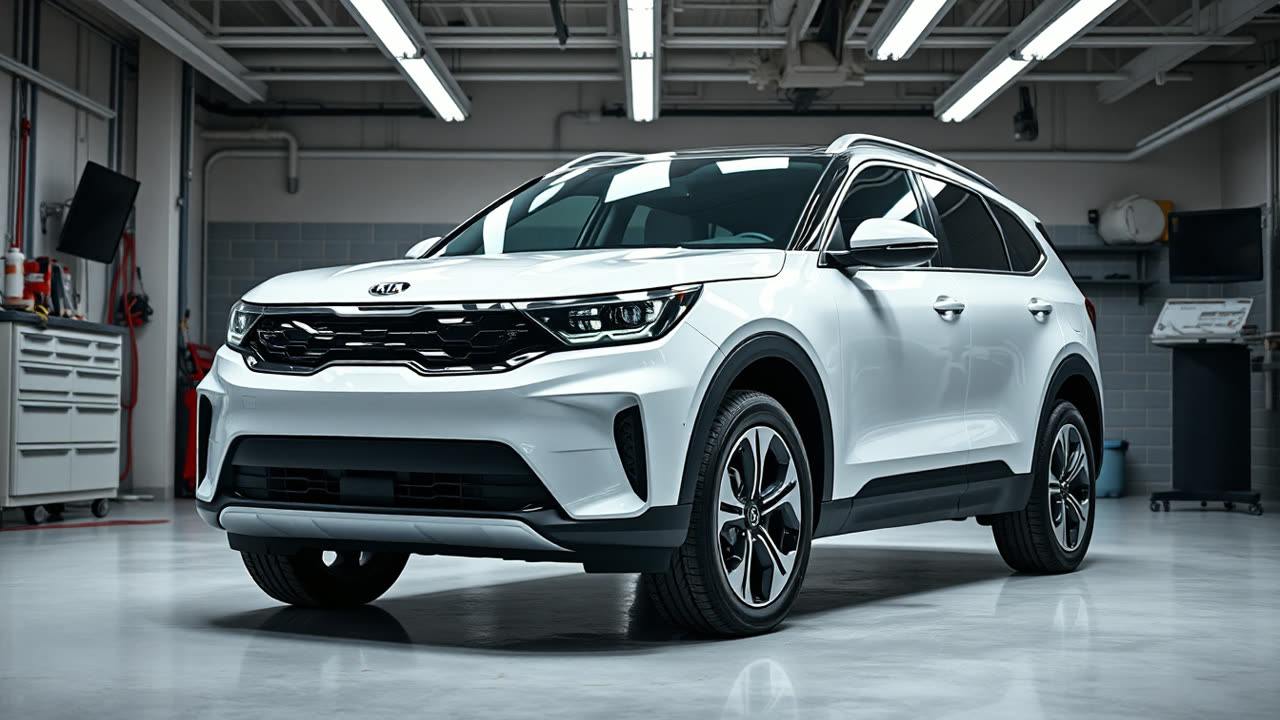
Kia has initiated a significant recall impacting over 21,000 of its flagship EV9 electric SUVs, addressing a critical safety flaw where the front passenger airbag system may fail to accurately detect the presence of a child, potentially leading to improper airbag deployment or non-deployment in a collision. This defect, which directly compromises the effectiveness of a fundamental occupant safety system, raises serious concerns about passenger protection and underscores the complex challenges inherent in integrating advanced safety technologies into modern vehicles.
The core issue lies within the Occupant Classification System (OCS), a sophisticated sensor network designed to determine the size and weight of a front-seat passenger, thereby tailoring airbag deployment force or suppressing it entirely for children or unoccupied seats. A malfunction in this system means that in the event of an accident, a child occupying the front passenger seat might be subjected to the full force of an airbag intended for an adult, or, conversely, the airbag might not deploy at all, significantly increasing the risk of injury. This isn't merely a software glitch; it represents a fundamental failure in a system crucial for adaptive safety, one that relies on precise sensor data to make life-or-death decisions in milliseconds.
For users, the immediate impact is a severe erosion of trust in a vehicle marketed as a premium, family-friendly electric SUV. Owners of the affected EV9s face the inconvenience and anxiety of needing to schedule repairs for a brand-new vehicle, coupled with the unsettling knowledge that a core safety feature designed to protect their most vulnerable passengers may be compromised. This recall forces owners to question the reliability of other advanced systems in their vehicle, particularly in an era where software-defined vehicles promise unprecedented levels of safety and convenience. The recall process itself, involving dealership visits and potentially parts availability delays, adds a layer of frustration to an already concerning situation.
Beyond the immediate user impact, this recall carries substantial implications for Kia and the broader automotive industry, particularly within the rapidly expanding electric vehicle segment. For Kia, the EV9 is a pivotal model, representing its bold entry into the three-row electric SUV market and a significant pillar of its "Plan S" electrification strategy. The EV9 has been lauded for its innovative design, spacious interior, and advanced technology, positioned as a direct competitor to established luxury EVs and a statement of Kia's technological prowess. A safety recall of this magnitude, particularly for a newly launched flagship EV, can inflict considerable reputational damage, potentially slowing sales momentum and making consumers wary of adopting new, complex EV platforms. Recalls, especially those concerning fundamental safety, often translate into tangible financial costs through repair expenses, potential legal liabilities, and decreased resale values.
In comparison to rivals, most modern vehicles, especially family-oriented SUVs, employ OCS technology as a standard safety feature. While airbag recalls are not uncommon across the industry, a significant flaw in the occupant detection system of a brand-new, premium EV like the EV9 stands out. Earlier generations of vehicles often had simpler airbag systems, but the advent of smart airbags and occupant classification systems has introduced new layers of complexity and potential failure points. This incident highlights the ongoing challenge for all automakers in ensuring robust validation and testing of increasingly intricate software and hardware integrations in advanced safety systems. Other manufacturers have faced similar challenges; for instance, various recalls have occurred over the years concerning OCS calibration issues or sensor malfunctions in both internal combustion engine (ICE) and electric vehicles, underscoring that this is a systemic industry challenge rather than an EV-specific flaw.
Looking ahead, Kia's response to this recall will be crucial in mitigating long-term damage. Swift and transparent communication, efficient repair processes, and potentially extended warranties or gestures of goodwill could help rebuild consumer confidence. This incident will likely prompt intensified internal reviews within Kia regarding its quality control and software validation protocols for future vehicle launches. More broadly, the recall serves as a stark reminder to the entire automotive sector that the rush to innovate and integrate advanced technologies must not compromise fundamental safety. Regulators, such as the National Highway Traffic Safety Administration (NHTSA) in the U.S., will undoubtedly scrutinize such failures, potentially leading to tighter regulations or more stringent testing requirements for occupant classification systems and other advanced driver-assistance systems (ADAS). As vehicles become more software-dependent, the industry will face increasing pressure to adopt more rigorous software development lifecycles, akin to those in aerospace or medical devices, to prevent critical safety defects from reaching consumers. The EV9 recall is not just about a faulty airbag; it's a bellwether for the growing pains of a technologically transformative automotive industry grappling with the intricate balance between innovation, complexity, and paramount safety.