Kia's 2027 EV4 GT Launches in Canada, Offering Affordable High-Performance EV Driving
This aggressive push into accessible performance EVs signifies a critical strategic pivot for Kia, aiming to democratize high-octane electric driving experience beyond premium price points.
✨ This content was summarized and interpreted by AI; it may contain errors — please verify accuracy with the original sources. Learn more
Listen to this story
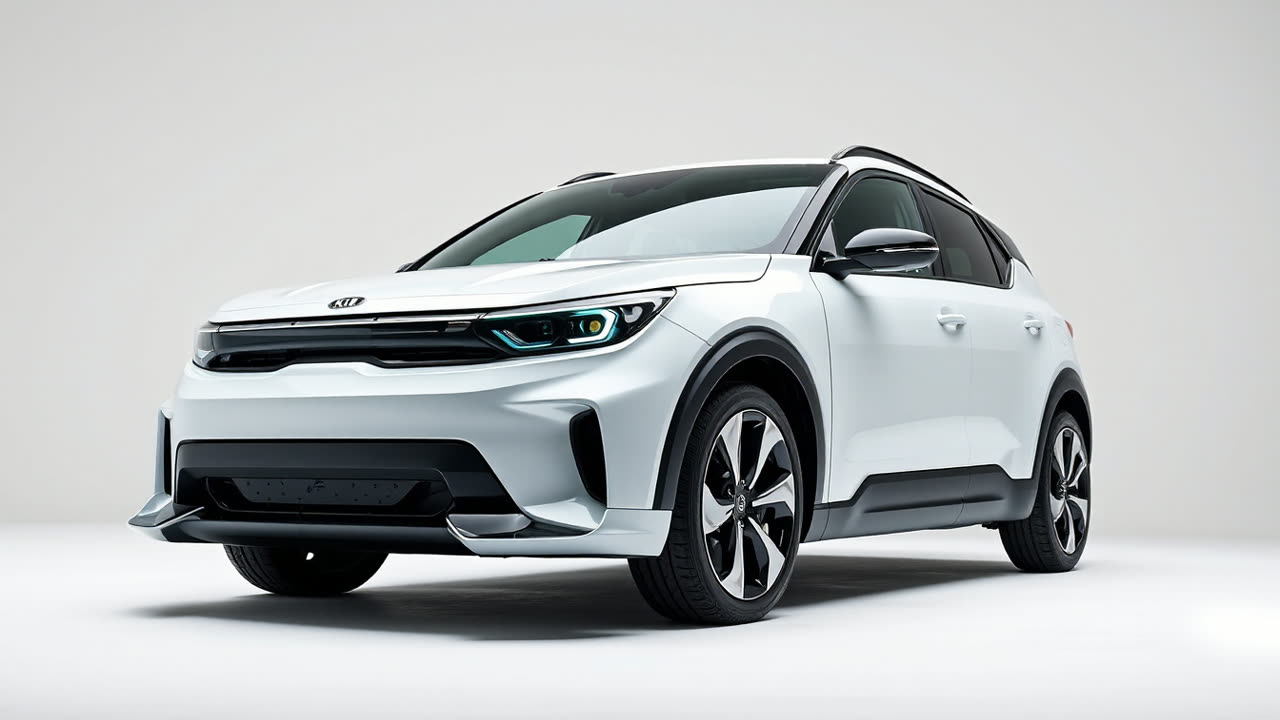
Kia's 2027 EV4 GT, now open for orders in Canada, delivers a potent 450 horsepower and 580 lb-ft of torque, positioning itself as the brand's third "affordable" electric vehicle to receive the high-performance GT designation in the Canadian market. This aggressive push into accessible performance EVs signifies a critical strategic pivot for Kia, aiming to democratize high-octane electric driving experience beyond premium price points. With a targeted 0-100 km/h acceleration in under 4.0 seconds, the EV4 GT significantly elevates the performance benchmark within its projected segment, offering a compelling blend of speed and daily usability. Its introduction follows the successful launches of the EV6 GT and the recently unveiled EV5 GT, solidifying Kia's commitment to injecting enthusiast appeal into its burgeoning electric lineup.
The arrival of the EV4 GT is more than just another model launch; it's a calculated move to capture a burgeoning demographic of buyers eager for electric performance without the prohibitive cost often associated with it. For Canadian users, this translates into greater choice within a rapidly expanding EV market, particularly for those seeking a dynamic driving experience that doesn't compromise on practicality or range. Initial estimates suggest a starting price in the mid-$60,000 CAD range, making it considerably more accessible than traditional performance EVs from luxury marques. Furthermore, the EV4 GT is expected to feature an advanced 800V architecture, enabling ultra-fast charging capabilities that can replenish the battery from 10% to 80% in approximately 18 minutes, a crucial factor for long-distance travel in Canada. This blend of performance, affordability, and rapid charging directly addresses some of the most persistent barriers to EV adoption, particularly for younger, performance-oriented buyers who might otherwise gravitate towards internal combustion engine (ICE) vehicles.
From an industry perspective, the EV4 GT's launch intensifies competition in the "affordable performance" EV segment, a space currently eyed by several manufacturers but largely dominated by a few key players. While the EV6 GT, with its 576 horsepower, targets a slightly higher performance tier, the EV4 GT aims to challenge models like the Tesla Model 3 Performance and Ford Mustang Mach-E GT, potentially offering a more distinctive design and a robust warranty package. The "GT treatment" for the EV4 includes not only a substantial power bump over its standard EV4 counterpart (which is expected to launch with around 200-300 horsepower) but also performance-tuned suspension, larger brakes, unique aerodynamic enhancements, and a more aggressive interior styling with bolstered sports seats. This holistic approach ensures that the GT designation is more than just a badge; it signifies a genuinely re-engineered vehicle designed for enthusiastic driving. The EV4 GT is built on the E-GMP platform, shared with other successful Hyundai Motor Group EVs, which inherently provides a low center of gravity and excellent structural rigidity, foundational elements for a performance vehicle.
Compared to its immediate predecessors in Kia's GT lineup, the EV4 GT represents a refinement of the brand's performance EV strategy. The EV6 GT, launched earlier, proved Kia's capability to deliver supercar-rivalling acceleration and handling. The EV5 GT, a more family-oriented SUV, expanded the GT philosophy to a different form factor, focusing on robust power for a larger vehicle. The EV4 GT, however, appears to be the most direct assault on the compact performance sedan/crossover market, aiming for a broader appeal through a more compact footprint and a potentially sharper driving dynamic due to its lighter weight. This iterative approach allows Kia to learn from each GT variant, progressively optimizing battery management, motor control algorithms, and chassis tuning for a more refined and compelling product.
Looking ahead, the EV4 GT's success in Canada could significantly influence Kia's global EV strategy, particularly regarding its commitment to performance derivatives. If the market responds positively to an "affordable" performance EV, it could spur Kia to introduce GT versions of other upcoming EV models, further diversifying its electric portfolio. The trend towards higher-performance, yet attainable, EVs is likely to accelerate, with manufacturers leveraging advancements in battery technology and motor efficiency to offer more power without drastically increasing costs. We can anticipate rivals to respond with their own enhanced versions of existing models or entirely new performance-oriented EVs in the sub-$70,000 CAD category. Furthermore, the focus on rapid charging and optimized range will remain paramount, pushing the boundaries of charging infrastructure development and battery chemistry. Kia's ongoing investment in dedicated EV platforms like E-GMP suggests a long-term vision where performance, efficiency, and design are seamlessly integrated, with the EV4 GT serving as a crucial stepping stone in establishing Kia as a serious contender in the high-performance electric vehicle arena.