Kia's PV7 Electric Van Spotted Testing in the U.S.
Kia's new PV7 electric commercial van has been spotted undergoing testing in the United States, signaling the automaker's aggressive push into the critical North American market and intensifying competition in the rapidly evolving commercial EV segment.
✨ This content was summarized and interpreted by AI; it may contain errors — please verify accuracy with the original sources. Learn more
Listen to this story
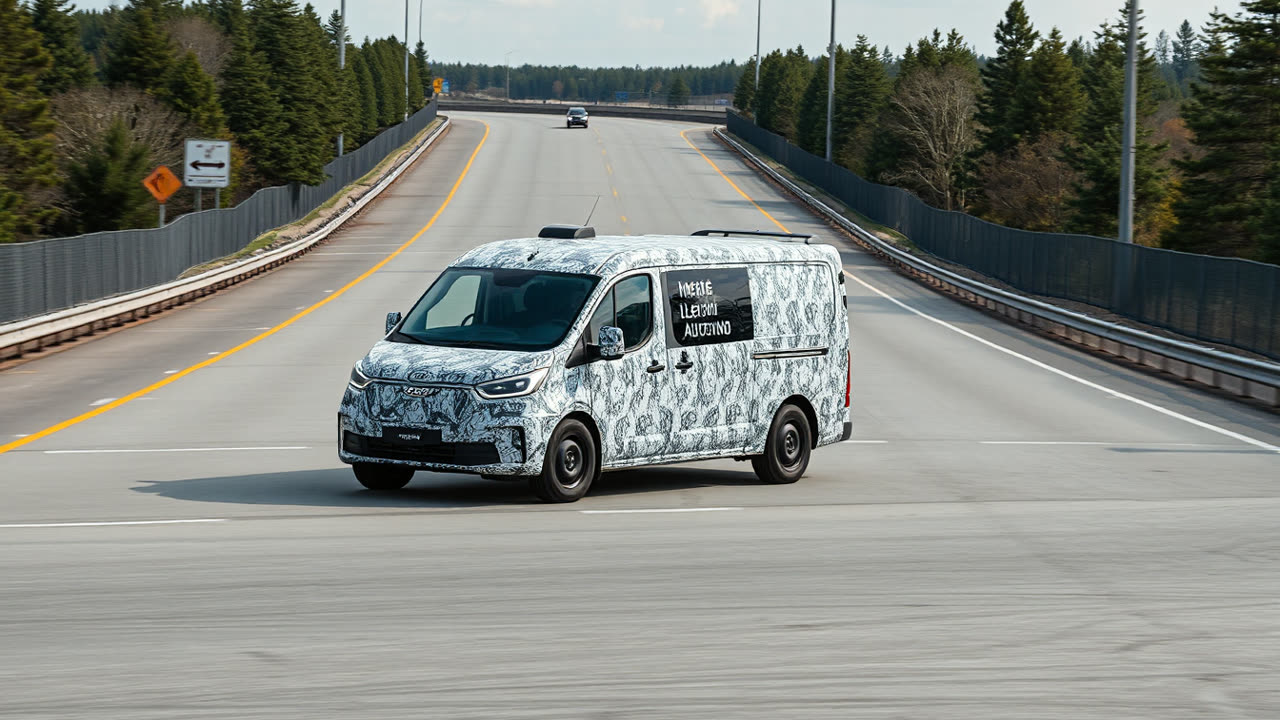
Kia's new PV7 electric van has been spotted undergoing testing in the United States, a significant development following its official unveiling earlier this year as a cornerstone of the automaker's ambitious Platform Beyond Vehicle (PBV) strategy. This early appearance in the critical North American market underscores Kia's accelerated push into the commercial electric vehicle segment, signaling a direct challenge to established players and emerging startups alike. The PV7, designed for modularity and scalability, represents more than just a new model; it embodies Kia's vision for a customizable mobility solution that can adapt to diverse business needs, from last-mile delivery to ride-hailing and even mobile retail.
The immediate presence of the PV7 in the U.S. matters profoundly for several reasons. For users, particularly fleet operators and small businesses, it promises a purpose-built electric alternative that could significantly reduce operational costs through lower fuel and maintenance expenses, alongside offering substantial environmental benefits. The PV7's anticipated high degree of customization, facilitated by its "dynamic hybrid" architecture, allows for quick interchangeability of upper bodies, potentially transforming how businesses deploy and utilize their fleets. This adaptability could drive unprecedented efficiency, enabling a single chassis to serve multiple functions throughout its lifecycle, thus maximizing return on investment and minimizing downtime. For the industry, Kia's aggressive entry with a dedicated commercial EV platform like PBV signals a maturing market where general-purpose electric vehicles are giving way to specialized solutions. It will intensify competition, pushing rivals to innovate faster in areas like battery density, charging speeds, and modular design. The strategic importance of the U.S. market, with its vast logistical networks and growing demand for sustainable transport, makes this sighting a strong indicator of Kia's global commercial EV aspirations.
The PV7 stands as the largest model in Kia's initial PBV lineup, which also includes the smaller PV5 and the robotic PV1. While specific U.S. market specifications, including range, payload capacity, and battery size, are yet to be fully detailed, the global unveiling highlighted its robust design and focus on maximizing cargo space and utility. This positions it directly against formidable rivals such as the Ford E-Transit, which has already established a significant footprint in the U.S. commercial EV market, and the Mercedes-Benz eSprinter, known for its premium features and long-standing presence in the van segment. Compared to these competitors, the PV7's core differentiator lies in its inherent modularity from the ground up, designed to optimize for various "upperbody" configurations rather than being an electrification of an existing internal combustion engine platform. This approach could offer superior integration and flexibility, potentially leading to lower conversion costs and faster deployment of specialized vehicles. Furthermore, the PV7 is expected to leverage Kia's advanced EV technology, including its E-GMP platform derivatives, promising competitive charging capabilities and potentially a more driver-centric cabin experience than some utilitarian rivals. The PV7 also builds upon Kia's broader electrification efforts, drawing insights from successful passenger EVs like the EV6 and EV9, translating that expertise into the commercial sector.
Looking ahead, the appearance of the PV7 in the U.S. testing phase suggests a potential market launch within the next 12 to 18 months, likely targeting late 2027 or early 2028 for full-scale availability. Kia's strategy with the PBV line is not just about selling vehicles but about offering a complete ecosystem of mobility solutions, including data-driven fleet management services and potentially even subscription models for specialized vehicle bodies. This holistic approach could reshape how businesses acquire and manage their commercial fleets. Challenges remain, particularly in establishing a robust charging infrastructure capable of supporting large commercial fleets and navigating the complex regulatory landscape for commercial vehicles in different states. However, Kia's commitment to building a dedicated PBV factory in Gwangmyeong, South Korea, with an initial annual capacity of 150,000 units, underscores its long-term vision and belief in the transformative potential of these purpose-built electric vans. The PV7's U.S. debut is not merely an engineering milestone; it's a strategic gambit that could fundamentally alter the trajectory of commercial transportation, pushing the industry towards a more flexible, sustainable, and interconnected future.