Kia Unveils PV7: A Game-Changing Electric Van for Commercial Mobility
Kia's new PV7 electric van, over 17.5 feet long with nine-passenger or substantial cargo capacity, signals a pivotal shift in the commercial EV market.
✨ This content was summarized and interpreted by AI; it may contain errors — please verify accuracy with the original sources. Learn more
Listen to this story
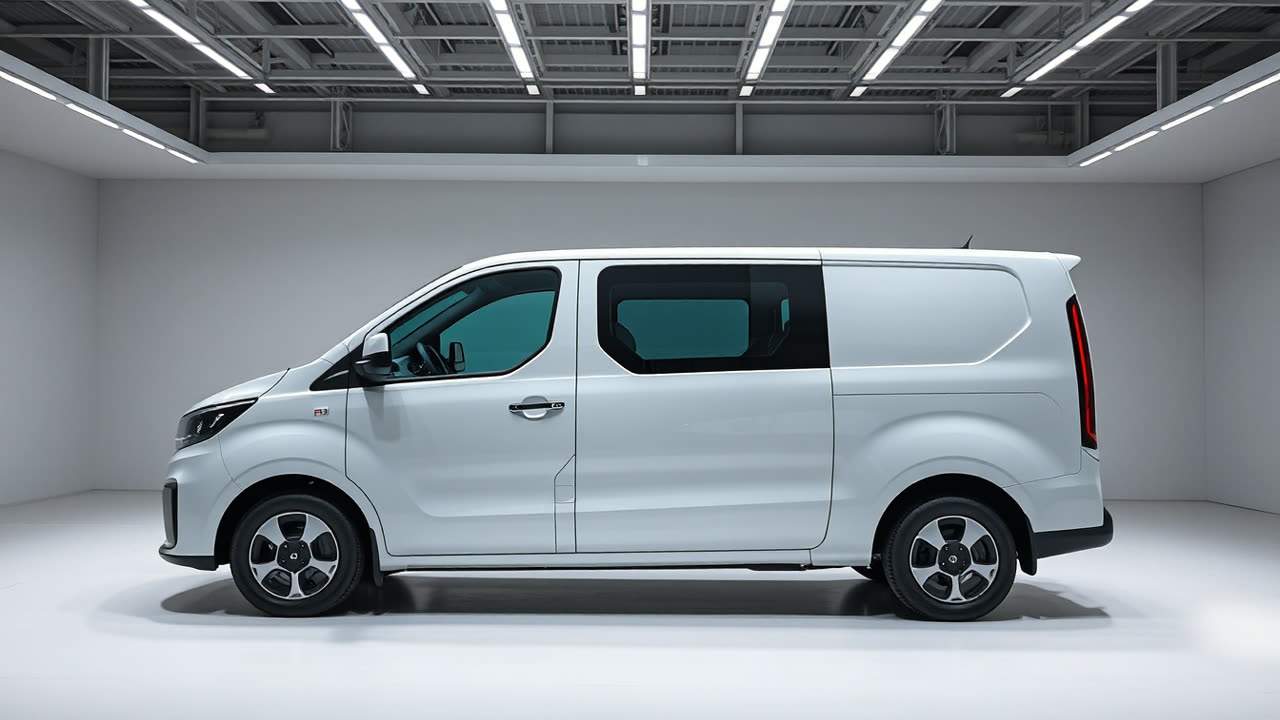
Kia’s recent unveiling of the PV7, an electric van exceeding 17.5 feet in length and capable of transporting nine passengers or substantial cargo, marks a pivotal moment in the rapidly evolving electric commercial vehicle sector. This vehicle is not merely another entry into the burgeoning EV market; it represents a significant advancement in Kia’s "Platform Beyond Vehicle" (PBV) strategy, aiming to redefine mobility solutions for businesses and individuals alike. Its substantial dimensions and versatile interior configuration position it as a direct challenger to established players and an indicator of a maturing market segment demanding specialized, purpose-built electric transport.
The PV7, as the flagship model in Kia’s PBV lineup, is designed from the ground up to offer unprecedented modularity and customization. While specific battery capacities and range figures are still emerging, early indications suggest a focus on long-haul capabilities and robust charging infrastructure compatibility to minimize downtime for commercial operators. Unlike many early electric vans that were conversions of existing internal combustion engine platforms, the PV7’s dedicated EV architecture promises optimized interior space, lower floor height for easier loading, and superior driving dynamics. Its ability to switch between a high-capacity passenger shuttle and a voluminous cargo hauler with apparent ease caters directly to the diverse needs of last-mile delivery services, ride-sharing fleets, and even large families or adventure enthusiasts. This adaptability is critical, as businesses increasingly seek single-platform solutions that can pivot between different operational demands without significant capital expenditure on multiple vehicle types.
This launch is particularly impactful for the industry, signaling a decisive shift towards specialized electric vehicles that prioritize utility and operational efficiency over mere electrification. The PV7’s size and passenger/cargo flexibility directly address a gap in the market for a large-format electric van that doesn't compromise on either capacity or zero-emission credentials. Competitors like the Ford E-Transit and Mercedes-Benz eSprinter have certainly made inroads, but often with a more fixed cargo-centric design or smaller passenger capacities for their electric variants. The E-Transit, for instance, offers various lengths and roof heights but typically maxes out at three front seats, focusing primarily on goods transport. Similarly, the eSprinter, while robust, has historically been more geared towards cargo, though newer generations are expanding options. The PV7's initial emphasis on a nine-passenger configuration alongside substantial cargo volume sets a new benchmark for versatility in a single electric platform, potentially disrupting segments from airport shuttles to mobile workshops. This multifaceted approach reduces the total cost of ownership for businesses by enabling greater fleet utilization and reducing the need for specialized vehicles for different tasks.
Kia's broader PBV strategy, with the PV7 at its vanguard, envisions a future where vehicles are not just transportation but adaptable platforms for various services. This includes a modular "skateboard" chassis that can be fitted with different "upper bodies" – a concept that has been discussed for years but is now nearing commercial reality with Kia’s commitment. This strategy extends beyond the PV7 to include smaller models like the PV5 and even futuristic robotic solutions, suggesting a comprehensive ecosystem designed to integrate seamlessly with smart cities and logistics networks. The PV7's introduction is a concrete step in this direction, showcasing how a large electric platform can be the backbone for multiple applications, from passenger transport to mobile retail or even autonomous delivery hubs.
Looking ahead, the success of the PV7 will hinge on several critical factors: its real-world range under various loads, the competitiveness of its pricing, and the robustness of Kia's charging infrastructure support for commercial customers. As production scales up, likely commencing in earnest in late 2027 or early 2028 from Kia's dedicated PBV plant in Gwangmyeong, South Korea, the market will closely watch how its modularity translates into practical advantages for businesses. If Kia can deliver on its promise of a truly adaptable, efficient, and cost-effective electric van, the PV7 could not only capture significant market share but also accelerate the wider adoption of purpose-built electric vehicles across numerous industries, fundamentally altering how goods and people are moved in urban and commercial environments. This strategic move by Kia is not just about selling vans; it's about selling a vision of flexible, sustainable mobility solutions that are designed for the next generation of commerce and transportation.