Korean Researchers Develop $7 AI-Powered Smartphone Clip-On to Detect Hidden Cameras with 94% Accuracy
A team from KAIST has created an affordable smartphone accessory that uses a dynamic LED grid and AI to identify hidden camera lenses, offering a robust solution for personal privacy.
✨ This content was summarized and interpreted by AI; it may contain errors — please verify accuracy with the original sources. Learn more
Listen to this story
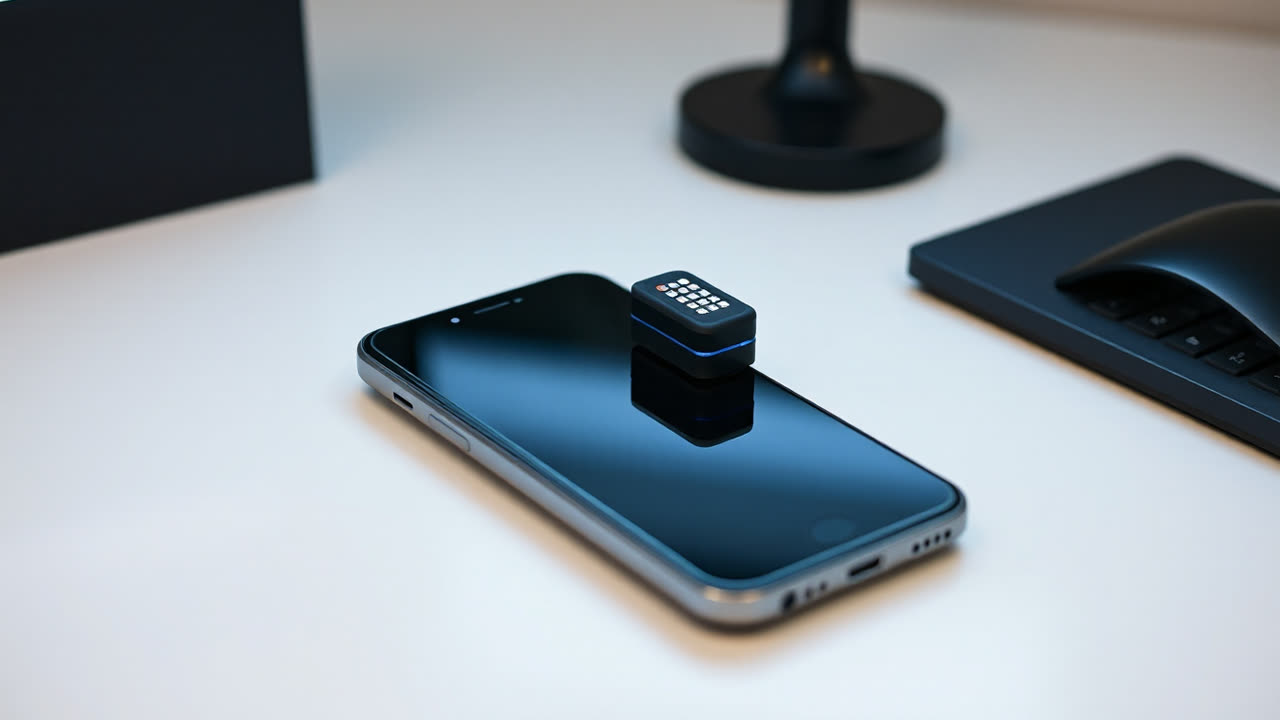
A $7 smartphone clip-on developed by Korean researchers can detect hidden cameras with an impressive 94% accuracy, leveraging a dynamic LED grid and a companion AI application to distinguish reflective camera lenses from other surfaces. This breakthrough, originating from a team at Korea Advanced Institute of Science and Technology (KAIST), significantly democratizes access to sophisticated privacy protection, moving beyond expensive, specialized equipment or rudimentary visual checks. The device works by rapidly altering the illumination angle of its LED lights, capturing multiple reflection patterns with the smartphone's camera. The integrated AI algorithm then analyzes these subtle differences, identifying the unique specular reflections characteristic of optical lenses, even those as small as 1mm.
The implications for personal privacy and the hospitality industry are profound. Historically, individuals concerned about surreptitious surveillance in rental accommodations, changing rooms, or public spaces have relied on crude methods like scanning for pinholes, using flashlight tests to spot reflections, or purchasing dedicated RF signal detectors that often produce false positives. The KAIST device, dubbed "CAmera-spotting fiLter" (CAIL), offers a robust, accessible, and highly accurate alternative, transforming a common smartphone into a powerful counter-surveillance tool. Its low cost – estimated at just $7 for materials – makes it an impulse purchase for everyday consumers, potentially leading to a widespread adoption that could deter the proliferation of hidden cameras. For businesses, particularly in sectors like hotels and Airbnb, the existence of such a readily available detection tool could increase pressure to implement stricter privacy policies and conduct regular, verifiable sweeps, thereby rebuilding trust with guests wary of privacy breaches.
Compared to existing solutions, CAIL stands out for its unique blend of affordability, performance, and user-friendliness. Professional hidden camera detectors, which often cost hundreds or even thousands of dollars, typically employ RF scanning to detect wireless camera signals or utilize infrared (IR) light to spot lens reflections. While effective, RF detectors can be prone to interference and false alarms from other electronic devices, and IR-based lens detectors require careful manual sweeping and interpretation. Cheaper consumer-grade IR detectors exist, but they generally lack the precision and automated analysis of the CAIL system, often struggling with small or well-concealed lenses. The AI-driven comparative reflection analysis of CAIL mitigates these shortcomings by focusing on the optical properties of the lens itself, making it less susceptible to environmental noise and human error. Older methods, such as simply scanning a room with a phone flashlight, are highly unreliable and depend entirely on the user's visual acuity and the camera's angle. CAIL's dynamic LED array and algorithmic processing represent a significant leap over these rudimentary techniques, offering a scientific, repeatable detection process.
Looking ahead, the development heralds a new era for personal security tools, where advanced AI and optical techniques are miniaturized and integrated into everyday devices. We can anticipate further refinements to CAIL, potentially including enhanced detection ranges, faster scanning, and even the integration of multi-spectral analysis to detect different types of lenses or imaging sensors. The open-source nature of the research, as published in *IEEE Access*, suggests that other developers and manufacturers could build upon this foundation, leading to a competitive market for similar low-cost, high-accuracy privacy protection gadgets. Furthermore, the underlying AI methodology could be adapted for other applications requiring precise optical anomaly detection, such as quality control in manufacturing or even medical diagnostics. The widespread availability of such tools will likely force manufacturers of hidden cameras to innovate new concealment methods, creating an ongoing technological arms race between surveillance and counter-surveillance. Ultimately, this $7 clip-on is not just a gadget; it's a harbinger of a future where robust digital privacy extends into the physical realm, accessible to everyone.