Laser Mosquito Zappers Arrive, Promising Chemical-Free Defense for $1,000
The $999.99 Bug Zapper Laser (BZL) is now commercially available, marking a significant shift from traditional chemical or electrical grid solutions in personal mosquito defense.
✨ This content was summarized and interpreted by AI; it may contain errors — please verify accuracy with the original sources. Learn more
Listen to this story
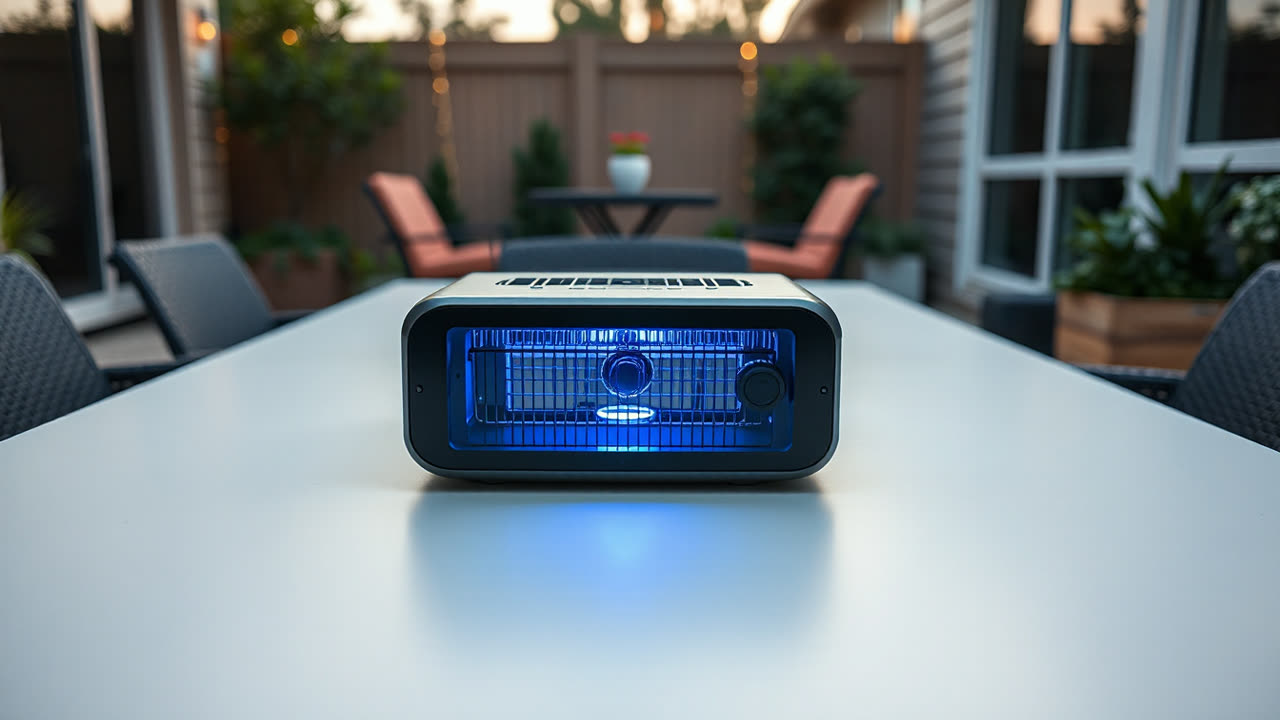
A new breed of personal mosquito defense has arrived, with laser-based systems like the $999.99 Bug Zapper Laser (BZL) now commercially available, marking a significant shift from traditional chemical or electrical grid solutions. This innovative device, which emerged from a successful crowdfunding campaign, promises to create a personal exclusion zone by precisely targeting and neutralizing individual mosquitoes with a low-power laser beam. Unlike conventional zappers that rely on broad-spectrum electrocution or repellents that merely deter, the BZL system offers a proactive, targeted elimination approach, theoretically reducing mosquito populations in a defined area without the use of harmful chemicals or the indiscriminate killing of beneficial insects.
The immediate impact on consumers is multifaceted. For individuals living in mosquito-prone regions, especially those at high risk of mosquito-borne diseases like dengue, malaria, or Zika, a reliable, chemical-free defense system represents a compelling proposition. The upfront cost of nearly $1,000 is substantial, placing it firmly in the premium home appliance category, yet the long-term savings on repellents, citronella candles, and professional pest control services could partially offset this investment. Furthermore, the psychological benefit of a mosquito-free environment, particularly during outdoor activities, holds significant value. However, the efficacy of these devices in real-world, dynamic environments, considering factors like wind, rain, and the sheer volume of insects, remains a critical point of evaluation for widespread adoption. Early reviews and demonstrations suggest promising results in controlled settings, but larger-scale independent testing is crucial to validate its "personal air defense system" claim.
From an industry perspective, the availability of consumer-grade laser mosquito zappers signals a burgeoning market for high-tech pest control. This technology could disrupt the established pest control industry, which has historically relied on chemical sprays, traps, and repellents. Companies specializing in traditional methods may need to innovate or integrate similar advanced technologies to remain competitive. Moreover, the environmental implications are significant. A reduction in pesticide use, particularly in residential areas, could lessen the impact on local ecosystems, protecting pollinators and other non-target species. This aligns with a growing consumer demand for eco-friendly and sustainable solutions, pushing the industry towards more precise and less invasive pest management strategies. The BZL system, for instance, claims to target only mosquitoes, leaving other insects unharmed, a stark contrast to broad-spectrum insecticides.
Compared to previous generations of mosquito control, which primarily consisted of bug zappers, mosquito coils, and topical repellents, laser systems offer a paradigm shift in precision and environmental responsibility. Traditional electric zappers, while effective at killing some insects, often attract and kill a wide array of nocturnal insects, many of which are beneficial to the ecosystem. Chemical foggers and sprays, while potent, introduce pesticides into the environment, raising concerns about human health and ecological impact. The highly publicized "Mosquito Destroyer" system, developed by Intellectual Ventures' Global Good program, demonstrated the feasibility of laser-based mosquito control on a larger scale, using computer vision to identify and eliminate mosquitoes at a rate of 50-100 per second. While the BZL is a consumer-grade adaptation, it embodies the same fundamental principle of targeted eradication, miniaturized for personal use. The key differentiator is its ability to offer a localized, on-demand defense without collateral damage.
Looking ahead, the market for laser-based insect control is poised for rapid evolution. Future iterations are likely to see significant price reductions as manufacturing scales and technology matures, making these devices more accessible to a broader consumer base. Integration with smart home ecosystems is an inevitable next step, allowing for automated operation, real-time monitoring of mosquito activity, and even predictive defense based on local weather patterns. Miniaturization will also continue, potentially leading to more discreet and portable units. Beyond mosquitoes, the underlying laser targeting technology could be adapted for other agricultural pests, offering a revolutionary approach to crop protection that minimizes chemical reliance. While challenges remain in optimizing efficiency, durability, and cost, the commercial availability of devices like the BZL marks the dawn of a new era in personal and potentially widespread pest management, promising a future where targeted light, not chemicals, defends our homes and health.