Lenovo Unveils ThinkBook Project Swan: A 14-inch Laptop That Transforms into a 17-inch Widescreen
Lenovo's ThinkBook Project Swan, revealed at IFA 2026, redefines portable productivity by horizontally expanding a 14-inch business laptop display into a 17-inch widescreen with a single button press.
✨ This content was summarized and interpreted by AI; it may contain errors — please verify accuracy with the original sources. Learn more
Listen to this story
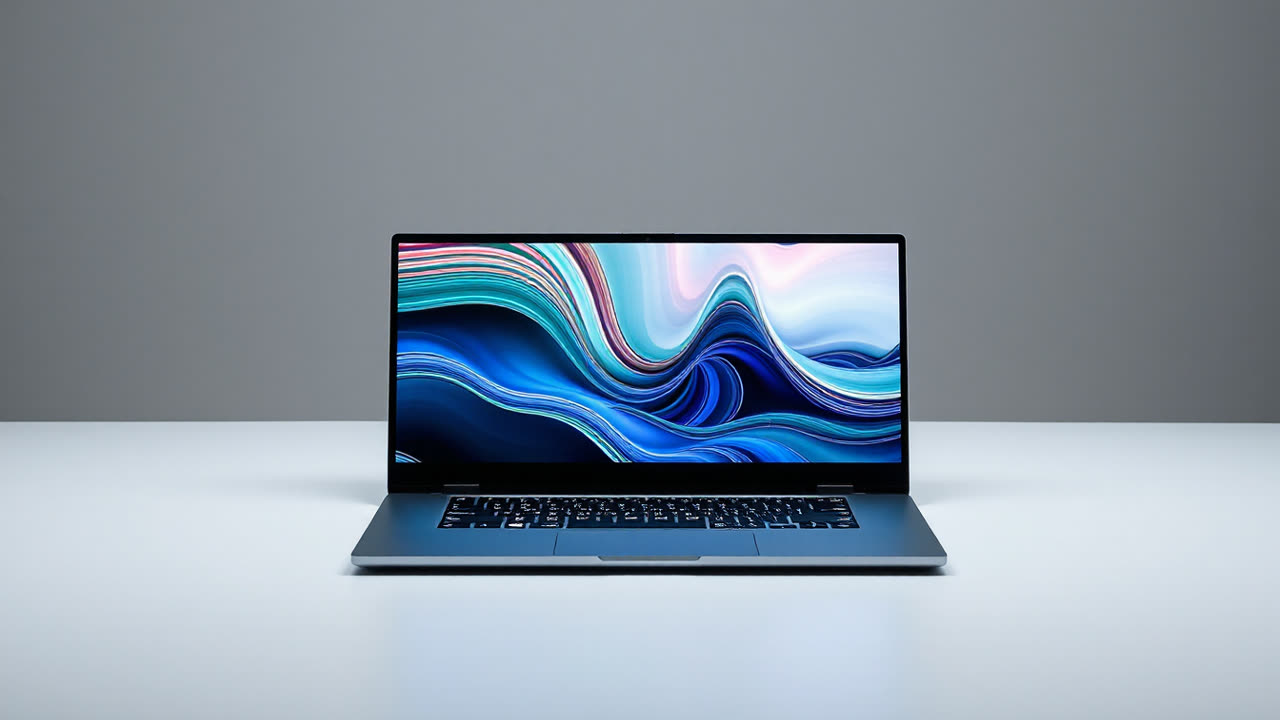
Lenovo's latest conceptual leap, the ThinkBook Project Swan, unveiled at IFA 2026, redefines the boundaries of portable productivity by transforming a standard 14-inch business laptop into a widescreen 17-inch display with the press of a button. This horizontal expansion from a compact form factor to an expansive workspace represents a significant evolution in rollable display technology, moving beyond previous vertical-expansion prototypes to target a more mainstream business user. While rollable screens are not entirely new territory for Lenovo, Project Swan distinguishes itself by focusing on practical, widescreen multitasking and portability, rather than raw screen size for specialized use cases.
The core innovation lies in the laptop's roll-and-slide mechanism, which dynamically extends the flexible OLED panel, maintaining a 16:9 aspect ratio at 17 inches with a resolution of 2850x1672. This is a departure from Lenovo's earlier ThinkBook Plus Gen 6 Rollable, revealed at CES 2025, which vertically expanded a 14-inch 5:4 display to a 16.7-inch 8:9 screen, catering more to document editing and coding. Project Swan, in contrast, offers an "almost 4K" widescreen experience, better suited for side-by-side application usage, media consumption, and general business tasks requiring broader visual real estate. Weighing approximately 3.5 pounds (1.6kg) and measuring 17.9mm thick, Project Swan aims for genuine portability, a stark contrast to heavier, larger rollable gaming concepts like the Legion Pro Rollable from CES 2026, which expanded from 16 to 23.8 inches. The absence of a visible crease, a common issue with foldable displays, is a key advantage of rollable technology, ensuring a seamless visual experience.
This technological advancement matters profoundly for both users and the wider industry. For professionals, Project Swan offers the flexibility of a compact travel machine that can instantly transform into a powerful workstation for intensive multitasking, data analysis, or presentations without the need for external monitors. The increased screen real estate, without a corresponding increase in the laptop's physical footprint when retracted, directly addresses the perennial trade-off between portability and productivity. This could significantly enhance user ergonomics, potentially reducing neck strain by allowing a taller display, and encouraging more efficient split-screen workflows.
From an industry perspective, Project Swan signals a maturation of rollable display technology, moving from experimental prototypes to more refined, user-centric concepts. While foldable displays currently dominate the flexible screen market, valued at around $6.35 billion in 2025 and projected to reach nearly $60 billion by 2035, rollable displays are expected to grow faster in the coming decade due to their crease-free nature and seamless expansion. Samsung Display's mass production of rollable OLED screens for laptops, which began in April 2025, and the integration of Eco² OLED technology for reduced thickness and 30% lower power consumption, are critical enablers for devices like Project Swan. This underscores a broader industry push towards more versatile computing form factors, driven by advancements in flexible OLEDs, ultra-thin glass, and robust motorized mechanisms.
Lenovo has a history of pioneering flexible screen devices, starting with the ThinkPad X1 Fold, the world's first folding-screen laptop, released in 2020. This laid the groundwork for subsequent rollable concepts, including the vertical-expanding ThinkBook Plus Gen 6 Rollable. Rivals, while not yet delivering mass-market rollable laptops, are also exploring flexible display innovations. Companies like Samsung and LG have showcased rollable phone prototypes and large-format rollable TVs, demonstrating the potential across various device categories. Oppo's X 2021 rollable phone prototype, for instance, expanded its screen from 6.7 to 7.4 inches, setting a benchmark for smooth transitions. The ongoing developments in nanomaterials and AI-powered inspection systems are enhancing the durability and production efficiency of these advanced displays, addressing earlier concerns about wear and tear after thousands of bending cycles.
Looking ahead, the commercialization of Project Swan, or a device like it, faces several hurdles, including durability, battery consumption of the rolling mechanism (estimated at a couple of watts), manufacturing costs, and long-term display longevity. Lenovo rates its rolling mechanisms for 20,000 cycles, which should cover most use cases, but real-world resilience will be key for consumer adoption. The current status as a "concept" means pricing and release dates are absent. However, the measured approach with Project Swan, focusing on a more achievable and practical horizontal expansion for business users, suggests a clearer path to market than some of the more ambitious, larger-format rollable concepts. The integration of AI features, like Lenovo's AI assistant, Lenovo AI Now, also hints at a future where these dynamic displays are seamlessly integrated into intelligent computing experiences. As production costs continue to decrease and durability improves, rollable laptops could move from a niche premium offering to a more accessible technology within the next decade, fundamentally altering how users perceive and interact with their portable computing devices.