Lexar's High-Priced Chinese DDR5 Memory Dampens Hopes for Cheap RAM
Lexar's new 32GB DDR5 kit, reportedly with domestically produced Chinese chips, is priced at $592, challenging expectations of disruptive price reductions from new entrants in the global DRAM market.
✨ This content was summarized and interpreted by AI; it may contain errors — please verify accuracy with the original sources. Learn more
Listen to this story
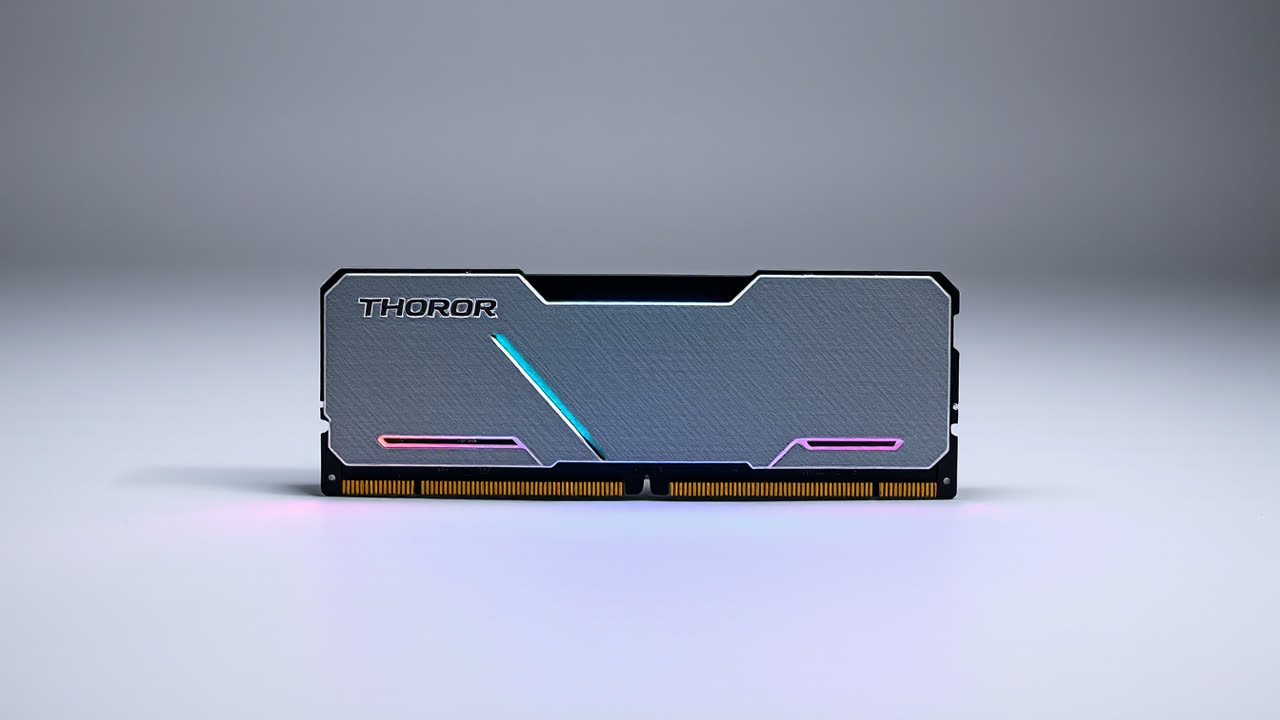
Lexar's recent listing of its 32GB DDR5 memory kit, reportedly powered by domestically produced Chinese chips, carries a 3,999 Yuan ($592) price tag that significantly dampens industry expectations for an immediate, disruptive price reduction from new entrants in the global DRAM market. This pricing, for the Lexar THOR RGB DDR5 Gen 2 kit rated at 7200 MT/s with CL38 timings, places it squarely in competition with premium offerings from established players, rather than undercutting them as many had hoped for Chinese-made RAM. The kit supports both Intel XMP 3.0 and AMD EXPO profiles and operates at 1.40V, featuring a sandblasted aluminum heat spreader and RGB lighting. While Lexar has not explicitly identified the DRAM manufacturer, ChangXin Memory Technologies (CXMT) is widely assumed to be the supplier, representing a significant milestone for China's ambitions in semiconductor self-sufficiency.
The core news here is less about the mere existence of Chinese-made DDR5 and more about its market positioning. For years, the global memory market has been dominated by a triumvirate of Samsung, SK Hynix, and Micron, who collectively control over 90% of the DRAM market. China, heavily reliant on imported semiconductors, has poured massive state-backed investment into companies like CXMT to reduce this dependency. The narrative often suggested that once Chinese manufacturers achieved volume production, a flood of cheaper DRAM would enter the market, driving down prices and challenging the established order. This Lexar pricing, however, indicates that CXMT, or whichever domestic supplier is involved, is not immediately pursuing an aggressive low-cost strategy in the high-performance DDR5 segment.
This strategic choice carries significant implications for both users and the industry. For end-users, particularly PC enthusiasts and builders, the hope for substantially cheaper, high-performance DDR5 RAM from a new competitor appears to be on hold. Current DDR5 prices have seen dramatic increases, with 32GB (2x16GB) kits that cost $100-$200 in October 2025 now starting at around $350, if available. Some premium kits have seen price jumps of over 30% in just three weeks, with a 32GB DDR5-7200 CL34 kit reaching €599. This surge is largely attributed to a global DRAM shortage exacerbated by the immense demand for high-bandwidth memory (HBM) and server DRAM driven by AI data centers, leading major manufacturers to prioritize these more profitable segments. With Lexar's domestically powered kit priced at $592 for a 32GB DDR5-7200 kit, it sits close to or even above comparable offerings from established brands like Corsair and Kingston, whose 32GB DDR5-6000 kits are currently listed in the $330-$380 range, though higher speed kits can exceed $500-$600. This suggests that Chinese DRAM, at least for now, is not positioned to alleviate the current high prices for mainstream consumers.
From an industry perspective, this pricing strategy by Lexar (and by extension, likely CXMT) suggests a focus on profitability and technological parity rather than a market share land grab through aggressive undercutting. CXMT has made remarkable strides, becoming China's largest DRAM producer and the world's fourth-largest, with an estimated 7.7% market share in 2025. Its IPO in July 2026 saw its share price surge by 466%, valuing the company at nearly $488 billion, underscoring investor confidence in its growth trajectory. Analysts project CXMT's production capacity to reach approximately 350,000 wafer starts per month (WSPM) by the end of 2026, nearing Micron's estimated 375,000 WSPM, and potentially expanding to 550,000 WSPM by 2028, which could see its global DRAM market share rise to 18%. However, a key distinction remains: over 98% of CXMT's revenue currently comes from conventional DRAM, with minimal presence in the high-margin HBM market where incumbents like Micron dominate. This means CXMT's pricing power in commodity DRAM is crucial for its financial health.
The decision to price competitively rather than aggressively low could be influenced by several factors. Firstly, the global memory market is currently experiencing a "super-cycle" with strong demand and rising prices, particularly for DDR5 and HBM. DRAM contract prices rose 58-63% quarter-over-quarter in Q2 2026 and are forecast to increase another 13-18% in Q3. This environment allows new entrants to command higher prices without necessarily needing to dump supply. Secondly, while CXMT's technology has advanced rapidly, it is still considered at least one generation behind leaders in some areas, particularly HBM. Achieving parity in performance and reliability for high-speed DDR5 modules likely comes with significant R&D and manufacturing costs, making a race to the bottom economically unfeasible. SemiAnalysis data suggests CXMT's DDR5 cost-per-bit is still over 30% higher than its peers. Lastly, China's long-term goal is not just to produce chips, but to build a sustainable, technologically advanced domestic industry. This requires generating profits to reinvest in further research and development, especially given ongoing geopolitical tensions and export restrictions on advanced chip-making equipment.
Looking ahead, the memory market will remain a dynamic battleground. CXMT is reportedly accelerating its DDR6 layout, aiming for mass production of LPDDR6 with speeds of 12.8 Gbps in the second half of 2026, directly competing with Samsung and SK Hynix. This aggressive roadmap indicates a clear intent to close the technological gap. However, analysts like Morningstar still believe the gap between CXMT and memory leaders will not shrink materially due to export restrictions on chip equipment, and they foresee CXMT's pricing power falling short of peers in the long run. While the current high pricing for Lexar's CXMT-powered DDR5 may disappoint immediate hopes for cheaper RAM, it signals a maturing Chinese DRAM industry that prioritizes value and sustainable growth over a disruptive price war. The real impact on global memory prices will likely come not from initial aggressive undercutting, but from CXMT's sustained capacity expansion and technological advancements, which could eventually provide more supply diversification and moderate price volatility in the longer term, potentially in late 2027 or 2028 when broader capacity growth is expected to improve demand-supply dynamics.