LG Enters Chip Packaging Market with LDI Machine, Targeting TSMC CoWoS Bottleneck
LG has decisively entered the high-stakes chip packaging equipment market with a new Laser Direct Imaging (LDI) machine, directly addressing critical bottlenecks in advanced semiconductor manufacturing, particularly TSMC's constrained CoWoS production for AI accelerators.
✨ This content was summarized and interpreted by AI; it may contain errors — please verify accuracy with the original sources. Learn more
Listen to this story
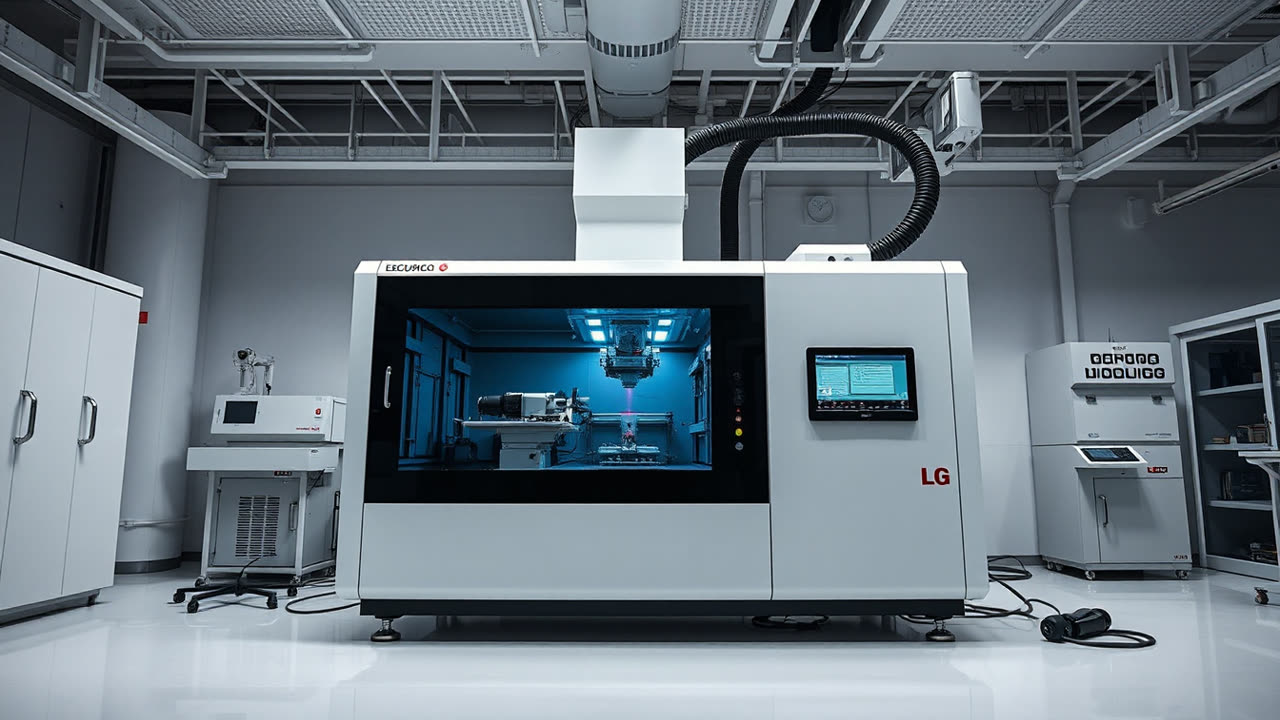
LG has decisively entered the high-stakes chip packaging equipment market, unveiling a new Laser Direct Imaging (LDI) machine designed to pattern fine interconnects for advanced packaging and high-density Printed Circuit Boards (PCBs), a strategic move addressing persistent bottlenecks in the global semiconductor supply chain, particularly the acute constraints experienced in TSMC's CoWoS (Chip-on-Wafer-on-Substrate) production. This maskless lithography system prioritizes higher throughput over the absolute finest resolution, a critical trade-off that could significantly alleviate the production pressures currently hindering the rollout of next-generation AI accelerators and other complex computing silicon.
The immediate significance of LG's foray lies in its potential to diversify and expand the available capacity for advanced packaging, an area that has become a choke point for the entire semiconductor industry. With TSMC, the world's leading contract chip manufacturer, reportedly struggling to meet demand for its CoWoS packaging—essential for stacking HBM (High Bandwidth Memory) alongside logic dies in cutting-edge AI GPUs—alternative solutions are desperately needed. Reports from early 2024 indicated TSMC's CoWoS capacity was fully booked well into 2025, with expansion plans still struggling to keep pace with insatiable AI demand, driving lead times for some advanced chips to over a year. LG's LDI technology, by enabling faster patterning of the intricate wiring layers within these advanced packages, could offer a crucial complementary pathway, potentially easing the burden on established packaging giants and accelerating time-to-market for critical components. The maskless nature of LDI also implies greater flexibility and faster turnaround times for prototyping and smaller production runs, eliminating the costly and time-consuming mask creation process inherent in traditional photolithography.
From an industry perspective, LG's entry marks a strategic pivot for the South Korean conglomerate, leveraging its existing expertise in display manufacturing and precision optics into the lucrative and rapidly growing semiconductor equipment sector. While LG is not a newcomer to manufacturing technology, its direct involvement in a core semiconductor production step like lithography for packaging signifies a deeper commitment and recognition of the value chain's evolving landscape. The advanced packaging market, valued at approximately $44.3 billion in 2022, is projected to reach $110.8 billion by 2030, driven primarily by demand for AI, high-performance computing (HPC), and automotive applications. This growth trajectory makes it an attractive target for new entrants capable of offering innovative solutions. LG’s LDI machine will likely compete with established players in the LDI space, such as Orbotech (now KLA), UCE, and SCREEN, which have historically focused on PCB manufacturing but are increasingly adapting their technologies for advanced packaging substrates. While traditional steppers and scanners from companies like ASML offer far greater resolution for front-end wafer fabrication, LDI's strength lies in its ability to directly pattern complex interconnects on larger, non-flat substrates used in packaging, where the resolution requirements are less stringent than for transistor gates but still demand precision for high-density interposers and package substrates.
The impact on users, particularly hyperscalers and AI developers, could be profound. Faster and more readily available advanced packaging capacity translates directly into quicker access to powerful new AI hardware. The current scarcity of CoWoS packaging has been a significant bottleneck, delaying the deployment of new AI clusters and limiting the scalability of AI models. By adding a robust, high-throughput packaging solution, LG's LDI machine could help democratize access to advanced packaging capabilities, potentially fostering innovation beyond the largest chip designers. This could lead to a broader range of AI-specific hardware, more competitive pricing due to increased supply, and ultimately, a faster pace of AI development and deployment across various industries.
Looking ahead, LG's move is likely just the beginning of a broader trend where companies with strong optical and precision manufacturing capabilities seek to capitalize on the advanced packaging boom. As chiplets and 3D stacking become more prevalent, the importance of sophisticated, high-volume packaging solutions will only intensify. Future iterations of LG's LDI technology could potentially push the boundaries of resolution while maintaining throughput, or integrate with other advanced packaging processes like hybrid bonding. The success of LG's LDI machine will hinge on its ability to demonstrate consistent performance, reliability, and cost-effectiveness compared to existing solutions and other emerging packaging technologies. Should LG successfully establish itself as a significant equipment provider in this niche, it could pave the way for further expansion into other semiconductor manufacturing equipment segments, potentially disrupting the established order and fostering greater competition and innovation in the critical infrastructure supporting the digital age. The long-term outlook suggests a more diversified and resilient advanced packaging supply chain, driven by both traditional semiconductor giants and new, agile entrants like LG.