Liquid AI Open-Sources Pipette: Revolutionizing On-Device AI Benchmarking
MIT spin-off Liquid AI's open-source Pipette suite directly addresses the critical gap between theoretical AI model performance and real-world on-device execution, redefining industry standards.
✨ This content was summarized and interpreted by AI; it may contain errors — please verify accuracy with the original sources. Learn more
Listen to this story
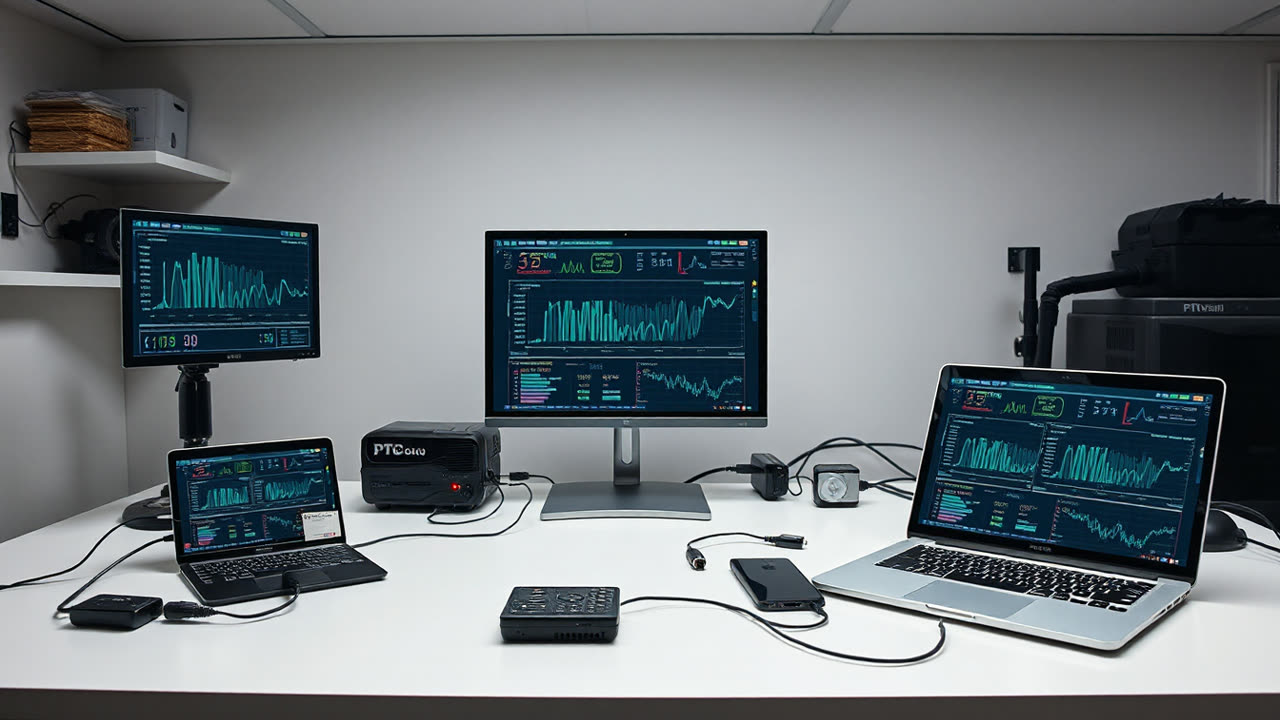
Liquid AI, an MIT spin-off specializing in efficient AI systems, has open-sourced Pipette, a reproducible benchmarking suite that directly addresses the critical gap between theoretical model performance and real-world on-device execution. Released on August 24, 2026, in partnership with Artificial Analysis, Pipette provides a comprehensive, empirically-driven platform for evaluating foundation models on edge devices, moving beyond the often misleading "server-class, full-precision" benchmarks typically reported in model cards. This initiative fundamentally redefines how the industry can assess and optimize AI for the ubiquitous, resource-constrained environments of smartphones, laptops, and other embedded systems.
The core innovation of Pipette lies in its holistic approach: it measures the entire deployed system, considering the intricate interplay of the model, its quantization, the chosen runtime, and the specific hardware. Traditional benchmarks often isolate models, failing to account for the performance degradation and variability introduced by quantization—the process of reducing model precision to fit smaller memory footprints—or the specific efficiencies (or inefficiencies) of different inference runtimes and device architectures. Pipette's initial public dataset, generated under rigorous, lab-verified reproducibility protocols, contains over 1,000 configurations spanning more than 30 models, various quantization formats, `llama.cpp` builds for macOS, iOS, Windows, and Android, and context lengths from 256 to 8,192 tokens. Initial results cover devices like the MacBook Pro with M5 Max, iPhone 17 Pro, and Galaxy S26 Ultra, with AMD Ryzen AI Max+ 395 and Radeon 8060S results anticipated soon. This level of detail, including metrics like prefill and decode throughput, latency, and peak memory usage, coupled with quality evaluations (e.g., using IFBench, GPQA Diamond, MATH-500), offers an unprecedented view into on-device AI performance.
This move by Liquid AI is profoundly significant for several reasons. Firstly, it democratizes access to reliable on-device AI performance data, which has historically been opaque and difficult for developers to obtain. The discrepancy between theoretical model performance and actual on-device behavior has been a major bottleneck for deploying powerful AI in real-world edge settings. By open-sourcing the infrastructure (pipette-mgmt, pipette-clients, pipette-scores) and providing native iOS and Android benchmark apps, Liquid AI empowers everyone from solo developers to large enterprises to accurately benchmark models on their own hardware or leverage the public dataset and interactive dashboard. This transparency fosters informed decision-making, allowing developers to select models and quantization strategies that genuinely meet their application's specific needs for speed, quality, and memory efficiency, rather than relying on generalized server-side metrics. The emphasis on reproducibility, with documented power and cooling setups, readiness checks, and five measured repetitions, directly addresses a pervasive challenge in AI research and deployment, where inconsistencies across different computing environments often lead to irreproducible results.
Comparing Pipette to existing benchmarking efforts reveals its unique value. While platforms like MLPerf provide gold standards for measuring AI hardware and software performance across various tasks, and others like Google AI Edge Portal offer benchmarking across a fleet of Android devices, Pipette's explicit focus on the entire *system* (model, quantization, runtime, *and* device) and its open-source nature for broad community adoption sets it apart. Many current benchmarks are optimized for large, cloud-based models, often failing to accurately reflect the performance of smaller, quantized models on edge devices. Pipette's detailed methodology, including thermal gating to prevent skewed results from device overheating, ensures that benchmarks are not just numbers, but reliable indicators of real-world performance. This contrasts with a landscape where benchmark scores can sometimes be prioritized over thorough insights, leading to "SOTA-chasing" rather than genuine utility.
Looking ahead, Pipette's emergence signals a maturation of the on-device AI ecosystem. As the global on-device AI market is projected to grow from $13.6 billion in 2026 to $75.5 billion by 2033, the demand for precise, reproducible benchmarks will only intensify. The ability to accurately evaluate how AI models perform on devices—critical for privacy, low latency, and offline capabilities—will drive innovation in consumer electronics, automotive, healthcare, and industrial sectors. We can expect Pipette to become a de facto standard, much like how general-purpose AI benchmarks have evolved. Its open-source nature will likely foster a vibrant community, contributing more models, runtimes, and device configurations, thereby expanding its coverage beyond the initial 30+ models and select premium devices. This will be crucial as the diversity of edge hardware, from low-power IoT devices to specialized NPUs in smartphones, continues to proliferate. Furthermore, the integration of community-submitted results, currently in beta, will accelerate the platform's utility and breadth, eventually providing a real-time, comprehensive leaderboard that truly reflects the fragmented yet rapidly advancing world of on-device AI. The future of AI deployment on edge devices hinges on such transparent, reproducible tools that bridge the gap between theoretical potential and practical performance.