LiquidAI Unveils LFM2.5-VL-3B: A Paradigm Shift for Edge AI
LiquidAI's new 3-billion-parameter vision-language model, LFM2.5-VL-3B, redefines on-device AI with unprecedented efficiency and accuracy for edge devices.
✨ This content was summarized and interpreted by AI; it may contain errors — please verify accuracy with the original sources. Learn more
Listen to this story
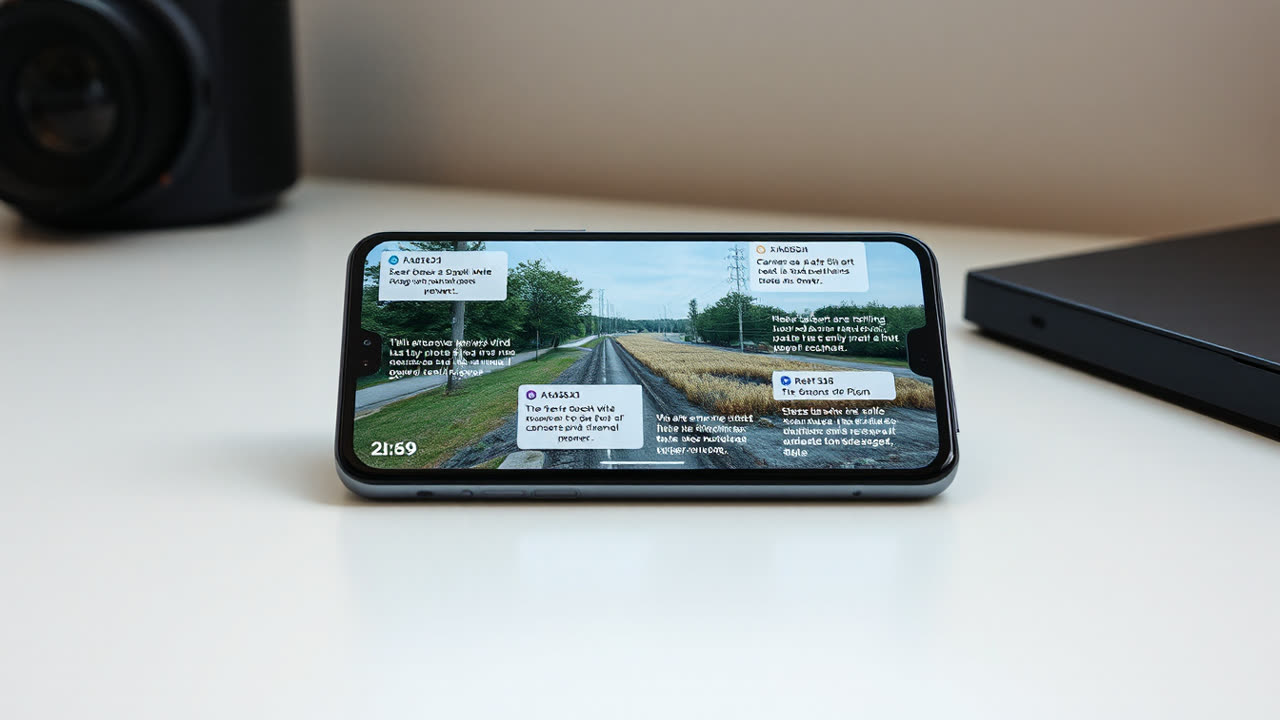
LiquidAI has introduced LFM2.5-VL-3B, a 3-billion-parameter vision-language model (VLM) engineered for superior performance and efficiency on edge devices, marking a significant leap in deploying sophisticated AI capabilities outside the data center. This model, built on the novel Liquid Factor Machines (LFM) architecture, promises to deliver accuracy comparable to larger, more resource-intensive models while operating at substantially faster speeds and lower power consumption, fundamentally altering the landscape for on-device AI applications.
The core innovation lies in Liquid Factor Machines, a paradigm shift from traditional neural network architectures. Unlike standard transformers, LFM models are designed to learn and process information more efficiently, exhibiting "liquid" properties that allow for dynamic adaptation and robust performance even with fewer parameters. This intrinsic efficiency is crucial for edge deployment, where computational power, memory, and energy are severely constrained. LFM2.5-VL-3B specifically targets vision-language tasks, encompassing image captioning, visual question answering, and object recognition, processing visual inputs and generating textual outputs or insights directly on devices like smartphones, drones, autonomous vehicles, and industrial IoT sensors. Its 3-billion-parameter count is substantial for an edge-optimized model, yet it achieves its performance with a smaller footprint and faster inference times than many larger, cloud-dependent counterparts.
The impact on users and industry is profound. For users, LFM2.5-VL-3B enables a new generation of intelligent applications that are more responsive, private, and reliable. Imagine a smartphone camera that can instantly describe complex scenes in natural language, or a smart security camera that can not only detect objects but also understand their context without sending data to the cloud, enhancing privacy and reducing latency. In autonomous systems, such as robotics and self-driving cars, faster and more accurate on-device vision-language processing translates directly into safer and more agile operation, as decisions can be made in milliseconds rather than relying on round-trip communication with remote servers. Industrial applications stand to benefit immensely, with real-time quality control, predictive maintenance based on visual inspections, and enhanced worker safety through immediate environmental understanding. The ability to perform complex VLM tasks locally removes dependencies on internet connectivity, making these applications viable in remote or disconnected environments.
Historically, deploying advanced vision-language models on edge devices has been a formidable challenge. Previous generations of edge AI models, such as MobileNet or YOLO for object detection, were primarily vision-centric and often required significant trade-offs between accuracy and model size/speed. While smaller language models like TinyLlama have emerged, integrating robust vision and language capabilities into a single, efficient edge-deployable package has remained elusive. Larger VLMs like Google's Gemini Nano or Meta's Llama-V models, while powerful, still often require specialized hardware accelerators or are scaled down significantly, sometimes compromising performance. LFM2.5-VL-3B distinguishes itself by offering a more holistic solution, leveraging its unique architecture to achieve high accuracy on complex multimodal tasks without the prohibitive computational demands typically associated with 3-billion-parameter models. This means it can run on general-purpose edge processors or lighter accelerators, broadening its accessibility and reducing deployment costs.
Looking ahead, LFM2.5-VL-3B represents a significant step towards truly ubiquitous and intelligent edge computing. The success of this model is likely to spur further innovation in efficient AI architectures, pushing the boundaries of what's possible on resource-constrained devices. We can anticipate a rapid expansion of multimodal AI applications across various sectors, from personalized assistive technologies that "see" and "understand" the world around a user, to sophisticated environmental monitoring systems that can interpret complex visual and textual data streams in real-time. Future iterations might focus on even smaller parameter counts with similar or improved performance, broader multimodal inputs (e.g., audio integration), or specialized versions optimized for ultra-low-power scenarios. The challenge will be to continue balancing model complexity with the ever-present constraints of edge hardware, but LiquidAI's LFM approach offers a compelling blueprint for how to achieve this without sacrificing critical capabilities. This development not only democratizes advanced AI but also sets a new benchmark for on-device intelligence, paving the way for truly autonomous and context-aware systems.