LiuGong Launches Extensive Battery-Electric Heavy Equipment Lineup in North America
Chinese equipment giant LiuGong has officially launched its extensive battery-electric heavy equipment and material handling portfolio in the United States and Canada, bringing globally validated electric platforms to North American construction and forestry sectors.
✨ This content was summarized and interpreted by AI; it may contain errors — please verify accuracy with the original sources. Learn more
Listen to this story
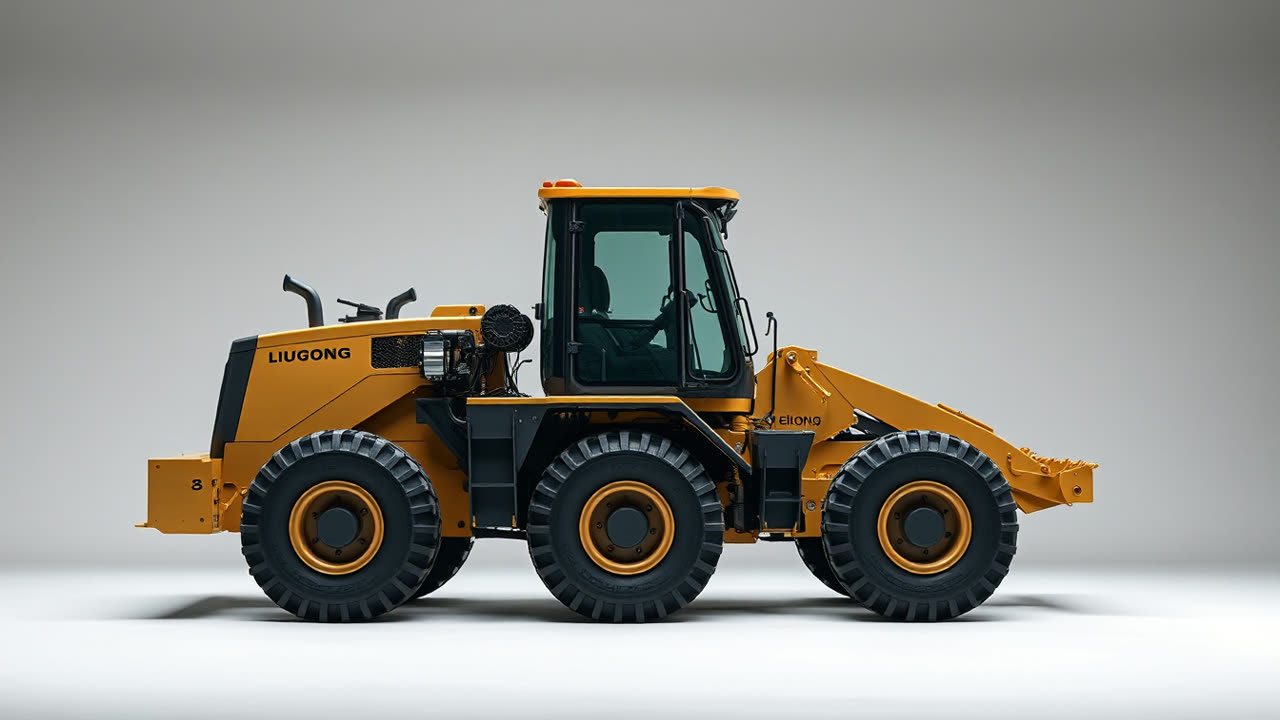
Chinese equipment brand LiuGong has officially launched its extensive battery-electric equipment and material handling portfolio in the United States and Canada, bringing a globally validated electric platform to North American construction and forestry crews. This strategic entry introduces a range of proven heavy electric vehicles (HDEVs), including the 856HE Battery-Electric Wheel Loader, the 820TE Battery-Electric Loader, the 924FE Battery-Electric Excavator, and the LRSE4531E Fully Electric 45-ton Reach Stacker, alongside electric forklifts and warehouse equipment, making it one of the industry’s broadest battery-electric offerings from a single manufacturer. This initial rollout is just the beginning, with additional battery-electric machines slated for release throughout 2027.
LiuGong's foray into the North American market is not an exploratory venture but rather an expansion backed by over 15 years of experience and more than 60,000 electric machines already deployed globally. This extensive real-world operation has provided invaluable data, with one electric wheel loader alone surpassing 20,000 operating hours in continuous production service—roughly a decade or more for many conventional machines. Such a robust track record positions LiuGong as a mature and commercially proven player, mitigating the "early adopter" risk often associated with new technologies. The company has meticulously adapted its equipment to North American charging standards, electrical infrastructure, software requirements, safety certifications, and dealer service practices, ensuring seamless integration into regional operating environments.
The immediate impact on users is substantial, primarily in the realm of operational economics and environmental benefits. LiuGong claims its battery-electric equipment can lower operating costs by 40% to 50% compared to similar diesel-powered machines. These savings stem from reduced energy consumption, fewer service requirements, and simplified maintenance, eliminating the need for engine oil changes, diesel exhaust fluid (DEF), and complex fuel filter replacements. Beyond the financial advantages, the zero-emission nature of these machines directly contributes to decarbonization efforts, fostering healthier job sites by eliminating exhaust fumes and CO2 emissions. Moreover, electric engines are significantly quieter—roughly half as loud as their diesel counterparts—which drastically reduces noise pollution. This quiet operation not only lessens operator fatigue and improves job site communication but also opens up possibilities for extended working hours, including night shifts, in noise-sensitive urban or residential areas where diesel operations are often restricted. The instant torque delivered by electric motors also translates into faster, smoother, and more responsive machine performance, enhancing productivity.
LiuGong's competitive pricing, touted as being below that of rival electric models, is a critical factor that could accelerate adoption across North America. Coupled with a generous warranty of five years or 10,000 operating hours on battery packs and electric motors, the total cost of ownership (TCO) proposition becomes highly attractive for fleet owners and contractors evaluating asset risk and long-term investment. For instance, the 856HE Wheel Loader, powered by a 432kWh LFP battery from CATL, offers 8-10 hours of working time and can be fast-charged in 90 minutes, providing practical runtime for typical shifts. Similarly, the 924FE Excavator, with 423/528 kWh LFP batteries, provides 5-8 hours of runtime and a 1-1.5 hour fast charge. The heavy-duty 39-ton 939FE Excavator, designed for mining and quarrying, boasts a 250kW permanent magnet synchronous motor and can reduce energy consumption by 60-70% compared to its diesel equivalent, with an optional cable-direct drive for continuous operation, effectively eliminating runtime anxiety in fixed applications.
The broader industry context highlights a rapidly expanding market for electric heavy equipment. The global electric construction equipment market, valued at $4.51 billion in 2025, is projected to reach $14.36 billion by 2032, growing at an 18% CAGR. In the U.S. specifically, the market is forecast to grow from 441 units in 2024 to 1,945 units by 2030, at a robust CAGR of 28.06%. This growth is driven by a global transition towards low-emission construction practices, increasing electrification of heavy machinery, and significant government investments and incentives, such as the U.S. EPA's Clean Trucks Plan and the Inflation Reduction Act.
Major competitors are also aggressively expanding their electric portfolios. Volvo CE, a pioneer in the space, already boasts the industry's largest electric lineup, having debuted its mid-size EC230 Electric excavator and L120 Electric wheel loader in North America in May 2025, and upgraded its L20 and L25 compact wheel loaders with North American deliveries starting in late 2022. John Deere, having acquired Kreisel Electric for advanced battery technology, plans to roll out over 20 electric construction equipment models by 2026, including its 145 X-Tier excavator, 310 X-Tier electric backhoe, and 244 X-Tier compact wheel loader prototype. Komatsu is also introducing 20-tonne class electric excavators like the PC200LCE-11 and 210LCE-11 to North America, developed in partnership with Proterra, and offers electric drive mining trucks. Even Case Construction launched its 12EV compact electric wheel loader and 580EV electric backhoe loader in North America in 2024.
LiuGong's entry with a broad and proven portfolio at competitive price points signals a significant intensification of competition in the North American electric heavy equipment market. This will likely push other OEMs to accelerate their electrification strategies, particularly in mid-to-heavy segments, and potentially drive down prices further, benefiting end-users. The primary challenge remains the development of robust charging infrastructure, especially in remote or off-grid construction sites, although portable charging solutions are emerging. As government regulations tighten and sustainability goals become more stringent, the demand for zero-emission alternatives will only grow. LiuGong's move is poised to capitalize on this momentum, solidifying the shift away from traditional diesel power and accelerating the industry's transition towards a quieter, cleaner, and more efficient future.