LiuGong’s 924FE Electric Excavator Poised to Disrupt North American Heavy Equipment Market
LiuGong asserts its 30-ton electric excavator is not merely an alternative but a superior performer to diesel counterparts, a claim customers are soon to evaluate directly.
✨ This content was summarized and interpreted by AI; it may contain errors — please verify accuracy with the original sources. Learn more
Listen to this story
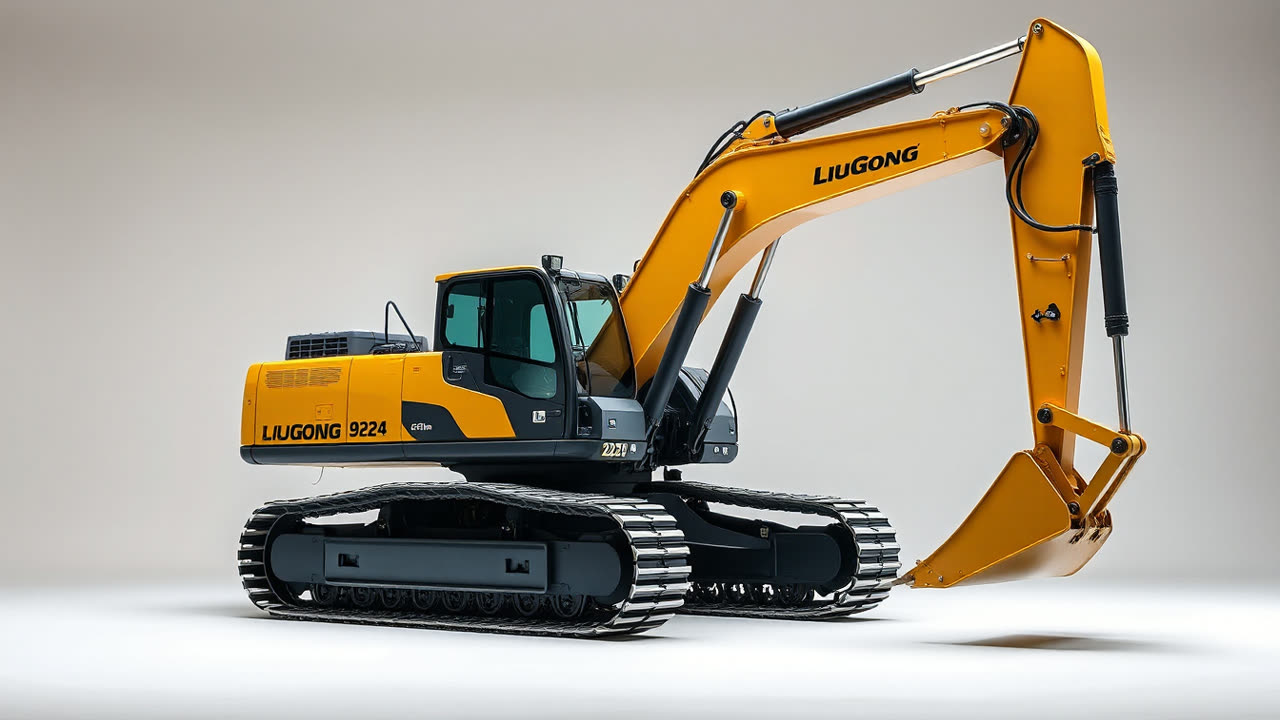
LiuGong’s 924FE, a 30-ton electric excavator, is poised to disrupt the North American heavy equipment market, with the company asserting it is not merely an alternative but a superior performer to its diesel counterparts, a claim customers are soon to evaluate directly. This strategic entry of a robust, zero-emission machine into a critical construction segment underscores a pivotal shift in the industry, moving beyond niche electric offerings to tackle the core demands of large-scale excavation.
The 924FE arrives with an impressive specification sheet, designed to quell skepticism about electric heavy machinery's capabilities. It boasts an operating weight of approximately 24,000 kg (24 metric tons), aligning it squarely with the popular 20-30 ton class traditionally dominated by diesel power. While specific battery capacity and motor output for the North American model remain under wraps, its European debut iterations have featured substantial battery packs, often exceeding 300 kWh, enabling up to 8 hours of continuous operation on a single charge in suitable applications. Crucially, LiuGong has emphasized rapid charging capabilities, with some reports suggesting an 80% charge can be achieved in under an hour with appropriate DC fast charging infrastructure. This addresses a significant hurdle for electric equipment adoption: minimizing downtime on busy job sites. Furthermore, electric powertrains inherently deliver instantaneous torque, promising superior digging force and smoother, more precise hydraulic operations compared to their diesel predecessors, potentially translating into enhanced productivity and reduced operator fatigue.
The implications for users and the industry are profound. For contractors, the 924FE promises significant operational cost reductions. Eliminating diesel fuel consumption, historically a volatile and substantial expenditure, provides immediate savings. Maintenance costs are also projected to decrease dramatically; electric motors have fewer moving parts than internal combustion engines, reducing the need for oil changes, filter replacements, and complex engine diagnostics. This translates into less downtime and a lower total cost of ownership (TCO) over the machine's lifespan, even if the initial purchase price might be higher than a comparable diesel model. Beyond economics, the environmental benefits are undeniable: zero tailpipe emissions contribute to cleaner air on job sites, a growing imperative in urban and environmentally sensitive areas. Reduced noise pollution is another critical advantage, improving communication and safety on site, and allowing for extended operating hours in noise-restricted zones. This could fundamentally alter how and where construction projects are executed, offering a competitive edge to early adopters.
Compared to its rivals, the 924FE enters a nascent but rapidly expanding electric excavator market. While manufacturers like Volvo Construction Equipment, Caterpillar, and Komatsu have introduced electric models, many have focused on smaller, compact excavators (e.g., Volvo's EC15 to EC27 series) or pilot programs for larger machines. LiuGong’s direct entry into the 30-ton class with a production-ready model positions it as a significant contender against established players who are still scaling up their larger electric offerings. Caterpillar, for instance, has showcased electric prototypes in larger classes but has yet to bring a widely available 30-ton electric excavator to market. Hyundai and Sany also have electric models, but the 924FE's imminent widespread availability in North America positions LiuGong to capture significant market share in this crucial mid-to-heavy segment. The prior generation of diesel excavators, while robust and ubiquitous, simply cannot compete on emissions, noise, or the long-term operational cost trajectory that electric machinery now offers.
Looking ahead, the arrival of machines like the LiuGong 924FE signals a critical inflection point for the heavy equipment industry. The immediate challenge for broader adoption will be the development of robust charging infrastructure on construction sites, which often lack the high-power electrical grids necessary for rapid charging multiple heavy machines simultaneously. This will necessitate collaboration between equipment manufacturers, utility providers, and site developers. Furthermore, battery technology continues to evolve, promising greater energy density, faster charging times, and reduced costs, which will further enhance the appeal and feasibility of electric excavators. LiuGong's bold assertion of superiority, rather than mere equivalence, suggests a confidence in current battery and motor advancements that could accelerate the transition away from fossil fuels in construction. The success of the 924FE in North America will likely spur further investment and innovation across the sector, pushing other manufacturers to accelerate their electric portfolios and solidifying electric heavy equipment as not just a viable option, but the preferred choice for a sustainable and efficient future.