Logitech G Blue Yeti 2 Unveiled: AI-Powered Smart Mic Redefines Creator Audio
Logitech's new Yeti 2 USB microphone integrates an intelligent voice proximity sensor and AI denoiser, promising broadcast-quality audio with unprecedented ease for content creators.
✨ This content was summarized and interpreted by AI; it may contain errors — please verify accuracy with the original sources. Learn more
Listen to this story
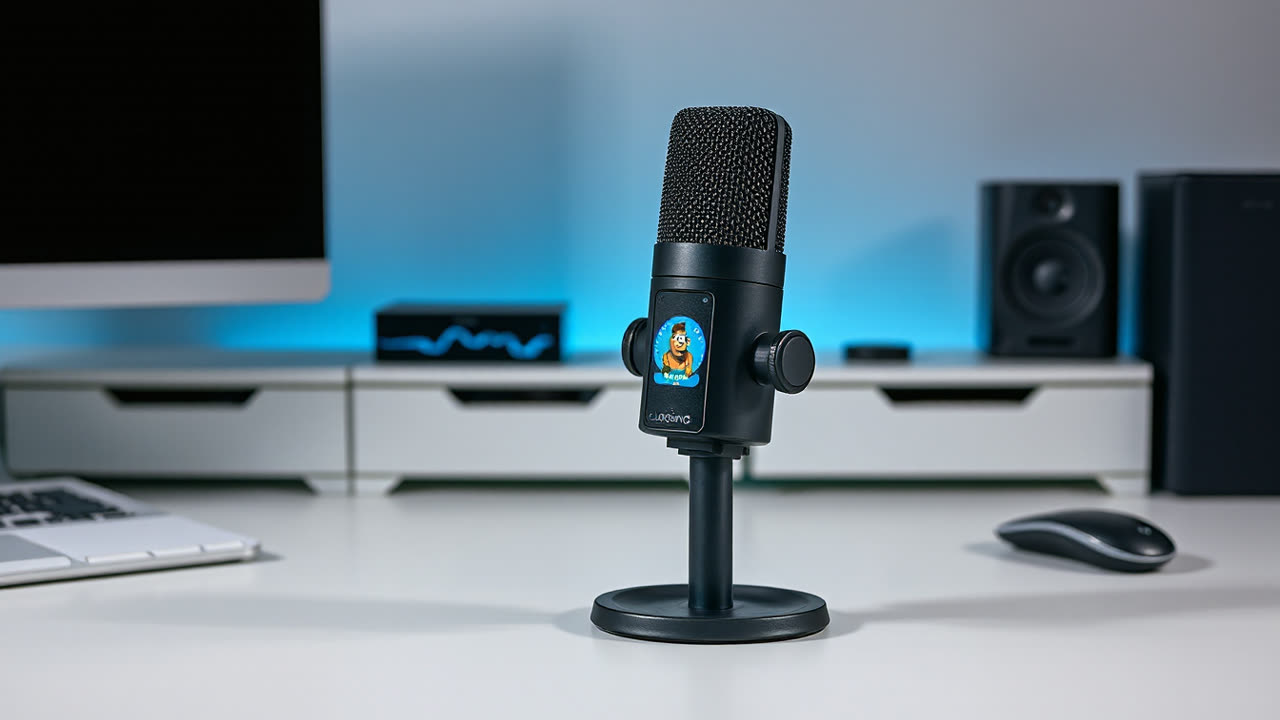
The Logitech G Blue Yeti 2, priced at $159.99, marks a significant technological leap for the venerable USB microphone line, nearly two decades after the original Blue Yeti debuted in 2009. Unveiled at Logitech G PLAY 2026, this reimagined successor integrates advanced features designed to simplify broadcast-quality audio for content creators, streamers, and podcasters. The release comes eight years after Logitech's $117 million acquisition of Blue Microphones in July 2018, a strategic move to enter the burgeoning creator market, with the Blue brand fully integrated into Logitech G by 2023.
The core innovation of the Yeti 2 is its intelligent voice proximity sensor, which tracks a speaker's position in three-dimensional space. This sensor automatically adjusts crucial audio parameters like gain, equalization (EQ), and pickup patterns in real time, ensuring consistent recording quality even as the user moves. This directly addresses a long-standing challenge with the original Yeti, where inconsistent microphone placement could lead to fluctuating audio levels and quality, particularly for novice users. Complementing this, an onboard AI-powered denoiser actively reduces unwanted background sounds, such as mouse clicks, keyboard keystrokes, and computer fan noise, without requiring additional software. The microphone also features a redesigned three-capsule array, 24-bit/48kHz recording capability, multiple directional modes, a headphone jack for direct monitoring, a capacitive mute button, a physical control dial, and five stored presets. A distinctive 1.3-inch color LED display on the front panel houses an animated Yeti mascot, providing visual feedback on gain levels and polar patterns, with custom avatars available through Logitech's G Hub software. The microphone is available immediately in black and white options.
This modernization of the Yeti line holds significant implications for both users and the wider industry. For users, particularly the rapidly expanding demographic of new content creators, the Yeti 2 represents a powerful step towards "idiot-proofed" audio. The automatic adjustments and AI noise reduction drastically lower the barrier to entry for achieving professional-sounding recordings, freeing creators to focus on content rather than complex audio engineering. This ease of use directly supports the boom in podcasting, streaming, and vlogging, where USB microphones have become the preferred choice for their plug-and-play simplicity and high fidelity. The global USB microphone market, valued at $1.52 billion in 2024, is projected to reach $4.07 billion by 2033, growing at a compound annual growth rate (CAGR) of 10.4% from 2025, largely driven by content creation and remote work trends. The Yeti 2's focus on automation aligns perfectly with this market trajectory, appealing to users who want quality without the steep learning curve.
Comparing the Yeti 2 to its predecessor and rivals reveals Logitech's strategic positioning. The original Blue Yeti, launched at $149.99, became an industry staple due to its versatility with four polar patterns and solid build. However, it often required careful placement and manual adjustment to avoid subpar audio. The Yeti 2 directly addresses these pain points, offering a more refined and intuitive experience. While other popular USB microphones like the Rode NT-USB+ (often lauded for its crisp audio and simplicity with a single cardioid pattern) or the Shure MV7 series (starting at $299 and popular among podcasters) offer excellent sound quality, they typically demand more user input or come at a higher price point. The Yeti 2's $159.99 price point, only $10 more than the original Yeti's launch price, makes its advanced features highly competitive. The integration with Logitech G Hub software further enhances its appeal, allowing for deep settings control, community-powered Blue VO!CE profiles, and custom avatar uploads, creating a unified ecosystem for Logitech G users.
Looking ahead, the Yeti 2 signals Logitech's commitment to leveraging AI and smart technology to democratize high-quality audio. The increasing integration of AI in audio production, from noise reduction to automated mixing and mastering, is a clear trend, with assistive AI tools already capable of reducing background noise, separating vocals, and suggesting EQ settings. The Yeti 2's proximity sensor and AI denoiser are early but impactful examples of this trend in consumer hardware, indicating a future where microphones become even more intelligent and self-optimizing. This could lead to further advancements like AI-driven room correction or personalized sound profiles that adapt to individual voices and environments. The USB microphone market itself is evolving, with emerging trends emphasizing deeper integration of AI and machine learning for real-time adaptive beamforming and neural noise suppression, alongside hybrid USB/XLR connectivity. Logitech, by embedding these capabilities directly into the hardware and software experience, is well-positioned to capitalize on this evolution, potentially driving wider adoption of sophisticated audio tools among casual users and further blurring the lines between amateur and professional-grade sound. The success of the Yeti 2 will likely dictate the pace and direction of future innovations in the mainstream USB microphone segment, pushing rivals to integrate similar intelligent features to remain competitive.