LTX-2.5 Reshapes Desktop Video Production with NVIDIA-Accelerated Open Weights Model
LTX-2.5 brings frontier video generation to local NVIDIA hardware, offering 6.8-second multishot clips with open weights and immediate ComfyUI integration, democratizing high-quality AI video creation.
✨ This content was summarized and interpreted by AI; it may contain errors — please verify accuracy with the original sources. Learn more
Listen to this story
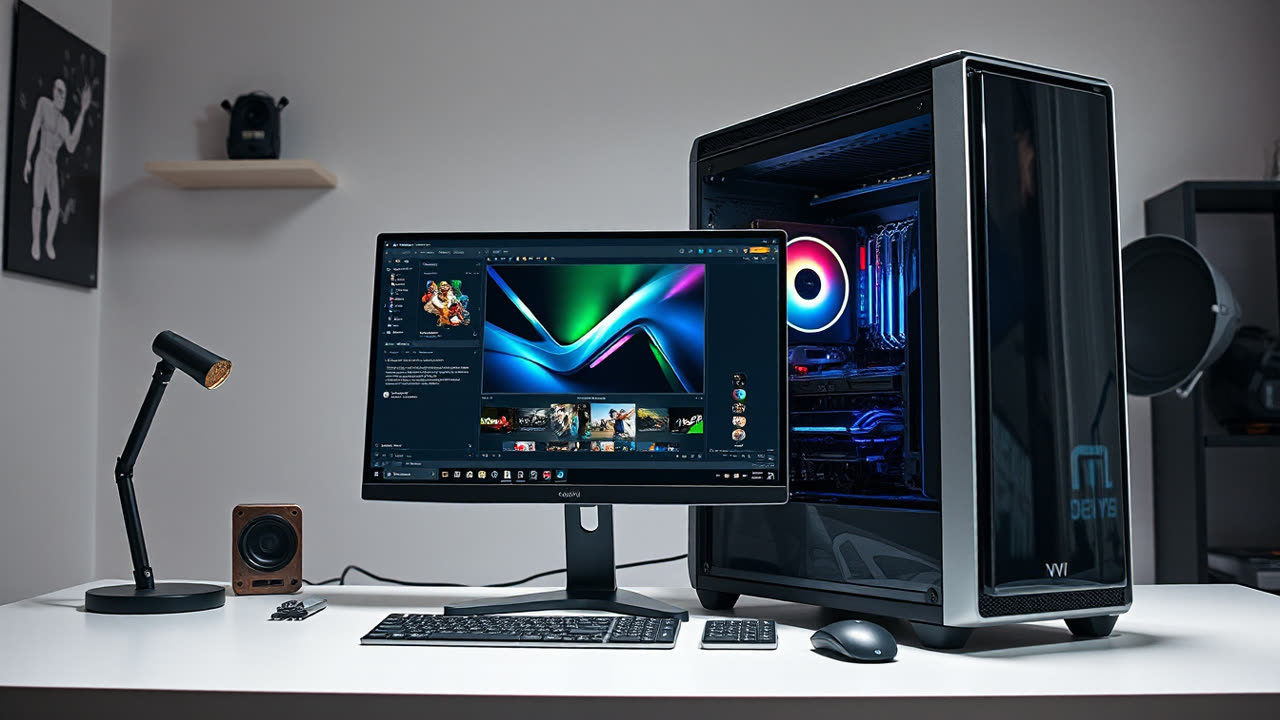
LTX-2.5 has fundamentally reshaped the landscape of desktop video production, launching as an NVIDIA-accelerated open-weights world model capable of generating sophisticated 6.8-second video clips natively supporting multishot compositions, with immediate integration into ComfyUI. This release marks a pivotal moment, shifting frontier video generation from exclusive cloud-based platforms to accessible local NVIDIA hardware, dramatically lowering the barrier to entry for high-quality AI-driven video content creation.
The immediate availability of LTX-2.5 with open weights is a game-changer for independent creators, small studios, and researchers. Unlike proprietary models locked behind APIs and subscription fees, the open-weight nature of LTX-2.5 allows for unprecedented customization, fine-tuning, and integration into existing workflows without vendor lock-in. This fosters innovation by enabling developers to build upon the core model, potentially leading to specialized applications and further advancements that cater to niche requirements. The 6.8-second clip length, while seemingly modest, represents a significant leap for local generation, especially with native multishot capabilities that allow for dynamic scene changes and character interactions within a single prompt, moving beyond static, single-perspective outputs common in earlier models. Its day-one support for ComfyUI, a popular and highly flexible node-based stable diffusion graphical user interface, ensures that users can immediately leverage LTX-2.5's power with a familiar and robust toolkit, streamlining the creative process and reducing the learning curve often associated with new AI models.
The implications for the creative industry are profound. Previously, generating high-fidelity video clips often necessitated access to powerful, expensive cloud computing resources or extensive render farms, placing professional-grade AI video tools out of reach for many. LTX-2.5 democratizes this capability, allowing artists, filmmakers, and marketers to iterate rapidly on their local machines, reducing production cycles and costs associated with cloud rendering. This shift empowers individual creators to experiment more freely, accelerating the adoption of AI video generation as a standard tool in the creative arsenal, much like stable diffusion models transformed image generation. The ability to run these advanced models locally also addresses growing concerns around data privacy and security, as sensitive project data can remain on-premises rather than being uploaded to third-party cloud services.
Comparing LTX-2.5 to its predecessors and current rivals reveals its significant leap. Earlier open-source video generation models often struggled with coherence over longer durations, exhibited flickering artifacts, or were limited to shorter, less complex clips, frequently requiring extensive post-processing. While cloud-based models like OpenAI's Sora or Google's Lumiere have demonstrated impressive capabilities in generating longer, highly realistic videos, they remain closed-source and often operate under a limited access model, making them unsuitable for widespread, independent development and local deployment. LTX-2.5 carves out a unique niche by bringing a comparable level of quality and control, particularly with its multishot feature, to the desktop environment, directly challenging the assumption that cutting-edge video AI must reside exclusively in the cloud. The NVIDIA acceleration is crucial here, leveraging the pervasive power of consumer-grade and professional NVIDIA GPUs to deliver real-time or near real-time generation speeds that were previously unattainable without enterprise-level hardware.
Looking ahead, LTX-2.5 is likely to ignite an intense period of innovation within the video production stack. The open-weights model will undoubtedly inspire a community of developers to create custom extensions, fine-tuned models for specific artistic styles or content types, and further optimize performance on various NVIDIA architectures. We can anticipate rapid improvements in clip length, resolution, and the complexity of narrative structures that can be generated. Furthermore, the success of LTX-2.5 will likely spur other hardware manufacturers to enhance their AI acceleration capabilities, intensifying competition in the GPU market as demand for local AI processing grows. The integration with existing video editing software will become more seamless, moving beyond basic ComfyUI support to direct plugins for professional suites like Adobe Premiere Pro or DaVinci Resolve. The ultimate vision is a future where the entire video production pipeline, from conceptualization and storyboarding to final render, can be significantly augmented, if not largely automated, by AI running efficiently on a single workstation, transforming the economics and creative possibilities of video content creation globally.