Lucid Air UX 3.0 Update Brings Gravity Interface, Charges Older Models $950 for Hardware Upgrade
Lucid's long-awaited UX 3.0 interface, bringing the Gravity SUV's advanced user experience to Air sedans, is rolling out with a controversial $950 hardware upgrade fee for pre-2025 models, potentially alienating early adopters.
✨ This content was summarized and interpreted by AI; it may contain errors — please verify accuracy with the original sources. Learn more
Listen to this story
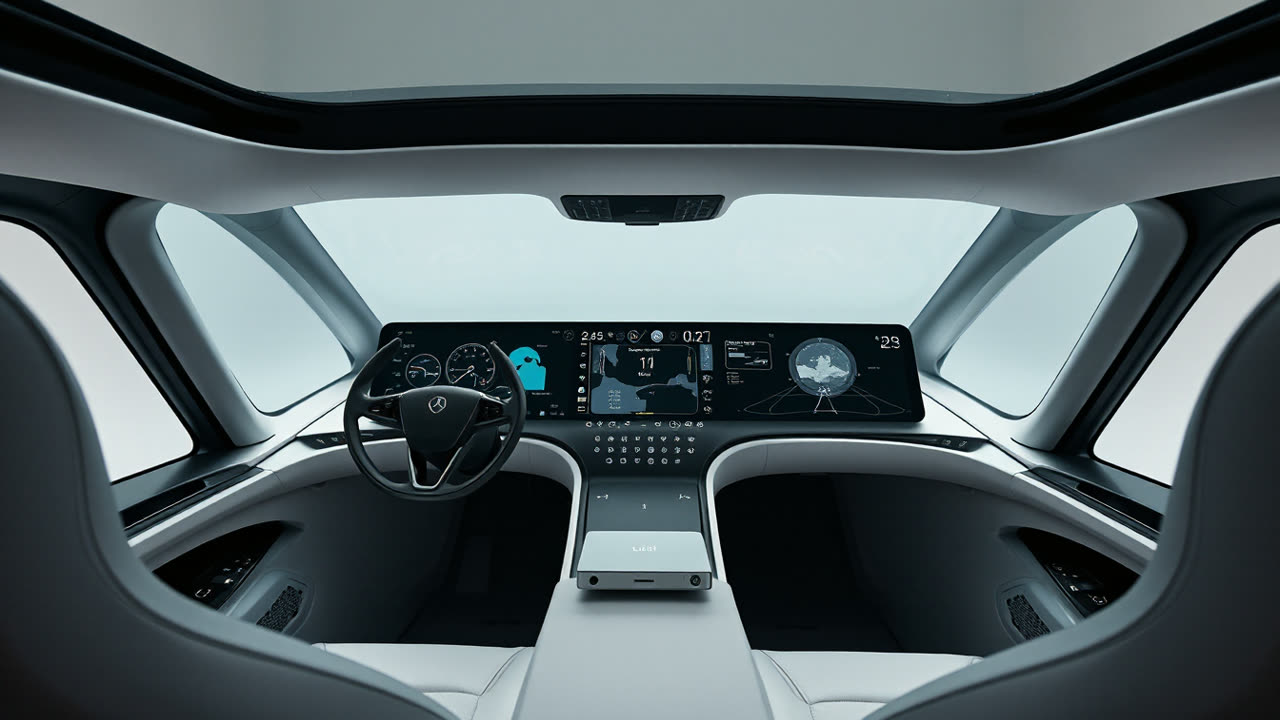
Lucid is finally pushing its long-anticipated UX 3.0 interface to Air sedans as part of the software version 2.11.0 update, marking the most significant overhaul to the Air’s in-car experience in years, yet this critical enhancement comes with a significant caveat: owners of 2025 models and newer will receive the upgrade free over-the-air, while those with older Airs must pay $950 for a hardware upgrade to access the new features. This tiered rollout, confirmed by Electrek, immediately casts a shadow over an otherwise positive development, potentially alienating early adopters who championed the brand. The $950 charge, reportedly necessary for a new hardware module to support the more demanding graphics and processing of UX 3.0, highlights a growing challenge in the software-defined vehicle era: maintaining feature parity across vehicle generations without incurring substantial costs or forcing hardware refreshes on consumers.
The core news is Lucid's commitment to delivering the user experience first showcased in its forthcoming Gravity SUV to its flagship Air sedan. UX 3.0 represents a substantial leap from previous iterations, focusing on a more intuitive, visually rich, and responsive interface. Key enhancements are expected to include redesigned menus, improved navigation, more customizable layouts for the Glass Cockpit and Pilot Panel displays, and potentially a more robust app ecosystem. The Gravity's interface, lauded for its sleek aesthetics and intelligent organization during its initial reveals, promises to streamline access to vehicle controls, infotainment, and advanced driver-assistance features, aiming to reduce driver distraction and enhance overall usability. This move is crucial for Lucid, as a premium EV brand, to match the sophisticated software experiences offered by rivals, where in-car technology is as vital a selling point as performance or range.
Why this matters fundamentally reshapes the user experience for Lucid Air owners and sets a precedent for the industry. For existing owners, the upgrade addresses a persistent criticism of the Air’s earlier software, which, while functional, often felt less polished and responsive than the vehicle’s hardware suggested. The previous UX, while innovative in its dual-screen approach, sometimes suffered from menu complexity and occasional lag, shortcomings that UX 3.0 aims to rectify with a more fluid and modern design language. The improved interface is not merely cosmetic; it directly impacts daily interactions, from adjusting climate control to utilizing advanced navigation features and managing charging profiles. A truly premium vehicle experience demands seamless software integration, and UX 3.0 is Lucid’s answer to this imperative.
From an industry perspective, Lucid’s decision to charge older owners for a software-driven upgrade necessitating new hardware is a double-edged sword. On one hand, it underscores the increasing hardware requirements for advanced software features, a reality that other automakers might soon face as vehicle technology rapidly evolves. Maintaining backward compatibility for ever-more complex software without hardware refreshes becomes increasingly difficult and costly. On the other hand, it risks consumer backlash, particularly from early adopters who often pay a premium for new technology and expect ongoing software improvements without additional significant outlays. Tesla, for instance, has largely provided software updates across its fleet for free, though hardware upgrades for features like Full Self-Driving have occasionally required payment. Mercedes-Benz's MBUX Hyperscreen, while hardware-intensive, is typically a factory option rather than a post-purchase upgrade with an additional fee for existing vehicles. The $950 charge for the Lucid Air could be perceived as a penalty for early adoption, contrasting sharply with the expectation of continuous improvement in the software-defined vehicle era.
Comparing UX 3.0 to its rivals, Lucid is clearly aiming for a top-tier experience. Tesla’s minimalist interface, while iconic, has faced criticism for burying essential controls within touchscreens. Porsche’s PCM (Porsche Communication Management) system offers a blend of physical controls and digital interfaces, prioritizing driver engagement. Mercedes-Benz’s MBUX, particularly the Hyperscreen in its EQS, sets a high bar for visual fidelity and intuitive voice control. Lucid’s UX 3.0, by inheriting elements from the Gravity, is expected to offer a more visually engaging and dynamically laid-out interface, potentially rivaling the best in terms of responsiveness and aesthetic appeal. The true test will be its long-term stability and the breadth of its app ecosystem, areas where some competitors still hold an advantage.
Looking ahead, the rollout of UX 3.0 is a pivotal moment for Lucid. Successfully integrating this advanced interface into the Air lineup is critical not only for current customer satisfaction but also for the successful launch and perception of the Gravity SUV. A seamless, high-quality user experience across both models will reinforce Lucid’s brand image as a leader in luxury EV innovation. The company will likely need to refine its communication strategy regarding paid hardware upgrades for future software enhancements to avoid further friction with its customer base. Furthermore, the industry will be watching to see if this trend of charging for hardware-dependent software upgrades becomes more widespread. Lucid’s next steps will likely involve expanding the features and capabilities of UX 3.0, potentially through over-the-air updates that introduce new applications, further personalization options, and deeper integration with smart home and mobile ecosystems. The long-term success of Lucid's software strategy will hinge on its ability to deliver continuous innovation while balancing the economic realities of hardware evolution with customer expectations for a consistently premium experience.