Lunacy Audio's Nova Democratizes AI Music Plugin Development
Lunacy Audio's Nova platform empowers creators to design, build, and monetize their own AI-powered music plugins, fundamentally shifting music software development.
✨ This content was summarized and interpreted by AI; it may contain errors — please verify accuracy with the original sources. Learn more
Listen to this story
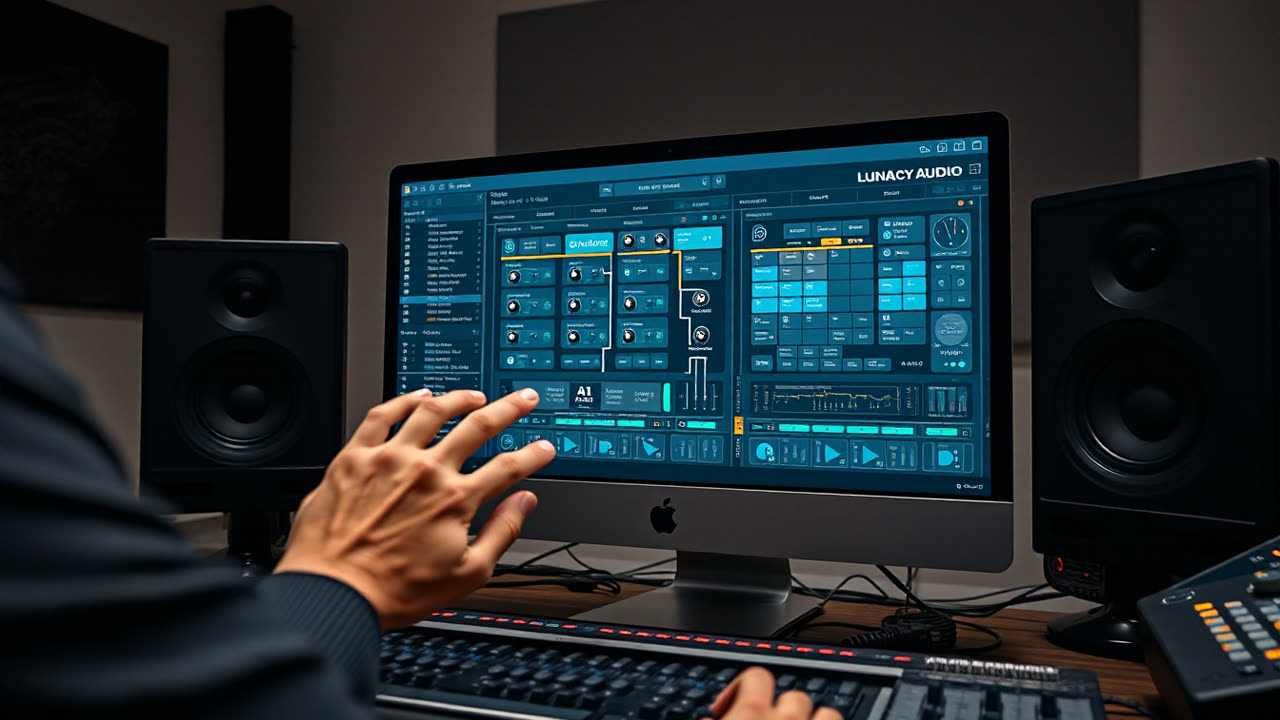
Lunacy Audio has fundamentally shifted the paradigm of music software development with the launch of Nova, a platform empowering creators to design, build, and monetize their own AI-powered music plugins. This innovative ecosystem extends beyond merely offering AI tools; it democratizes the very creation of AI-driven instruments and effects, allowing developers to leverage Lunacy's proprietary AI models, including its "AI audio engine," to craft highly personalized sound generation and processing tools. The platform initially launched with a free tier, allowing users to experiment with building plugins, alongside a paid "Pro" subscription at $19.99 per month or $199.99 annually, which unlocks advanced features such as unlimited plugin exports, commercial usage rights, and integration with external tools via MIDI and OSC. This move positions Nova not just as a marketplace, but as a comprehensive development environment, potentially fostering an unprecedented surge in bespoke, intelligent audio tools.
The significance of Nova extends far beyond a new product launch; it represents a pivotal moment for both individual music producers and the broader music technology industry. For independent artists and sound designers, Nova offers an unparalleled opportunity to transcend the limitations of off-the-shelf plugins, enabling them to actualize unique sonic visions that were previously constrained by a lack of coding expertise or access to advanced AI research. Imagine a producer needing a reverb that precisely emulates the acoustics of a specific, obscure historical concert hall, or a distortion unit that intelligently adapts its harmonics based on the input instrument's timbre – Nova makes the creation of such hyper-specific, AI-driven tools feasible. This could lead to a proliferation of highly specialized plugins catering to niche genres and creative workflows, fostering greater sonic diversity and individuality in music production. Furthermore, the ability to sell these custom-built plugins through Nova's marketplace creates a new revenue stream for creative individuals, transforming users from mere consumers into active innovators and entrepreneurs within the music tech space.
For the music technology industry, Nova challenges established business models and development pipelines. Historically, creating advanced audio plugins, especially those incorporating cutting-edge AI, required significant investment in R&D, specialized engineering teams, and deep knowledge of DSP (Digital Signal Processing) and machine learning. Companies like Native Instruments, Waves, and iZotope have dominated this landscape through their extensive resources and proprietary technologies. Nova, however, effectively "no-codes" much of this complexity, abstracting the underlying AI and DSP into an accessible interface. This could level the playing field, allowing smaller studios and even individual developers to compete with larger entities in terms of innovative functionality, if not raw processing power. While Lunacy Audio itself is known for innovative plugins like Cube, a synthesizer controlled by navigating a 3D space, Nova represents a strategic pivot from merely selling unique tools to selling the *means* of creating unique tools. It shifts the value proposition from proprietary algorithms to a platform that empowers collective innovation. This could force established developers to rethink their own strategies, potentially leading to more open development environments, partnerships with independent creators, or a renewed focus on hardware integration and deeply integrated ecosystems to maintain their competitive edge.
Comparing Nova to existing solutions highlights its unique position. While platforms like Splice offer subscription-based access to a vast library of samples and some plugins, and marketplaces like Plugin Boutique facilitate the sale of traditional VSTs, none provide an integrated environment for *building* AI-powered plugins without extensive coding. Similarly, general-purpose AI music generation tools like Google's Magenta Studio or various text-to-music models focus on generating entire compositions or musical elements, rather than empowering users to craft custom, intelligent instruments and effects for their DAWs. Nova stands out by combining the accessibility of a visual development environment with the power of advanced AI models, specifically tailored for real-time audio processing within a plugin format. Its modular design, utilizing nodes and connections for defining signal flow and AI behaviors, offers a level of customization typically reserved for experienced programmers.
Looking ahead, Nova's trajectory could redefine the landscape of music production software. The platform's success will hinge on its ability to attract a critical mass of both creators and buyers, fostering a vibrant ecosystem. Future developments could include deeper integration with popular DAWs, more sophisticated AI models capable of learning user preferences or adapting to specific musical contexts, and perhaps even collaborative plugin development features. The "AI audio engine" at Nova's core, which allows for dynamic sound generation and manipulation, holds immense potential for evolution, moving beyond pre-trained models to systems that can be trained on user-supplied audio data, leading to truly personalized AI instruments. However, challenges remain, including ensuring the quality and stability of user-created plugins, managing intellectual property rights for AI-generated components, and maintaining a balance between accessibility and advanced functionality. The long-term impact could be a move towards a more fluid, adaptive, and highly personalized music production experience, where the tools themselves are as creatively driven and unique as the music they help create, fundamentally altering how artists interact with technology to shape sound.