macOS 27 Golden Gate Rolls Out with Reimagined Siri AI and Apple Silicon Exclusivity
Apple's latest macOS iteration, Golden Gate, fundamentally redefines the desktop experience by integrating a powerful, context-aware Siri AI, powered by Apple Intelligence and Google's Gemini models, while simultaneously ending support for Intel-based Macs.
✨ This content was summarized and interpreted by AI; it may contain errors — please verify accuracy with the original sources. Learn more
Listen to this story
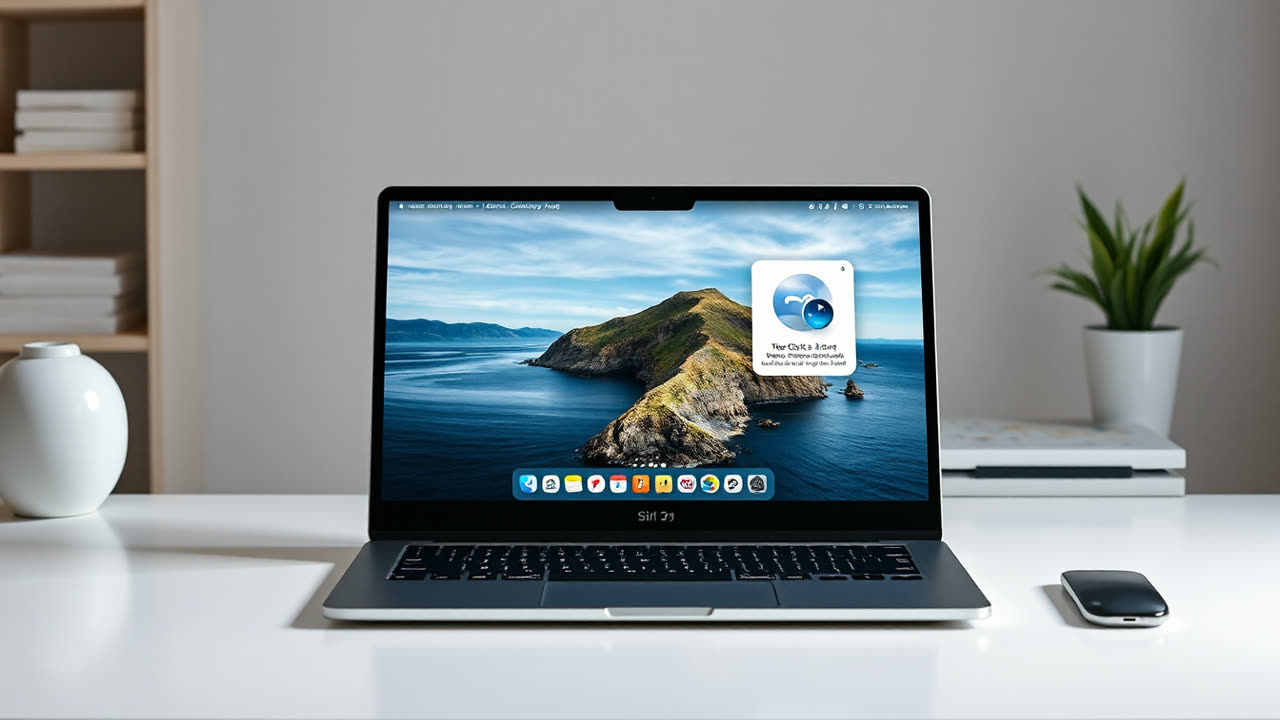
Apple has officially rolled out macOS 27 Golden Gate, a pivotal release launched to the public on September 14, 2026, following its announcement at WWDC 2026 on June 8, 2026. This iteration marks a profound shift for Apple’s desktop operating system, headlined by a comprehensive reintroduction of Siri, now powered by Apple Intelligence and notably, integrating Google's Gemini models for enhanced capabilities.
This isn't merely an update; it's a strategic re-envisioning of how artificial intelligence integrates into the everyday computing experience. The new Siri AI is designed to be an entirely more personal, capable, and conversational assistant, moving far beyond the often-criticized, somewhat rudimentary voice commands of its predecessors. Users can now engage in natural, back-and-forth dialogues, and Siri demonstrates an unprecedented understanding of personal context, drawing information from emails, messages, photos, and even what is currently displayed on screen. This on-screen awareness is particularly powerful, allowing users to invoke Siri with Command-Shift-Space to query or act upon any selected region of their display, whether it's an image, a PDF, or text. Furthermore, Siri can now execute actions across a wide array of applications, including Messages, Music, and Reminders, streamlining workflows directly through voice or text input. The integration extends to Spotlight, transforming it into a unified "Search or Ask" bar where users can seamlessly switch between searching local files and engaging with Siri AI. A dedicated Siri app, syncing conversations across all Apple devices, ensures continuity and provides a centralized hub for interactions. For text generation and refinement, a "Write with Siri" feature offers drafting and editing suggestions virtually anywhere text can be entered. Accessibility is also enhanced, with VoiceOver leveraging Apple Intelligence for richer image descriptions and the ability to ask follow-up questions.
The significance of Golden Gate extends beyond Siri's overhaul. It fundamentally redefines Apple’s approach to AI, emphasizing an "invisible" integration where intelligence is woven into the operating system itself, rather than existing as a separate application. This "Apple Intelligence" umbrella brand prioritizes on-device model inference for privacy, employing "Private Cloud Compute" for tasks requiring more processing power with verifiable guarantees that no user data persists on Apple's servers. This privacy-first stance is a crucial differentiator in a competitive AI landscape, aiming to build user trust by keeping sensitive data local whenever possible. The decision to integrate Google's Gemini models for Siri AI capabilities, while maintaining Apple's privacy architecture, underscores a pragmatic strategy to leverage best-in-class AI models without compromising core principles.
This release also marks a significant hardware inflection point: macOS 27 Golden Gate runs exclusively on Apple silicon Macs (M1 chip or later), definitively ending support for Intel-based Macs. While Intel Macs compatible with macOS 26 Tahoe will receive security updates until 2029, they will no longer gain new OS features, forcing a substantial portion of the user base to consider upgrading. Specifically, the full Siri AI experience requires an Apple Silicon Mac with at least 12GB of RAM. This strategic move reinforces Apple's commitment to its proprietary silicon, optimizing performance and efficiency for AI tasks, and will inevitably accelerate the adoption of newer hardware.
In terms of user experience, Golden Gate refines the "Liquid Glass" design language introduced in macOS 26 Tahoe, addressing previous criticisms. It offers a new transparency slider, allowing users to customize the visual depth from ultra-clear to fully tinted. Uniform toolbars, edge-to-edge sidebars, updated window shapes, and colorful sidebar icons contribute to a more polished and consistent aesthetic, aiming for enhanced readability and visual coherence. Beyond aesthetics, performance improvements are widely noted, with faster AirDrop transfers, quicker network file browsing, improved Safari loading times, more efficient Mail search, and generally smoother system animations. New parental controls, including "Ask to Browse" for Safari and expanded Communication Safety, offer robust tools for managing children's digital interactions. Photo editing tools also see a boost with "Spatial Reframing," an "Extend" tool, and enhanced "Clean Up" for distraction removal.
Compared to its immediate predecessor, macOS 26 Tahoe, which primarily focused on the Apple Silicon transition and laid the groundwork for Liquid Glass, Golden Gate is a more feature-rich and refined release, particularly in its AI capabilities and design polish. Against rivals like Windows 11, Apple's AI strategy distinguishes itself by emphasizing deep OS integration and privacy, contrasting with Windows' focus on personalized AI agents and broader platform connectivity. While some analysts argue Windows 11 currently offers more for gaming and diverse mobile platform integration, Golden Gate's seamless, privacy-centric AI could sway users prioritizing productivity and ecosystem coherence.
Looking ahead, macOS 27 Golden Gate represents merely the genesis of a more profound AI integration. The current Siri AI, still in beta and rolling out in English with a waitlist, is poised to evolve into an even more contextual, always-on assistant, potentially leading to advanced chatbot capabilities. Apple's ongoing investment in its Foundation Models and App Intents frameworks will empower developers to harness Apple Intelligence more deeply, fostering a new generation of intelligent applications. The strict hardware requirements for Siri AI underscore a future where Apple Silicon chips are increasingly optimized for sophisticated on-device AI processing, potentially paving the way for new form factors like AI-powered smart glasses, rumored as a key device for 2026. This release solidifies Apple's ecosystem, offering compelling reasons for users to remain within its walled garden while simultaneously challenging the broader tech industry to match its blend of seamless integration, powerful AI, and unwavering commitment to user privacy.