Marco Arment Launches Unforgetful: A Relentless Reminder App for the Chronically Forgetful
Independent developer Marco Arment has launched Unforgetful, a new task-management app designed to fundamentally alter how users interact with reminders by making them impossible to ignore.
✨ This content was summarized and interpreted by AI; it may contain errors — please verify accuracy with the original sources. Learn more
Listen to this story
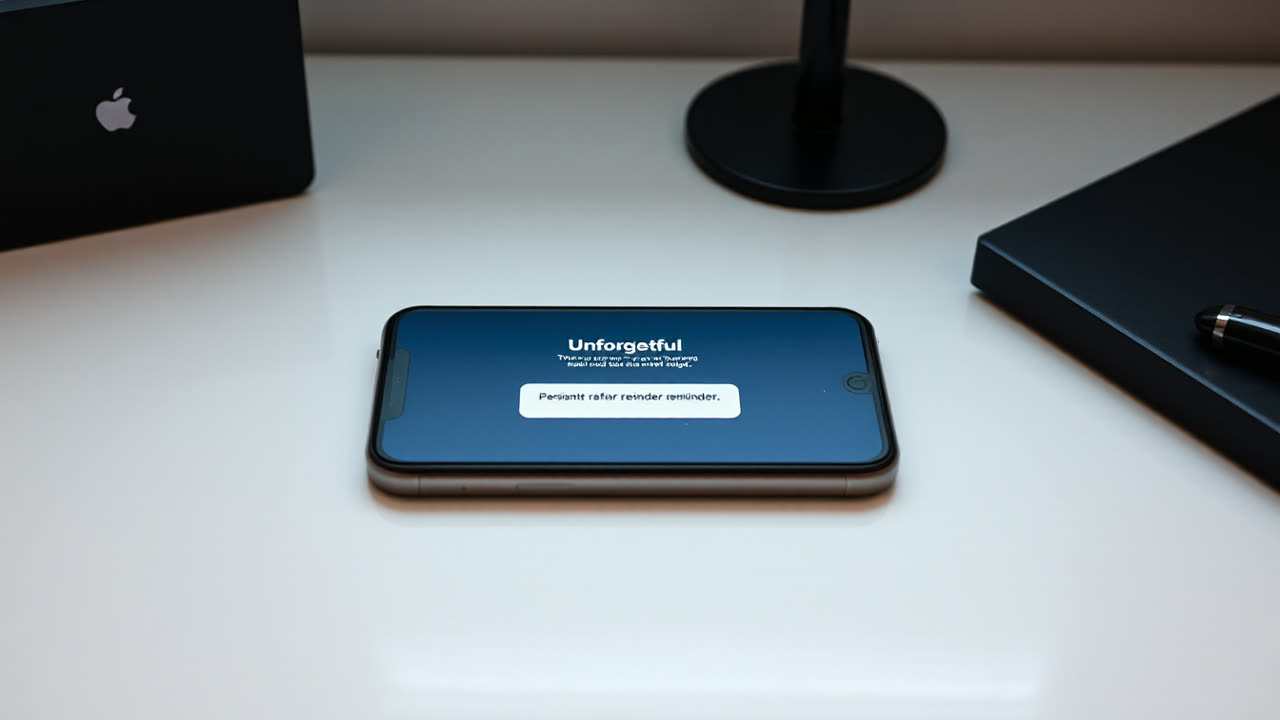
Marco Arment, the independent developer renowned for crafting essential apps like Overcast and Instapaper, has launched Unforgetful, a new task-management application designed to fundamentally alter how users interact with reminders, particularly those who habitually dismiss or snooze alerts. Available across iPhone, iPad, and Mac, Unforgetful distinguishes itself by integrating directly with Apple's native Reminders database, providing a persistent, "impossible to lose" notification system without requiring users to migrate their existing tasks. The app is priced at $19.99 per year, offering a one-month free trial to experience its unique approach to combating procrastination and forgetfulness.
The core innovation of Unforgetful lies in its relentless, yet thoughtful, notification strategy. Unlike standard reminder apps where dismissed alerts often vanish permanently, Unforgetful ensures notifications repeat until a task is explicitly completed or deleted. This persistent nudging is complemented by adaptive snooze intervals that intelligently scale as a user repeatedly postpones a task, moving beyond fixed, often ineffective, snooze options. Arment, who describes the concept as "Reminders for ADHD," built the app to address personal frustrations with Apple's built-in system, specifically the silent disappearance of tasks without alerts, the non-return of dismissed notifications, and the inadequacy of standard snooze timings. Furthermore, Unforgetful intelligently spaces out multiple simultaneous notifications to prevent overwhelming users and delays location-based reminders until a few minutes *after* arrival, acknowledging that immediate alerts upon reaching a destination are often forgotten amidst settling in.
Unforgetful's impact on users could be profound, particularly for the estimated 56% of people who frequently hit the snooze button, often averaging 11 extra minutes of fragmented sleep. Psychological studies indicate that repeatedly snoozing alarms disrupts natural sleep cycles, leading to "sleep inertia" – a state of grogginess and impaired cognitive performance that can persist for hours. While snoozing might offer a fleeting sense of comfort or a temporary reprieve from responsibilities, it ultimately postpones stress and diminishes overall sleep quality, affecting focus, mood, and productivity. Unforgetful directly confronts this behavioral loop by making reminders unavoidable, forcing a conscious decision rather than a passive dismissal. By eliminating "overdue" labels and complex organizational structures like folders or tags, the app adopts a non-judgmental stance, framing tasks as either "due now or in the future," thereby reducing the mental burden and shame often associated with unfinished obligations. This minimalist design, coupled with quick task capture via dictation through Siri or an in-app microphone, aims to lower the barrier to both creating and acting on reminders.
For the broader tech industry, Unforgetful represents a significant development in the highly competitive productivity app market. While numerous apps, such as Todoist, Things 3, and even Apple's own Reminders, offer robust task management features, few prioritize the aggressive anti-snooze philosophy central to Unforgetful. Arment's reputation for user-centric design, previously demonstrated with the popular podcast player Overcast and the read-it-later service Instapaper, lends considerable weight to Unforgetful's potential to redefine expectations for reminder efficacy. His choice to build upon Apple's existing Reminders database is a strategic move, leveraging Siri integration and seamless data flow without requiring users to abandon their current system or learn an entirely new one. This approach could inspire other developers to create specialized "layers" over native system apps, enhancing functionality for niche user needs rather than building entirely separate ecosystems. It also puts pressure on major platform holders like Apple to consider integrating more robust, user-behavior-aware notification and reminder systems into their default offerings.
Looking ahead, Unforgetful's success will hinge on its ability to strike a delicate balance between persistence and intrusiveness. While its "nagging" features are designed to be effective, some users might find them overly aggressive, potentially leading to app fatigue or even uninstallation if not carefully managed. Future iterations could explore customizable levels of persistence or more nuanced feedback mechanisms to cater to varying user tolerances. The current focus on Apple's ecosystem leaves a significant portion of the smartphone market untouched, suggesting a potential future expansion to Android, although Arment's historical focus has been on Apple platforms. Ultimately, Unforgetful is more than just another reminder app; it's a direct challenge to the ingrained habit of digital dismissal, offering a compelling vision for how software can genuinely help users overcome procrastination and regain control over their daily tasks in an increasingly distracting digital landscape. Its ability to cultivate new, more effective reminder habits could set a new benchmark for personal productivity tools.