Mercedes-Benz Partners with Wayve to Integrate AI Driver in Future Vehicles
Mercedes-Benz has signed a landmark production agreement to embed British startup Wayve's end-to-end 'AI Driver' into its mass-produced vehicles within two years, signaling a major industry shift towards data-driven autonomous driving.
✨ This content was summarized and interpreted by AI; it may contain errors — please verify accuracy with the original sources. Learn more
Listen to this story
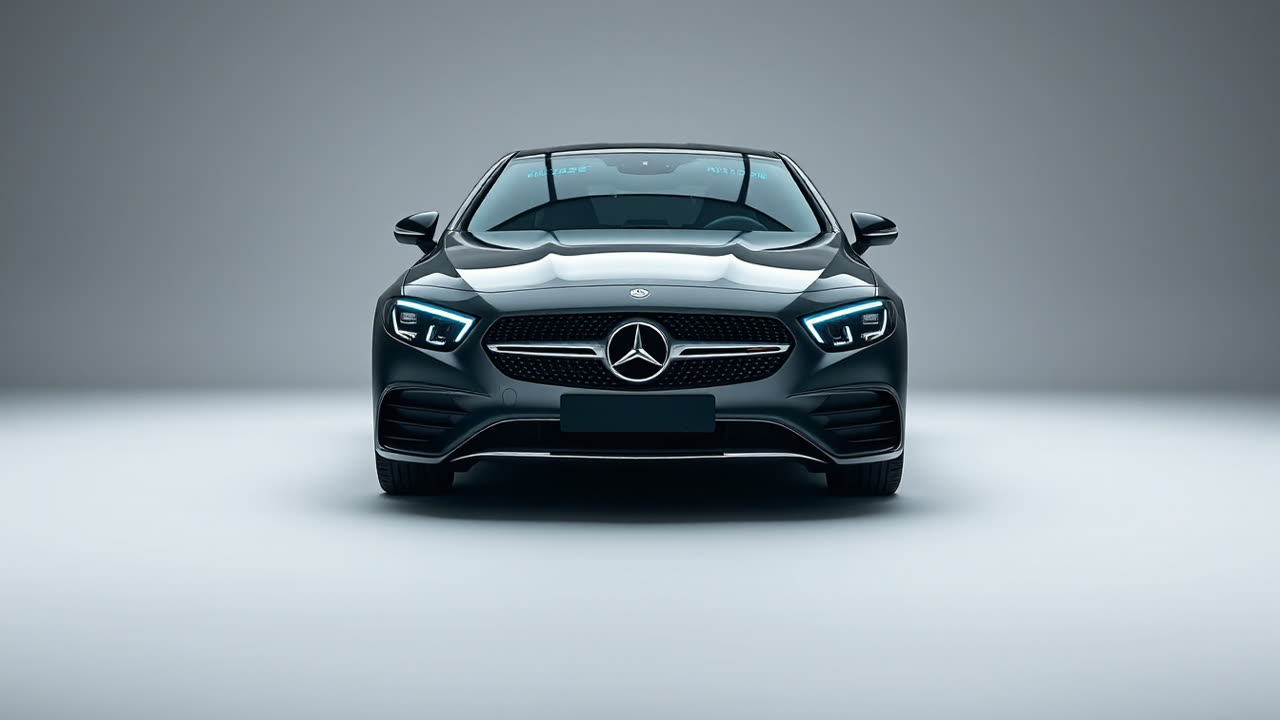
Mercedes-Benz has signed a definitive production agreement to integrate British self-driving startup Wayve’s "AI Driver" into its future vehicles within the next two years, marking the first time Wayve's end-to-end AI system will be deployed in mass production. This strategic partnership represents a significant pivot for Mercedes-Benz, which has previously invested heavily in traditional, rules-based autonomous driving systems, and signals a growing industry confidence in AI-first approaches to Level 2+ and potentially Level 3 autonomy. The integration will leverage Wayve's novel approach, which learns to drive directly from real-world data using a single neural network, bypassing the need for extensive hand-coded rules or high-definition maps for every route, a fundamental shift from many existing systems.
This collaboration is not merely an incremental upgrade but a foundational architectural shift, holding profound implications for both users and the broader automotive industry. For consumers, the promise is a more adaptable and robust autonomous driving experience, capable of handling diverse and unpredictable road conditions with greater proficiency than systems reliant on pre-mapped environments or explicit programming for every scenario. Wayve's AI, trained on vast quantities of real-world driving data, aims to develop a more human-like intuition for driving, potentially leading to smoother, more natural interactions and a higher degree of reliability in complex urban environments where traditional systems often struggle. The "within two years" timeline suggests that consumers could see these advanced capabilities in new Mercedes models as early as late 2028 or early 2029, potentially offering a competitive edge over rivals still refining less flexible solutions.
Industrially, this deal validates the end-to-end AI paradigm championed by companies like Wayve and, notably, Tesla, which has long pursued a vision of autonomous driving powered by neural networks trained on fleet data. Mercedes-Benz, a stalwart of automotive engineering and a pioneer in Level 3 conditional autonomy with its DRIVE PILOT system in specific markets, is now explicitly endorsing a data-driven, learning-based approach as a core component of its future mobility strategy. While DRIVE PILOT offers true Level 3 capability under limited conditions, such as congested highways below 40 mph, Wayve's technology targets a more expansive operational design domain by continuously learning and adapting. This move could accelerate the industry's shift away from sensor-rich, rules-heavy systems that are expensive to scale and maintain, towards more software-defined vehicles where AI models are the primary drivers of autonomous function. The partnership also underscores the increasing trend of legacy automakers collaborating with agile AI startups to leapfrog development cycles and access cutting-edge software expertise.
Compared to rivals, Mercedes-Benz's adoption of Wayve’s AI Driver positions it more directly against the likes of Tesla's Full Self-Driving (FSD) Beta, which also relies heavily on an end-to-end neural network architecture to perceive and react to driving environments. While Tesla has faced scrutiny and regulatory challenges regarding its FSD capabilities and nomenclature, its continuous over-the-air updates and large data collection fleet provide a significant advantage in training its AI. Wayve, however, distinguishes itself with a focus on generalizable AI that can quickly adapt to new geographies and unseen scenarios, a critical hurdle for global deployment. Traditional players like Waymo and Cruise, while achieving high levels of autonomy in geofenced areas, still predominantly utilize highly detailed maps and extensive sensor arrays, leading to slower expansion and higher operational costs. Mercedes-Benz's move with Wayve could offer a path to broader, more cost-effective deployment of advanced autonomous features, potentially bridging the gap between limited Level 3 systems and the ambitious, but often geographically constrained, Level 4/5 robotaxis.
Looking ahead, this partnership suggests a future where vehicle intelligence is less about pre-programmed responses and more about continuous learning and adaptation. The success of Wayve's AI Driver integration will largely depend on its ability to scale robustly across different Mercedes-Benz vehicle platforms and global regulatory landscapes. Further advancements will likely focus on refining the AI's decision-making in edge cases, enhancing its ability to predict human behavior, and ensuring seamless human-machine interaction during transitions of control. The "within two years" timeline implies an aggressive development and validation schedule, potentially leading to a broader rollout of Wayve-powered features beyond initial high-end Mercedes models. This collaboration could also spur further consolidation or strategic alliances within the autonomous driving sector, as other automakers seek to secure similar AI-first capabilities to remain competitive. Ultimately, this deal is a strong indicator that the future of automotive autonomy will be profoundly shaped by sophisticated, data-driven artificial intelligence, moving beyond incremental improvements to fundamentally reimagine how cars perceive and navigate the world.