Meta AI Launches Dedicated macOS App, Targets Professional Users
Meta AI has launched a dedicated desktop application for macOS, integrating its advanced Llama 3 model directly into the Apple ecosystem to target professional users and compete for AI desktop dominance.
✨ This content was summarized and interpreted by AI; it may contain errors — please verify accuracy with the original sources. Learn more
Listen to this story
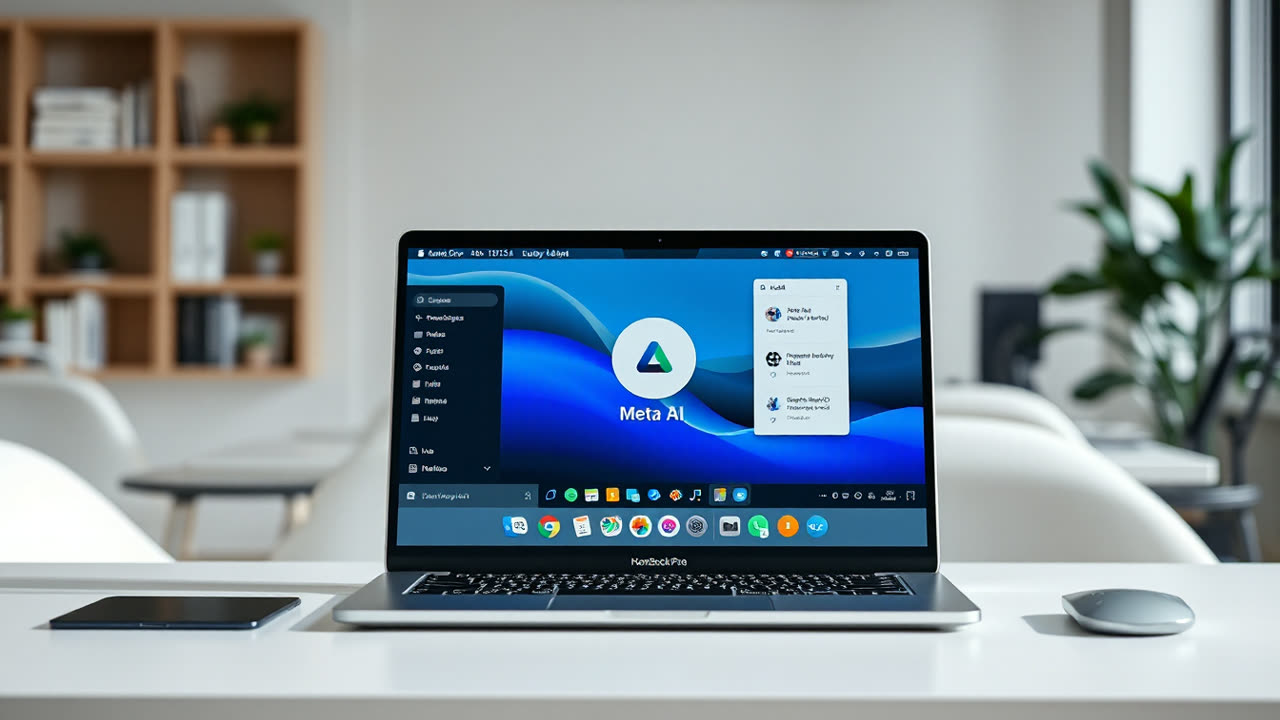
Meta AI has solidified its play for professional users with the recent launch of its dedicated desktop application for macOS, integrating advanced AI capabilities directly into the Apple ecosystem and signaling a serious push beyond consumer-facing chatbots. This move, initially announced in April 2024 with broader availability following in the subsequent months, brings Meta's powerful Llama 3 large language model (LLM) to Mac users, offering a native, streamlined experience designed to enhance productivity and creative workflows. The application positions Meta AI as a direct competitor to established desktop AI assistants, embedding features like content generation, coding assistance, and information retrieval directly onto the user's desktop, accessible via a dedicated icon in the Dock or through a system-wide hotkey.
The strategic significance of a dedicated Mac application for Meta AI cannot be overstated. For users, it means a significant leap in accessibility and integration, moving the AI from a web browser or a chat interface within Meta's social platforms to a persistent, always-on utility. This direct desktop presence reduces friction, allowing for quicker queries, faster content generation, and more seamless integration with other desktop applications through features like drag-and-drop functionality and screenshot analysis. For instance, users can now quickly generate marketing copy, summarize long documents, or debug code snippets without switching browser tabs or juggling multiple applications, directly leveraging Llama 3's advanced reasoning and generation capabilities. The emphasis on "business-friendly" tools suggests a focus on functionalities that cater to professionals in various fields, from marketing and content creation to software development and data analysis, aiming to make Meta AI an indispensable part of their daily toolkit.
From an industry perspective, Meta's Mac app represents a crucial front in the escalating battle for AI desktop dominance. While OpenAI's ChatGPT launched its own macOS app in May 2024, followed by Microsoft's Copilot integration into Windows, Meta's entry brings a formidable third contender with its open-source-backed Llama 3 architecture. Unlike ChatGPT's initial Mac app which was exclusive to Plus subscribers, Meta AI is generally available, potentially broadening its user base more rapidly. The core distinction lies in the underlying models and their training data; Llama 3, particularly the 8B and 70B parameter versions, has demonstrated strong performance benchmarks, often rivaling or exceeding competitors in various tasks, especially in coding and reasoning. Furthermore, Meta AI's integration with real-time information from Google Search and Microsoft Bing, a feature announced with Llama 3's broader rollout, provides a critical advantage for delivering up-to-date responses, a common limitation for many LLMs. This real-time web access, combined with its ability to generate images directly within the chat via Meta's image generation model, creates a versatile multimodal assistant.
The background of Meta AI reveals a gradual but determined evolution. Initially launched as an AI assistant within Instagram, WhatsApp, Messenger, and Facebook, its migration to a standalone web interface and now a dedicated desktop application underscores a deliberate strategy to broaden its utility beyond social interactions. This trajectory mirrors the broader industry trend of AI assistants moving from niche applications to pervasive computing tools. Compared to prior iterations embedded within Meta's social apps, the Mac app offers a more focused, less distracting environment, free from the notifications and feeds of social media. The prior generation of Meta AI was often perceived as a companion feature, whereas the desktop app positions it as a primary productivity tool. Its ability to analyze screenshots and interact with on-screen content directly from the desktop is a significant advancement over purely text-based or web-based interactions, offering a more context-aware and powerful user experience.
Looking ahead, Meta's commitment to business-friendly AI tools suggests deeper integrations are imminent. One plausible next step involves tighter integration with Meta's existing business suite, including Workplace from Meta and its various advertising and e-commerce platforms. Imagine Meta AI assisting with campaign optimization, generating ad creatives, or drafting internal communications directly from the desktop, leveraging proprietary business data securely. Further enhancements could include advanced offline capabilities, allowing core functionalities even without an internet connection, or specialized plugins and extensions that cater to niche professional applications, much like the plugin ecosystem developing around other AI platforms. The ongoing development of Llama 3 and its successors will undoubtedly bring even more sophisticated reasoning, multimodal understanding, and reduced hallucination rates, further solidifying Meta AI's position. As the AI assistant market matures, the differentiator will increasingly be seamless integration, specialized functionality, and robust performance, areas where Meta is now aggressively competing. The Mac app is not just a feature; it's a foundational piece of Meta's long-term strategy to embed its AI directly into the fabric of professional digital life.