Meta and OpenAI Launch Ambient AI Agents, Reshaping Future of AI Hardware
Two of the most influential AI powerhouses, Meta and OpenAI, have officially launched their ambient AI agents, "Muse" and "Dots," within the last month, marking a critical strategic pivot that aims to integrate proactive, persistent AI companions into daily life and potentially validate the struggling dedicated AI hardware market.
✨ This content was summarized and interpreted by AI; it may contain errors — please verify accuracy with the original sources. Learn more
Listen to this story
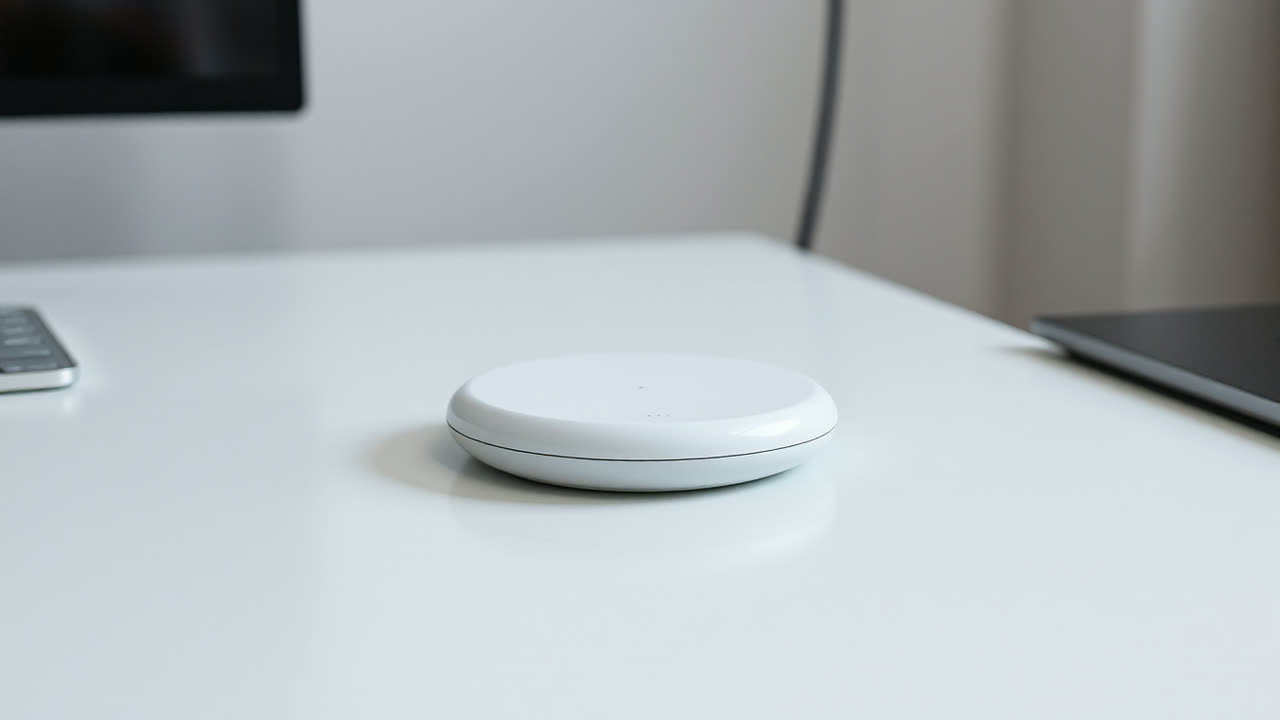
The nascent market for dedicated AI hardware, littered with recent high-profile failures, is poised for a seismic shift as Meta and OpenAI have launched their own ambient AI agents, "Muse" and "Dots" respectively, within the last month, signaling a major bet on a future beyond screen-bound artificial intelligence. This strategic pivot from two of the most influential AI powerhouses suggests a renewed, and potentially more successful, attempt to integrate AI into daily life through persistent, proactive companions rather than mere reactive tools.
Meta's "Muse," released earlier this month, is envisioned as a sophisticated AI agent capable of interacting with the physical world, leveraging advanced cameras and microphones to observe and understand user environments, moving beyond simple voice commands to offer proactive assistance and insights. It operates on a dedicated Linux virtual machine with 8GB of memory and storage, offering a persistent, isolated computing environment for users. Muse is designed to feel like a conversation and can be accessed via a dedicated app on mobile, Mac, or directly within WhatsApp. It can browse the web, shop online, fill out forms, plan trips, send emails, and schedule events, connecting to third-party services like Google and Spotify. Crucially, Muse is "agentic" AI, meaning it has the autonomy to act on a user's behalf by building action plans, tracking progress, and even constructing its own tools when needed. Meta is also expanding Muse's reach to its AI glasses, allowing for hands-free access and the ability to act on what the user is looking at.
OpenAI's "Dots," launched on September 29, are described as "always-on" personal AI agents powered by GPT-6 Astra, with their own cloud computer and access to over 4,000 apps, including workplace tools like Slack and Microsoft Teams. These agents are designed to handle tasks in the background, keep context across conversations, and continue working on projects even when the user isn't actively directing them. OpenAI CEO Sam Altman articulated the goal for AI to "feel like magical things it just does for you without you having to ask". Users can connect with their Dot agent in ChatGPT, Slack, Microsoft Teams, and soon via texting. Voice interaction is also a key feature, allowing users to have in-depth conversations and work through projects with their Dot. Unlike Muse, OpenAI's Dots are available for users subscribed to ChatGPT's Pro and Business Premium plans, which start at $20 a month. This move into consumer devices is part of OpenAI's broader strategy to build a "family of AI hardware products" and establish a US-based manufacturing network for consumer electronics and robotics.
The timing and approach of Meta and OpenAI are particularly noteworthy given the recent stumbles of dedicated AI hardware. Devices like the Humane AI Pin and the Rabbit R1, both launched with considerable hype in late 2023 and early 2024, have largely failed to capture consumer interest or deliver on their ambitious promises. The Humane AI Pin, priced at $699 with an additional $24 monthly subscription, was criticized for its sluggish performance, inconsistent battery life, and often inaccurate AI responses, with reports indicating more returns than sales – only about 7,000 units remained with buyers by August 2024 out of an initial expectation of 100,000. Similarly, the Rabbit R1, while more affordable at $199, faced widespread criticism for its buggy software, limited functionality often requiring a connected smartphone, and poor battery life, lasting as few as 4.5 hours. These devices struggled to define a compelling use case that justified their existence alongside, let alone replacing, a smartphone, often lacking the foundational AI expertise to deliver on their ambitious "Large Action Model" promises.
Meta and OpenAI, however, bring unparalleled AI research and development capabilities to the hardware arena, having invested billions in AI infrastructure, custom chips, and frontier models. Meta, with its vast resources and experience in social computing and virtual reality, can leverage its ecosystem to create highly personalized and context-aware AI experiences. OpenAI, as the developer of GPT models, possesses a core competency in generative AI and natural language understanding that enables truly intelligent and adaptive companions. Their advantage lies not just in their AI models but in their deep understanding of how these models can learn, adapt, and generate meaningful interactions, positioning them to potentially overcome the "dumb hardware, smart AI" paradox that plagued earlier entrants.
The impact on users could be profound, ranging from enhanced productivity through seamless, context-aware assistance to a more personalized and less screen-dependent interaction with technology. Muse's ability to proactively manage tasks like travel bookings or fitness routines, and Dots' capacity for continuous background work across thousands of apps, hint at a future where AI handles mundane tasks, freeing up human attention. However, the privacy implications are immense; both Muse and Dots require significant access to personal data, emails, calendars, and even credit card information, raising significant concerns about data collection, security, and potential misuse, despite assurances of user controls and automated protections.
For the industry, the entry of Meta and OpenAI could validate the dedicated AI hardware category, spurring innovation and investment beyond smartphones. OpenAI's acquisition of Jony Ive's "io Products" startup in 2025, valued at $6.4 billion, underscores the strategic importance of design and user experience in this new hardware paradigm. The move signifies a broader industry shift towards "on-device AI" and "AI PCs," with dedicated neural processing units becoming a competitive differentiator. Wearable devices are projected to be the fastest-growing segment in on-device AI from 2026-2032, driven by the need for local, privacy-preserving AI inference for continuous health monitoring. The success of Muse or Dots could fundamentally alter e-commerce, introducing AI shopping assistants that bypass traditional search and enable hyper-personalized experiences. Conversely, another wave of failures, even from these titans, could permanently dampen enthusiasm for ambient AI devices, relegating them to a niche market for years to come. The coming year will be a critical litmus test for the future of AI outside the confines of traditional screens, determining whether these AI Tamagotchis evolve into indispensable companions or merely become another footnote in the history of technological ambition.