Meta Bolsters Ray-Ban Smart Glasses Privacy with Private Processing Encryption
Meta is bringing its Private Processing encryption service to its Ray-Ban smart glasses, a significant move announced at Meta Connect on September 23, 2026, aimed at enhancing user privacy for cloud-based AI interactions.
✨ This content was summarized and interpreted by AI; it may contain errors — please verify accuracy with the original sources. Learn more
Listen to this story
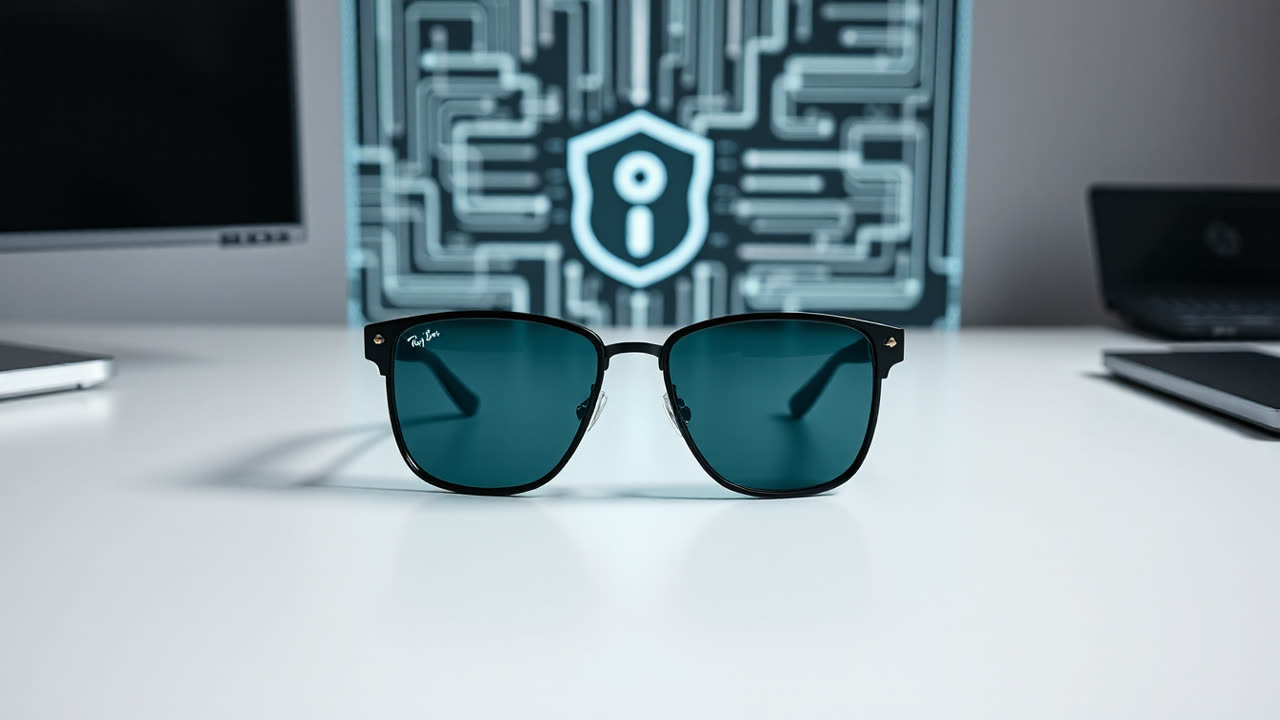
Meta is bringing its Private Processing encryption service to its Ray-Ban smart glasses, a significant move announced at Meta Connect on September 23, 2026, aimed at enhancing user privacy for cloud-based AI interactions. This initiative extends Meta's confidential computing infrastructure, previously introduced for WhatsApp and the Meta AI app in 2025, to its wearable devices. While no immediate release date for the glasses' implementation has been provided, Meta states that the underlying platform is functional and will undergo scrutiny from security and privacy researchers and a third-party auditor before features are rolled out.
The core of Private Processing lies in its use of Trusted Execution Environments (TEEs) and Confidential Virtual Machines (CVMs), primarily leveraging AMD and NVIDIA hardware. This technology ensures that data processed in the cloud remains encrypted and inaccessible to Meta or any third parties, even during active processing. For smart glasses, this means intensive AI workloads like streaming transcription, contextual search, and long-term recall can be offloaded to the cloud while maintaining user data confidentiality. The system is designed with hardware isolation, non-targetable routing (using a third-party relay to hide user IP addresses), remote attestation, and verifiable transparency through public ledgers, aiming to prevent Meta from inspecting user data or silently altering code. Initial features expected to utilize Private Processing on the glasses include live translation.
This development is crucial for Meta's smart glasses, which have seen considerable commercial success despite persistent privacy concerns. In 2025 alone, Meta and EssilorLuxottica sold over 7 million units of Ray-Ban and Oakley smart glasses, tripling sales from the previous year, with total sales since the October 2023 launch reaching around 9 million units. This strong market performance has Meta reportedly considering scaling annual production capacity to 20-30 million units by the end of 2026. However, this growth has been shadowed by a history of privacy backlash, with critics labeling the devices "pervert glasses" due to the ease with which users could covertly record others.
The privacy issues stem from the inconspicuous design of the glasses, which resemble ordinary eyewear, and the perceived inadequacy of the small LED indicator light meant to signal recording. Despite Meta introducing a firmware update in 2026 to disable the camera if the recording indicator is tampered with, privacy advocates argue that the light itself remains insufficient for meaningful bystander consent, especially outdoors. Furthermore, recent updates to Meta's privacy policy for its Ray-Ban Meta smart glasses have raised additional alarms, as AI features, including the camera, are now turned on by default, and voice recordings are automatically stored for up to a year, with the option to opt out removed. This means photos, videos, and voice commands are analyzed by Meta AI unless users manually disable specific features.
The introduction of Private Processing addresses a specific facet of these privacy concerns: the confidentiality of user data *once it leaves the device* for cloud-based AI processing. It's a technical solution to a technical problem, aiming to provide a "blind spot" where Meta cannot inspect sensitive user interactions with its AI. This is a significant step forward in securing the user-to-AI interaction, especially as smart glasses become more capable of multimodal input, including voice commands and real-time visual analysis.
However, Private Processing does not inherently resolve the broader societal and ethical dilemmas posed by always-on, discreet recording devices in public spaces. The fundamental issue of bystander consent for recording, the potential for misuse, and the legal ambiguities surrounding biometric data collection remain. Even with Private Processing, the glasses still capture audio and video, and the data, while encrypted in transit and processing, still originates from a device that can be used for surreptitious recording. Competitors like Even Realities have opted for camera-free smart glasses to explicitly address privacy concerns, offering a stark contrast to Meta's camera-centric approach. Other rivals, such as Rokid and XREAL, offer their own AI-powered and AR-display glasses, but Meta currently dominates the market, holding an 82% share in H2 2025.
Looking ahead, Meta's commitment to Private Processing signals a strategic shift towards building trust through verifiable technical safeguards, particularly as AI becomes more integrated into personal devices. The company's push for third-party auditing before widespread deployment of Private Processing-backed features on its glasses is a positive indicator of this intent. However, the real challenge for Meta will be to balance advanced AI capabilities and user convenience with robust, transparent, and easily understood privacy protections that extend beyond technical encryption to address the social implications of wearable cameras. The ongoing tension between innovation and privacy will likely shape not only the future of Meta's smart glasses but the entire wearable technology industry, demanding continuous evolution in both technology and policy to build genuine public trust.