Meta Ray-Ban Smart Glasses Users Can Opt Out of AI Training Data Collection
Users of Meta's Ray-Ban Meta smart glasses can now prevent their visual data from being used for AI model training, including human review, a critical privacy control that addresses growing concerns over data collection and sets a precedent for future wearable tech.
✨ This content was summarized and interpreted by AI; it may contain errors — please verify accuracy with the original sources. Learn more
Listen to this story
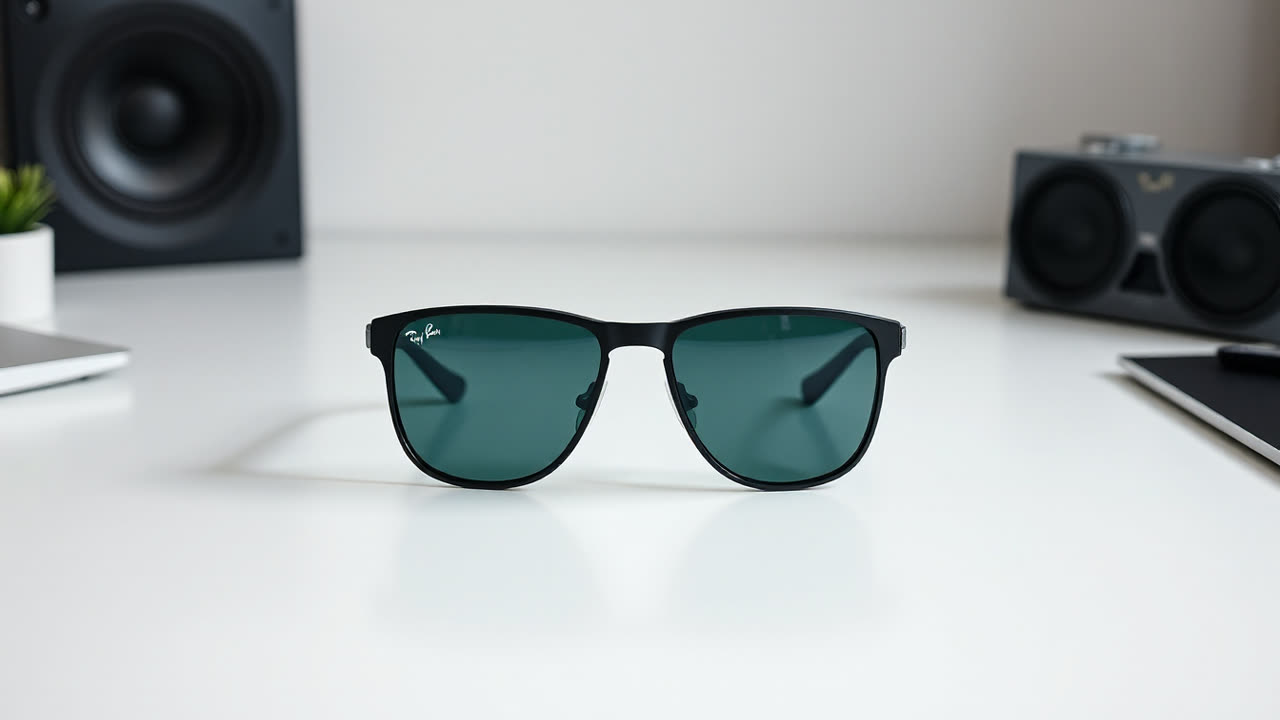
Users of Meta's Ray-Ban Meta smart glasses can prevent the company from utilizing their visual data for AI model training, including human review, by deactivating the "Meta AI features" setting within the Meta View app. This crucial toggle, often enabled by default, dictates whether photos and videos captured by the glasses contribute to Meta's ambitious AI development initiatives, potentially involving human contractors analyzing anonymized content to refine the AI's understanding of the world. The setting specifically refers to an opt-in for "additional processing" of data from Meta AI features, which users might inadvertently agree to without fully grasping its implications for their privacy.
This granular control over visual data carries significant implications for both user privacy and the nascent smart glasses industry. For users, the primary concern revolves around the sensitive nature of visual recordings. Unlike text or audio, visual data inherently captures detailed contextual information about individuals, locations, and personal activities. Even with Meta's assurances of anonymization and aggregation, the sheer volume and intimacy of data collected by always-on cameras on one's face raise legitimate questions about the potential for re-identification or unintended inferences. The ability for human reviewers to access even anonymized snippets underscores the direct pipeline from personal experience to corporate AI training, demanding a higher level of transparency and explicit consent than current practices often provide. Users are essentially contributing to the intelligence of a powerful AI system by simply using their device, and the default "on" setting for such a privacy-sensitive feature places the burden of protection squarely on the individual. This approach risks eroding trust, a critical component for the mainstream adoption of any wearable technology.
For the industry, Meta's strategy highlights the ongoing tension between innovation and ethical data handling. The development of advanced AI, particularly for computer vision tasks, relies heavily on vast datasets of real-world imagery. Smart glasses, by their very nature, are ideal data-gathering tools, offering a first-person perspective that traditional cameras cannot replicate. However, how this data is acquired and utilized will define public perception and regulatory responses. Companies like Meta, pushing the boundaries of spatial computing and augmented reality, face intense scrutiny over their data practices, especially given past privacy controversies. The explicit inclusion of a setting for AI training and human review, while offering a degree of control, also implicitly acknowledges the privacy risks involved. This move sets a precedent for future wearable devices, suggesting that robust, easily accessible privacy controls will become a non-negotiable feature rather than an afterthought. Without clear, user-friendly mechanisms to manage data, the smart glasses market risks being hampered by privacy fears, much like early social media platforms grappled with data security concerns.
The Ray-Ban Meta smart glasses, launched in October 2023, represent Meta's second generation of smart eyewear, succeeding the original Ray-Ban Stories from 2021. While the initial Stories glasses focused primarily on capturing photos and short videos, the Ray-Ban Meta iteration significantly enhances functionality with integrated Meta AI capabilities, including voice commands, real-time information access, and multimodal AI features that allow the glasses to understand and respond to what the user sees. This leap in AI integration is precisely why the data collection settings have become more critical. The earlier generation had simpler data collection for basic media capture, but the new AI features necessitate more sophisticated data processing for model refinement. Compared to rivals, the smart glasses market is still relatively niche, with devices like Amazon's Echo Frames focusing on audio-first interactions and less on visual data capture, thus presenting different privacy profiles. Other devices, such as the XREAL Air glasses, are primarily display-oriented and do not feature cameras for continuous environmental capture, sidestepping the visual data training issue entirely. Meta's direct competitor in advanced visual capture and AI integration is arguably still emerging, making their approach to data governance a significant benchmark.
Looking ahead, the trajectory of smart glasses and AI development suggests an increasing need for both robust privacy by design and transparent user education. As AI models become more sophisticated and capable of real-time environmental analysis, the temptation to collect and process more data will grow. This will likely lead to a push for industry standards around data anonymization, retention, and third-party access. Regulators, particularly in regions with strong data protection laws like the EU, are expected to scrutinize these devices more closely, potentially mandating clearer consent mechanisms and stricter limits on AI training data. Users, in turn, will become more discerning, demanding intuitive controls and clear explanations of how their personal data fuels AI development. The future success of smart glasses hinges not just on technological prowess but on the ability of companies like Meta to build trust by demonstrating an unwavering commitment to user privacy, moving beyond default opt-ins to systems that prioritize explicit, informed consent for every byte of sensitive data.