Meta's AI-Powered 'Pocket' App Launches in U.S., Challenging UGC Giants
Meta's experimental AI-powered app, Pocket, which enables users to "vibe-code" and share interactive games, has officially launched for users across the U.S., marking a significant expansion after a quiet incubation period in Brazil.
✨ This content was summarized and interpreted by AI; it may contain errors — please verify accuracy with the original sources. Learn more
Listen to this story
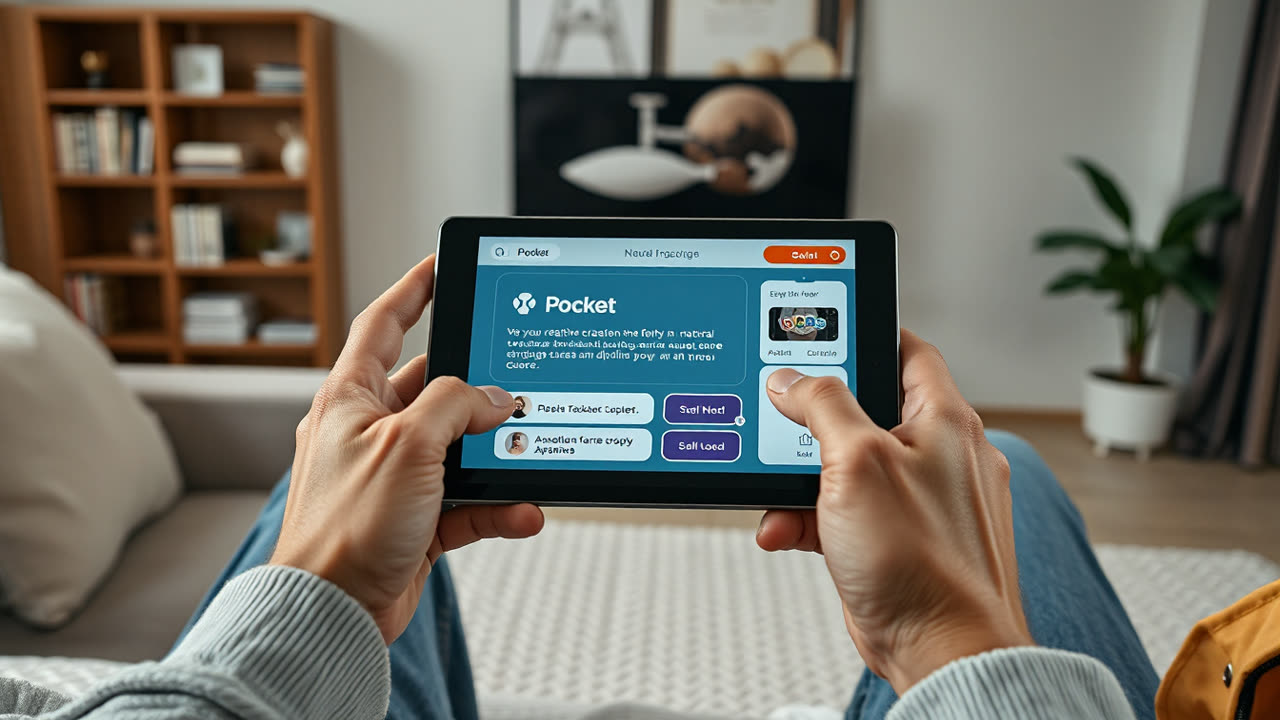
Meta's experimental AI-powered app, Pocket, which enables users to "vibe-code" and share interactive games, has officially launched for users across the U.S., marking a significant expansion after a quiet incubation period in Brazil. This move positions Meta to directly challenge established user-generated content (UGC) platforms and fundamentally reshape the landscape of casual game creation. Pocket distinguishes itself by leveraging advanced generative AI to simplify the game development process, allowing individuals with little to no coding experience to craft interactive experiences through intuitive, natural language prompts and visual cues, a process Meta terms "vibe-coding."
The immediate impact on users is profound, effectively democratizing game development beyond the niche of dedicated hobbyists and professional developers. By abstracting the complexities of traditional coding languages, Pocket lowers the barrier to entry to an unprecedented degree, inviting a broader demographic to transition from passive consumption to active creation. This accessibility could unleash a torrent of novel, diverse, and perhaps unconventional games, fostering a new wave of digital artistry and interactive storytelling within Meta's ecosystem. For the average user, Pocket offers a creative outlet that blends the immediate gratification of social media with the deeper engagement of game design, potentially capturing significant user attention and screen time that might otherwise be spent on competing platforms.
From an industry perspective, Pocket represents a direct strategic thrust by Meta into the burgeoning creator economy, intensifying competition with established UGC giants like Roblox, Epic Games' Fortnite Creative, and Microsoft's Minecraft. While Roblox has built its empire on a vibrant community of young creators using Lua scripting, Pocket's AI-driven "vibe-code" offers a potentially more fluid and less technical alternative, appealing to an even wider audience. This could fragment the UGC market, drawing away casual creators who find traditional scripting too steep a learning curve. Moreover, Pocket signifies Meta's continued commitment to integrating AI across its product suite, not just as a feature enhancer but as a core engine for content generation. This is a critical step in Meta's long-term vision for the metaverse, where user-generated, dynamically created content will be paramount to populating virtual worlds. The app's success could also pave the way for new monetization models for Meta, potentially through in-app purchases, creator tools subscriptions, or even advertising within user-created games, though initial details on these aspects are still emerging.
Historically, Meta has experimented with various creative tools, but Pocket represents a more cohesive and ambitious foray into AI-powered content generation. Previous iterations of game creation tools, even those designed for accessibility, often required a foundational understanding of game logic or visual scripting. Pocket's "vibe-code" paradigm, however, pushes the envelope by allowing users to essentially describe their desired game experience, with the AI translating those abstract concepts into functional interactive elements. This approach sets it apart from earlier generations of "no-code" or "low-code" platforms, which, while simplifying development, still demanded a more structured approach from the creator. The closest contemporary rivals, like Roblox Studio, still necessitate a degree of technical proficiency that Pocket aims to bypass entirely, focusing instead on creative intuition and iterative prompting.
Looking ahead, the success of Pocket hinges on several factors. Its ability to maintain a delicate balance between creative freedom and content quality will be crucial. As the platform scales, Meta will face significant challenges in content moderation, ensuring a safe and engaging environment while preventing the proliferation of low-effort or inappropriate creations. Furthermore, the evolution of the "vibe-code" engine itself will determine Pocket's longevity; continuous improvements in AI's ability to interpret complex user intentions and generate sophisticated game mechanics will be essential to keep creators engaged. We can anticipate deeper integrations with Meta's hardware ecosystem, particularly with Quest headsets and Ray-Ban Meta smart glasses, allowing for the creation and experience of spatial games that blur the lines between physical and digital realities. This move is not merely about a new app; it's a strategic pillar in Meta's broader ambition to dominate the next era of digital interaction, where AI empowers everyone to be a creator, shaping the very fabric of the metaverse itself. The U.S. launch of Pocket is less an endpoint and more the opening salvo in Meta's bid to redefine the creator landscape, with profound implications for how we conceive, build, and interact with digital worlds.