Meta's Muse AI Charm to Feature Groundbreaking Inter-Device Communication
Meta's forthcoming handheld Muse AI Charm will be able to recognize and interact with other nearby Charms, marking a significant evolution for personal AI devices.
✨ This content was summarized and interpreted by AI; it may contain errors — please verify accuracy with the original sources. Learn more
Listen to this story
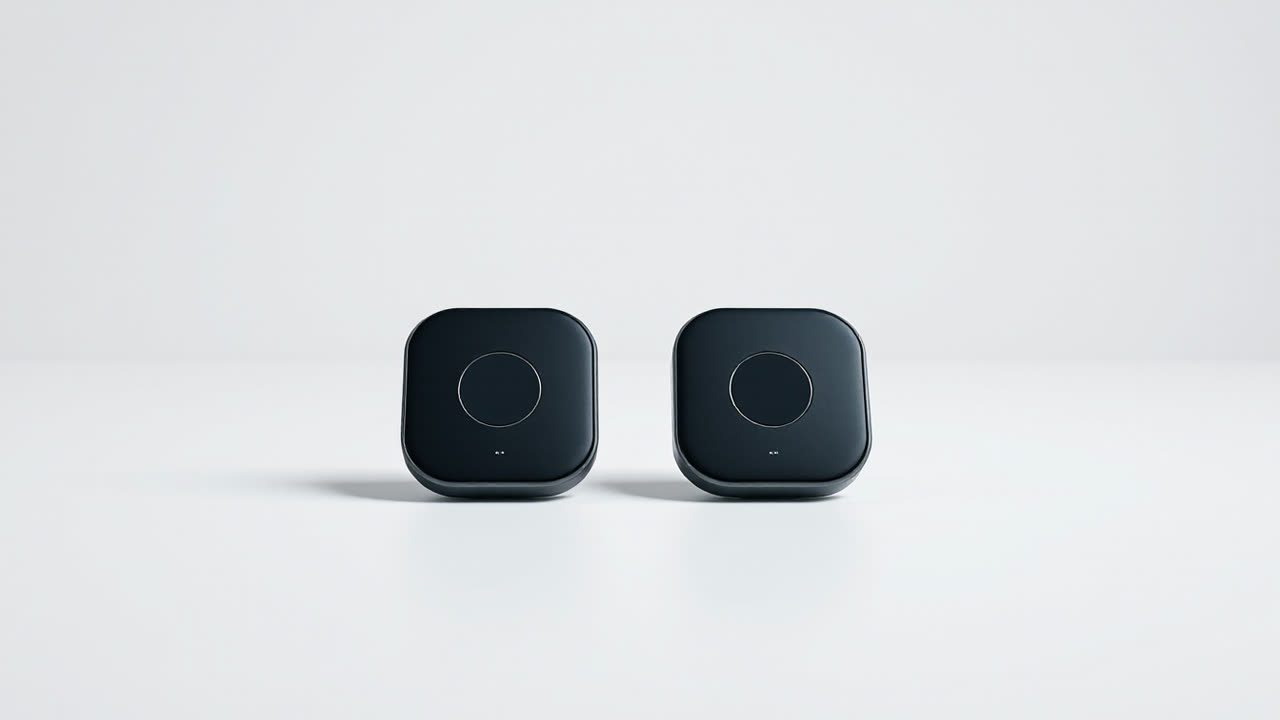
Meta's forthcoming Muse AI Charm, a handheld gadget slated for release later this year, will possess the groundbreaking ability to recognize and interact with other nearby Charms, a capability detailed in a recent Bloomberg report. This interconnectedness marks a significant evolutionary step for personal AI devices, moving them beyond isolated assistants into a potentially collaborative and ambient computing ecosystem. The Charms are envisioned as compact, always-on AI companions, distinct from smartphones, designed to offer real-time assistance and information through multimodal interaction, leveraging a 5G modem for constant connectivity.
This interaction capability fundamentally transforms the potential utility and user experience of personal AI. Instead of each user’s Charm operating in a silo, a group of Charms could theoretically pool environmental data, share contextual understanding, or even coordinate tasks. Imagine a scenario where multiple Charms at a conference could collectively identify key speakers, transcribe discussions, and summarize action items more robustly than a single device, by cross-referencing audio and visual inputs. For users, this could manifest as a more seamless and less intrusive form of assistance, where the collective intelligence of several devices provides a richer, more accurate, and more proactive support system. The "why it matters" extends deeply into the very nature of personal technology, pushing it from individualistic tools towards a more communal and context-aware experience.
From an industry perspective, Meta’s strategy with the Muse Charm positions it as a vanguard in the nascent ambient computing space, a domain where technology seamlessly integrates into daily life without demanding constant human attention. While devices like the Humane AI Pin and Rabbit R1 have recently attempted to carve out niches in this market, often struggling with user adoption and feature sets, Meta's approach with the Charm's inter-device communication introduces a novel layer of complexity and potential. The AI Pin, for instance, focuses on a screenless, projection-based interface, and the Rabbit R1 on a large language model (LLM) driven "Rabbit OS" to control apps. Neither has prominently featured direct, peer-to-peer interaction between devices as a core offering, leaving Meta's Charm with a distinct advantage in fostering a truly distributed AI environment. The Charm's likely integration with Meta's broader AI initiatives, including its large language models and advanced multimodal AI research, suggests a powerful backend driving its capabilities, potentially surpassing the more limited AI models deployed in some rival gadgets. The rumored inclusion of a 5G modem further underscores Meta's commitment to real-time, cloud-connected AI, avoiding the latency and processing limitations that can plague purely on-device AI solutions.
The background to Meta’s foray into AI hardware is rooted in its long-standing vision for the metaverse and its pursuit of next-generation computing platforms beyond smartphones. Mark Zuckerberg has consistently articulated a future where AI and augmented reality (AR) are deeply intertwined, with devices like the Charm serving as a crucial bridge. While Meta has invested heavily in VR/AR headsets like the Quest series and Ray-Ban Meta smart glasses, the Muse Charm represents a more discreet, always-on form factor designed for ambient interaction. This device is not merely a new product; it is a strategic piece in Meta's larger puzzle to own the next computing paradigm, aiming to capture user data and attention in ways traditional mobile devices cannot. This also aligns with Meta's significant investments in developing open-source large language models like Llama, which could power the Charm's sophisticated understanding and response capabilities, potentially offering a more advanced and customizable AI experience than competitors.
Looking ahead, the success of Meta’s Muse Charms, particularly their interacting capabilities, hinges on several critical factors. User privacy will be paramount; the collection and sharing of data between devices, even within a single user’s ecosystem or among trusted groups, raises significant questions that Meta must address transparently and robustly. The potential for misuse or unwanted data sharing could quickly undermine adoption. Furthermore, the practical applications of inter-Charm communication need to extend beyond novelty; users must perceive tangible benefits that justify the investment and potential privacy trade-offs. If Meta can convincingly demonstrate how these interacting Charms genuinely enhance productivity, social connection, or personal well-being in ways that current devices cannot, it could catalyze a new wave of ambient AI adoption. This could evolve into a foundational layer for future AR experiences, with Charms providing contextual awareness and processing power for more immersive visual overlays. The long-term outlook suggests that if successful, the Muse Charms could establish a precedent for truly distributed, collaborative AI, potentially shifting the focus of personal technology from individual computation to shared, ambient intelligence, thereby profoundly impacting how humans interact with technology and each other in an increasingly AI-driven world.