Meta's Muse Glimmer Brings 30B Parameter Local AI to Consumer GPUs
Meta's Superintelligence Labs has released Muse Glimmer, a 30-billion-parameter model under an Apache 2.0 license, enabling sophisticated local AI agents to run on consumer GPUs like the RTX 4090, democratizing access and enhancing privacy.
✨ This content was summarized and interpreted by AI; it may contain errors — please verify accuracy with the original sources. Learn more
Listen to this story
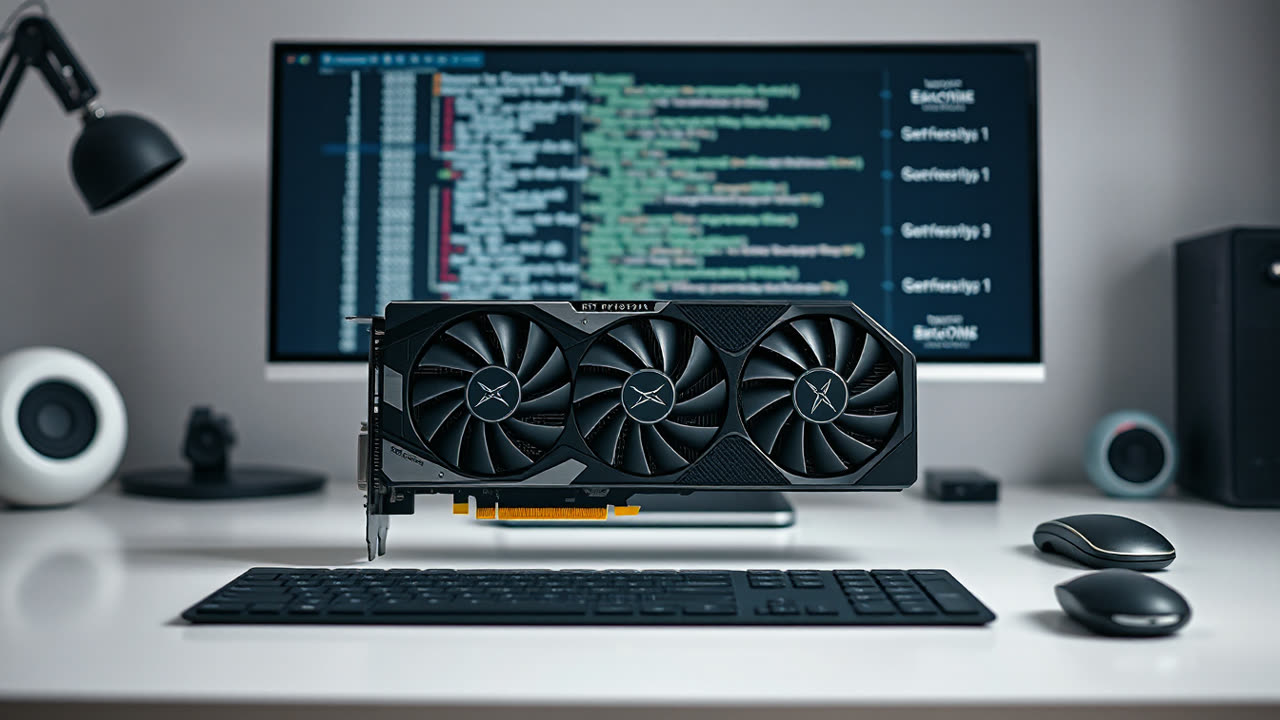
Meta's Superintelligence Labs has released Muse Glimmer, a 30-billion-parameter model designed for local AI agents capable of running on consumer GPUs, under an Apache 2.0 license, making its weights available on Hugging Face. This move significantly democratizes access to sophisticated AI, shifting the paradigm from purely cloud-dependent large language models (LLMs) to a more decentralized, user-centric AI ecosystem. The 30B parameter count places Muse Glimmer in a sweet spot, offering considerably more complexity and capability than smaller, highly-quantized models often limited to mobile or ultra-low-power edge devices, while remaining accessible on high-end consumer graphics cards like NVIDIA's RTX 4090, which typically boasts 24GB of VRAM.
The implications for users are profound, primarily revolving around enhanced privacy, reduced latency, and offline functionality. By processing data locally, users can maintain greater control over their personal information, alleviating concerns associated with transmitting sensitive queries to remote servers. This is particularly crucial for applications dealing with personal health, financial data, or proprietary business information. Furthermore, local execution eradicates the round-trip delay inherent in cloud-based AI, enabling near-instantaneous responses for AI agents assisting with tasks like drafting emails, summarizing documents, or generating creative content, even in environments without reliable internet connectivity. The Apache 2.0 license encourages broad adoption and innovation, allowing developers to freely use, modify, and distribute the model for both commercial and non-commercial purposes, fostering a vibrant ecosystem of specialized local AI agents.
From an industry perspective, Muse Glimmer represents a strategic push towards edge AI, potentially disrupting the dominance of large cloud AI providers. While cloud-based LLMs like OpenAI's GPT-4 or Google's Gemini Pro offer unparalleled scale and continuous updates, their operational costs and data privacy implications remain significant hurdles for many enterprises and individual developers. Muse Glimmer provides a viable alternative for applications where data locality, cost-effectiveness, and low latency are paramount. The ability to run complex AI agents on consumer hardware could spur a new wave of innovation in personal computing, smart home devices, and even specialized industrial applications, where custom, on-device AI can deliver tailored experiences without constant internet reliance or subscription fees. This also positions Meta as a leader in open-source AI, building on the success of its Llama series, and directly challenging proprietary models by empowering a community-driven approach to AI development.
Compared to existing solutions, Muse Glimmer enters a growing but still nascent field of local AI. Smaller open-source models, such as various derivatives of Llama 2 7B or Mistral 7B, can run on a wider range of consumer GPUs, sometimes even integrated graphics, but often at the cost of sophisticated reasoning or contextual understanding. Conversely, larger models like Llama 2 70B typically demand professional-grade GPUs or multiple consumer cards, making them less accessible for the average user. Muse Glimmer's 30B parameter size offers a compelling balance, delivering significantly more capability than smaller models while remaining within the reach of a single high-end consumer GPU. This sweet spot could make it a preferred choice for developers aiming to build robust, on-device AI experiences without requiring enterprise-grade hardware or cloud subscriptions. Rivals like Google and Apple have also invested in on-device AI, with Apple integrating advanced machine learning capabilities directly into its silicon for features like Siri and photo processing, and Google developing models optimized for mobile and edge devices. However, Meta's open-source release with an Apache 2.0 license offers a distinct advantage in fostering external innovation and adoption, contrasting with the more vertically integrated approaches of its competitors.
Looking ahead, the release of Muse Glimmer is likely to accelerate the development of personalized, intelligent assistants and specialized AI tools that operate entirely on the user's device. We can anticipate a surge in creative applications leveraging this capability, from highly context-aware writing aids and coding copilots to advanced content generators that respect user privacy by keeping data local. The immediate challenge will be optimizing these 30B models for even broader hardware compatibility and efficiency, pushing the boundaries of quantization techniques and specialized inference engines. Further down the line, Meta may integrate Muse Glimmer's capabilities into its own hardware ecosystem, such as future iterations of Ray-Ban Meta smart glasses or Quest VR headsets, transforming these devices into truly intelligent, always-on personal AI companions. This strategic move cements Meta's commitment to open AI and decentralized processing, paving the way for a future where powerful AI resides not just in the cloud, but directly in the hands of its users.