Meta's Patented Smart Glasses Feature Deactivates Display While Driving for Safety
Meta Platforms has patented a smart glasses system that automatically disables its visual display when detecting a user is driving, aiming to enhance road safety and mitigate distraction.
✨ This content was summarized and interpreted by AI; it may contain errors — please verify accuracy with the original sources. Learn more
Listen to this story
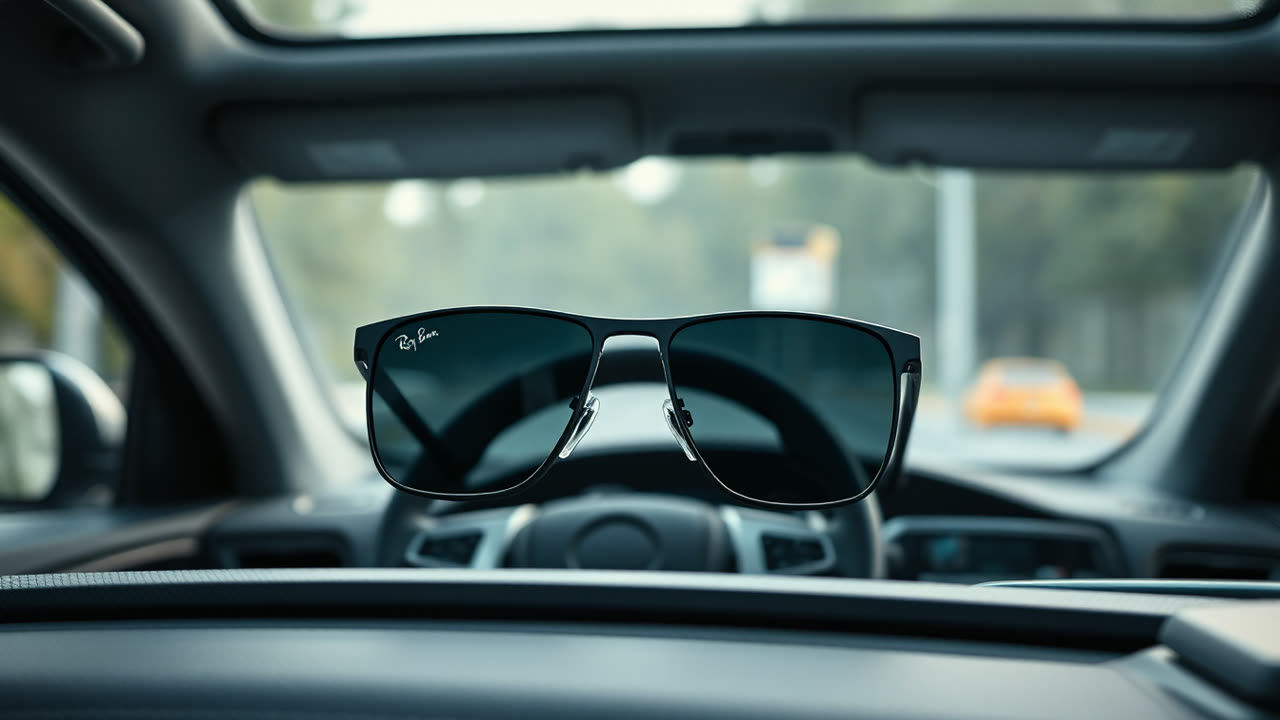
Meta Platforms' patent for a smart glasses system that automatically deactivates its visual display when detecting a user is driving marks a significant, albeit prospective, inflection point for augmented reality (AR) wearable technology and automotive safety. This "Audio Only" feature, outlined in a patent application, proposes utilizing sensors within the glasses to discern driving activity, subsequently disabling the visual overlay to mitigate distraction and enhance road safety. While not yet integrated into current consumer models like the Ray-Ban Meta Smart Glasses, this patented technology signals Meta's strategic foresight into addressing one of the most pressing concerns for head-mounted displays: their potential to divert attention from critical tasks, particularly driving.
The core functionality described involves sophisticated contextual awareness. The glasses would employ an array of sensors—likely accelerometers, GPS, and potentially even camera-based object recognition or eye-tracking—to identify driving conditions. Upon confirmation, the system would transition the device into an "Audio Only" mode, rendering any visual information inert and channeling all user interaction through auditory cues, such as turn-by-turn navigation, incoming call alerts, or music playback. This proactive disengagement of the visual component directly confronts the inherent danger of overlaying digital information onto a user's field of view while operating a vehicle, a scenario that has historically raised red flags for regulators and safety advocates.
The impact on users, should this feature materialize, would be multi-faceted. For proponents of smart glasses, it offers a pathway to seamless integration of wearable tech into daily life without compromising safety in high-risk environments. Drivers could potentially leverage the glasses for hands-free audio communication, entertainment, or even discreet navigation prompts without the visual clutter or cognitive load associated with a head-up display (HUD) within their direct line of sight. This could transform the utility of smart glasses from a niche gadget to a more universally accepted personal assistant, bridging the gap between digital convenience and real-world responsibility. Conversely, the absence of a visual display might frustrate users accustomed to visual prompts, requiring a re-calibration of interaction habits. The effectiveness hinges entirely on the accuracy and reliability of the driving detection algorithm; false positives or negatives could undermine user trust and adoption.
For the industry, Meta's patent filing underscores a critical strategic realization: the widespread adoption of AR glasses is inextricably linked to their safe and responsible use. This move positions Meta as a proactive player in a nascent market, attempting to pre-empt regulatory scrutiny and consumer apprehension. Current smart glasses, including the latest Ray-Ban Meta Smart Glasses released in October 2023, primarily focus on hands-free photography, video recording, and audio streaming, with no explicit, automated driving-specific safety modes that disable the display. Their existing features, while useful, do not inherently prevent display-based distraction during driving, relying instead on user discretion. This patented "Audio Only" feature would set a new safety benchmark, potentially compelling rivals like Apple, Google, and Magic Leap—all developing their own AR solutions—to integrate similar safeguards. Apple's Vision Pro, for instance, focuses on mixed reality within controlled environments, not explicitly addressing automotive use cases with automated display deactivation. The industry's ability to self-regulate and embed safety features like Meta's patented system could significantly influence the pace of AR glasses' market penetration and their eventual acceptance by legislative bodies.
The background of smart glasses has been fraught with challenges, particularly regarding social acceptance and privacy concerns, but safety has always loomed large. Google Glass, an early pioneer, faced significant backlash partly due to privacy implications and the perceived distraction of its prism display. Meta's approach with the "Audio Only" feature learns from these past missteps by actively seeking to mitigate a core safety risk. This self-aware design philosophy is a marked departure from earlier iterations of smart glasses that often overlooked real-world usage complexities.
Looking ahead, the successful implementation of this "Audio Only" feature could pave the way for more sophisticated, context-aware AR experiences. Future iterations might incorporate advanced eye-tracking to detect driver fatigue, or integrate with vehicle telematics systems to provide adaptive audio cues based on road conditions or traffic alerts. However, significant hurdles remain. Regulatory bodies worldwide are already grappling with how to classify and govern smart glasses, especially concerning their use in vehicles. Legislation may be required to standardize such safety features, ensuring all manufacturers adhere to minimum safety thresholds. Furthermore, the ethical implications of constantly monitoring user context for safety features will need careful consideration, balancing utility with privacy. The evolution of Meta's patented technology, from concept to consumer product, will serve as a crucial test case for how the AR industry navigates the complex intersection of innovation, user safety, and regulatory oversight in the coming years.