Meta's Quest 4 Pro Challenges Apple, Redefines Mixed Reality at $1,499
Meta's new $1,499 Quest 4 Pro headset aims to democratize high-end mixed reality, directly challenging Apple's spatial computing ambitions with enhanced features and an open ecosystem.
✨ This content was summarized and interpreted by AI; it may contain errors — please verify accuracy with the original sources. Learn more
Listen to this story
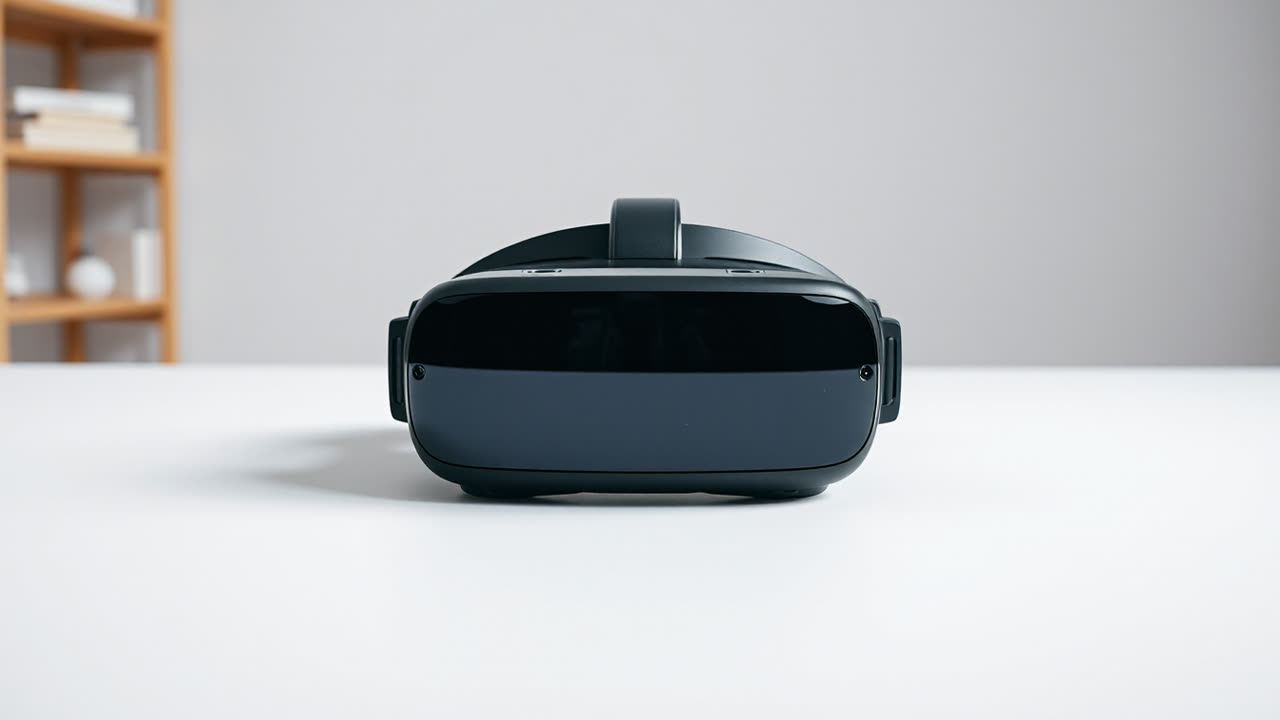
Meta's annual Connect 2026 keynote revealed the "Meta Quest 4 Pro," a formidable mixed-reality headset priced at $1,499, directly challenging Apple's spatial computing ambitions while solidifying Meta's commitment to a more accessible, open metaverse. The new device boasts a significantly lighter form factor, a 50% increase in pixel density over the Quest 3, and eye-tracking technology refined for both foveated rendering and intuitive user interface navigation, promising an unparalleled visual fidelity and interaction experience. Mark Zuckerberg emphasized the device's "Meta Reality OS 3.0," a platform designed for seamless integration between virtual and physical worlds, featuring enhanced pass-through capabilities that render real-world environments with near-photorealistic accuracy and minimal latency. This launch is not merely an incremental hardware update; it signals Meta's strategic pivot towards democratizing high-end mixed reality, aiming to capture a broader market segment that demands premium features without the prohibitive cost of some competitors.
The "Quest 4 Pro" fundamentally matters because it represents Meta's most aggressive move yet to define the future of spatial computing on its own terms, contrasting sharply with Apple's more curated, walled-garden approach. By positioning the device as a powerful tool for both professional productivity and immersive entertainment, Meta is attempting to bridge the gap between niche enthusiast hardware and mainstream adoption. The advanced eye-tracking and improved passthrough are critical for enterprise applications, enabling more natural interaction with virtual objects overlaid on the real world, a significant leap from the Quest 3's capabilities. For consumers, the enhanced visual clarity and comfort could finally push mixed reality beyond novelty, making extended use more viable for social interaction, gaming, and content consumption. Furthermore, the emphasis on an open operating system and robust developer tools, including new AI-powered avatar creation kits and environment generation APIs, could foster an explosion of unique applications and experiences, potentially accelerating the metaverse's evolution beyond Meta's own Horizon Worlds. This strategic openness is Meta's strongest weapon against rivals, aiming to attract a diverse developer community essential for long-term platform viability.
Historically, Meta has iterated rapidly since the acquisition of Oculus, with devices like the Quest 2 setting the standard for standalone VR and the Quest 3 pushing the boundaries of accessible mixed reality. The Quest 4 Pro builds directly on this legacy, learning from the Quest Pro's enterprise focus and the Quest 3's mainstream appeal. Its $1,499 price point places it significantly below the Apple Vision Pro's initial $3,499 asking price, yet it offers comparable, and in some areas, superior, core MR functionalities. While the Vision Pro has been lauded for its display and integration with Apple's ecosystem, Meta's strategy focuses on raw processing power, an extensive content library, and a more open development environment. The Quest 4 Pro features Meta's custom-designed "Reality Processor 3," reportedly delivering a 2.5x performance boost over the Quest 3's Snapdragon XR2 Gen 2, crucial for rendering complex virtual environments and running sophisticated AI models directly on the device. Compared to its predecessor, the Quest 4 Pro also introduces haptic feedback in the headset itself, creating a more immersive tactile experience beyond controller vibrations.
Looking ahead, the "Quest 4 Pro" is poised to catalyze a new wave of innovation within the spatial computing industry. Its blend of high-end features and a relatively aggressive price point could force competitors to re-evaluate their own hardware strategies, potentially leading to a more competitive and diverse market for advanced mixed-reality devices. We can anticipate significant growth in enterprise adoption, particularly in training, design, and remote collaboration, as the device's capabilities make it a more practical and cost-effective solution than previous generations. The deeper integration of Meta's AI models, including a new "Meta AI Companion" that can assist users within mixed-reality environments, suggests a future where AI becomes an omnipresent, intelligent layer across digital and physical interactions. However, Meta still faces the enduring challenge of driving widespread consumer adoption and overcoming privacy concerns inherent in pervasive eye-tracking and environmental scanning. The success of the Quest 4 Pro will ultimately hinge on the quality and breadth of experiences developers create for its open platform, and Meta's ability to convince a skeptical public that the metaverse offers genuine, indispensable value beyond novelty. The next 12-18 months will be critical in determining if Meta can truly solidify its leadership in the nascent, yet rapidly evolving, spatial computing landscape.