Meta's Threads Unleashes AI Transcription to Dominate Audio Content
Meta's Threads is deploying an advanced AI-driven podcast transcription feature, transforming how users discover, engage with, and share audio content, directly challenging established platforms and positioning Threads as a major player in the social audio space.
✨ This content was summarized and interpreted by AI; it may contain errors — please verify accuracy with the original sources. Learn more
Listen to this story
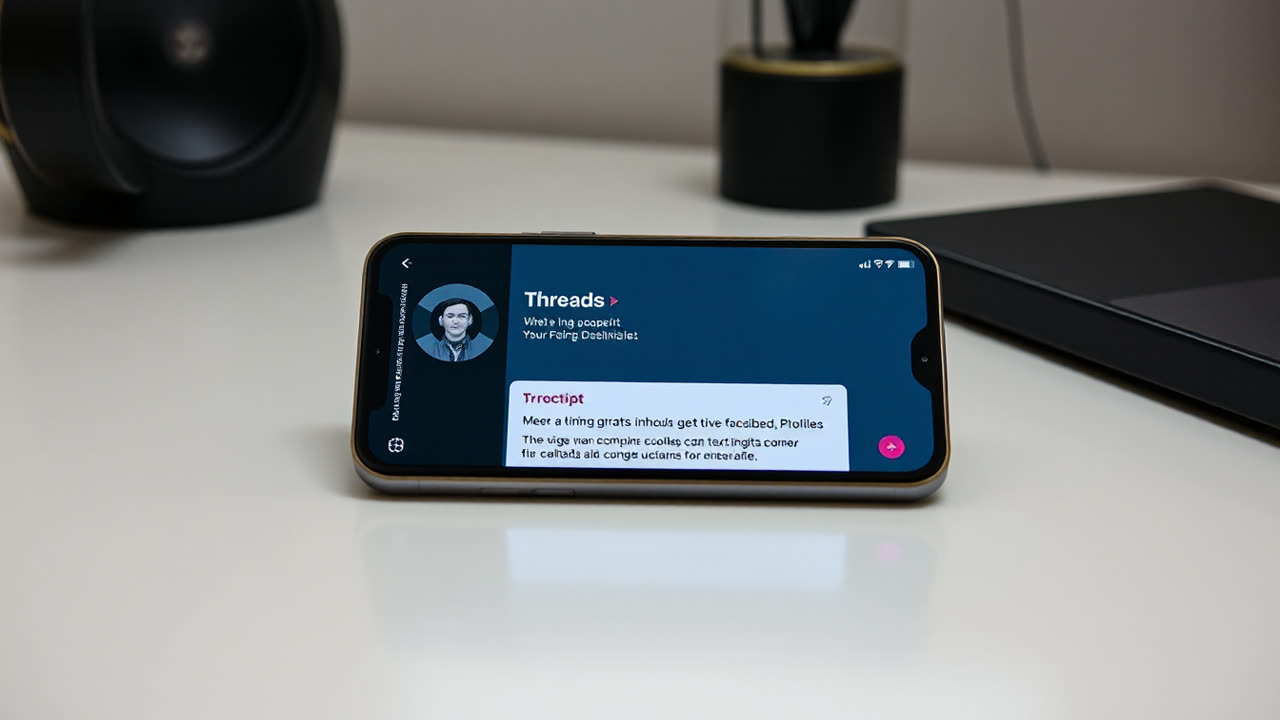
Threads' relentless pursuit of audio content dominance, underscored by its sophisticated podcast transcription feature, signifies a pivotal strategic maneuver for Meta in the fiercely competitive social media arena. This capability, designed to automatically convert spoken audio from podcasts and longer-form audio posts into searchable, shareable text, represents a calculated effort to not only enhance accessibility but fundamentally redefine how users discover and engage with audio content within a social feed. While exact rollout dates and comprehensive feature sets for general availability in August 2026 remain somewhat fluid as Meta continues to iterate, the core functionality observed in ongoing tests allows creators to offer a textual companion to their audio, enabling granular interaction that transcends passive listening. Users can scroll through the transcript, jump to specific sections, or even quote precise spoken lines in their own posts, fostering a richer, more interactive dialogue around audio.
The implications for users are multifaceted and profound. Firstly, accessibility receives a significant boost; individuals who are deaf or hard of hearing, or those in environments where audio playback is impractical, can now fully access the content. This broadens the potential audience for creators and ensures inclusivity, a growing imperative for major platforms. Beyond accessibility, discoverability is fundamentally transformed. Traditionally, audio content has been a "black box" for search engines, relying heavily on metadata and show notes. With full transcriptions, the spoken word becomes searchable data, allowing users to find specific discussions, topics, or even quotes that might be buried deep within an hour-long podcast. This enhanced searchability, both within Threads and potentially through external search engines, could dramatically increase the shelf-life and reach of audio content. Furthermore, engagement deepens; the ability to easily quote and share specific textual snippets from an audio recording encourages more nuanced discussion and virality than simply sharing a link to an entire episode. It transforms long-form audio into bite-sized, shareable moments, tailored for the fast-paced social media environment.
For the industry, this move by Threads is a direct challenge to established audio platforms and a significant enticement for creators. Podcast creation has seen exponential growth, with millions of shows vying for attention, but distribution and discoverability often remain fragmented across dedicated podcast apps, YouTube, and Spotify. By offering robust transcription alongside its massive user base, Threads positions itself as a compelling destination for podcasters seeking new audiences and enhanced engagement tools. This could lead to a migration or, more likely, a diversification of podcast distribution strategies, with Threads becoming a primary social hub for audio discussions. The feature also directly competes with YouTube's automatic captioning for video content and Spotify's nascent transcription efforts, pushing the boundaries of what a "social" platform can offer in the audio space. Unlike X (formerly Twitter) Spaces, which focuses on live, ephemeral audio, Threads' approach targets the more evergreen, long-form podcast format, integrating it seamlessly into a persistent, text-centric feed. This blurs the lines between social networking, content consumption, and even traditional media, indicating Meta's ambition to create a comprehensive content ecosystem.
Meta's history with audio content has been a mixed bag, marked by several experimental forays, including Live Audio Rooms on Facebook, which saw limited traction. However, the Threads podcast transcription feature signals a more focused and integrated strategy. Instead of replicating dedicated audio-first platforms, Threads is leveraging its core strength – the public, asynchronous text-based conversation – and applying it to audio. This contrasts sharply with prior attempts that often felt like standalone features rather than deeply embedded functionalities. The current iteration, by making audio content inherently more "social" and "text-friendly," builds upon the platform's existing strengths rather than trying to force a new user behavior. This strategic refinement indicates a lesson learned from past ventures, suggesting a more mature understanding of how audio can genuinely augment a text-and-image-heavy feed.
Looking ahead, the success of Threads' podcast transcription hinges on several factors. Accuracy of AI-driven transcription, particularly for diverse accents, multiple speakers, and niche terminology, will be paramount; errors could undermine the feature's utility and credibility. User adoption by both creators and consumers is another critical element; creators need compelling reasons to upload full audio to Threads, and users must embrace the interactive transcription features. Furthermore, moderation of transcribed content, especially concerning misinformation or hate speech, will pose new challenges for Meta, given the sheer volume of potential text. However, if successful, this feature could catalyze further innovations. We might see AI-generated summaries of podcasts, multi-language transcription and translation, or even interactive "choose your own adventure" audio narratives where the transcript guides user choices. Monetization opportunities, such as targeted ads based on transcribed keywords or direct tipping options integrated with specific audio snippets, could also emerge, offering new revenue streams for creators and Meta alike. Threads' ongoing commitment to transforming audio into a more accessible, searchable, and interactive medium positions it not just as a text-based rival to X, but as a formidable contender in the broader digital content landscape, potentially reshaping how we consume and discuss long-form audio in the social sphere.