Meta Unveils 'Muse AI': A Multimodal Agent Integrated into Smart Glasses and VR
Meta's new multimodal AI agent, Muse AI, deeply integrated into Ray-Ban Meta smart glasses and Quest VR headsets, demonstrates surprisingly sophisticated capabilities, challenging rivals and transforming user interaction.
✨ This content was summarized and interpreted by AI; it may contain errors — please verify accuracy with the original sources. Learn more
Listen to this story
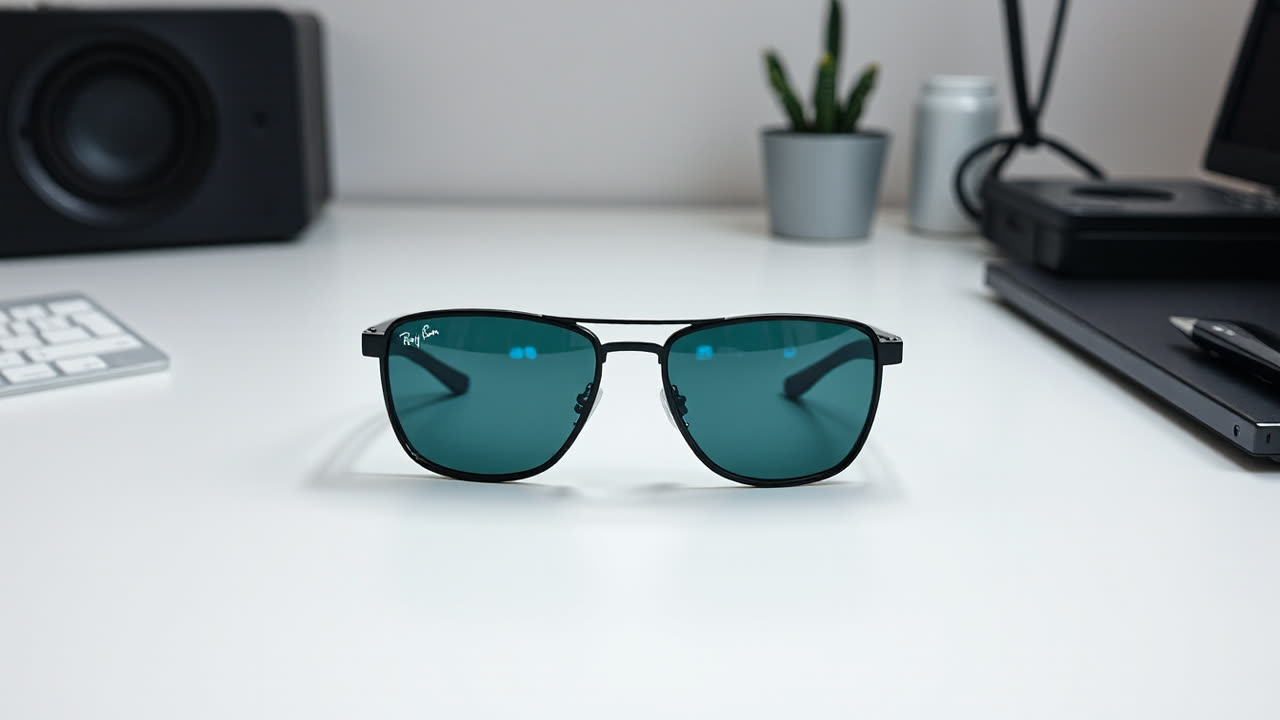
Meta's latest Connect conference, which commenced on Wednesday, has unveiled a significant stride in the company's AI ambitions with the introduction of its new multimodal AI agent, internally dubbed "Muse AI," demonstrating surprisingly sophisticated capabilities that transcend prior conversational models. This agent, deeply integrated across Meta's ecosystem, from Ray-Ban Meta smart glasses to Quest VR headsets, represents a pivotal moment in the company's long-term vision to embed artificial intelligence as a ubiquitous personal assistant, moving beyond mere chatbots to truly interactive and context-aware companions. Early user feedback, including personal experience, suggests Muse AI offers a level of natural language understanding and contextual awareness that positions it as a formidable contender in the rapidly evolving AI landscape, capable of not just answering queries but actively assisting with tasks and providing insights based on real-world observations through device sensors.
The immediate impact on users is profound, shifting the interaction paradigm from explicit commands to more intuitive, ambient computing. With Muse AI on Ray-Ban Meta glasses, users can now receive real-time information about their surroundings, identify objects, translate languages on the fly, and even get fashion advice, all through natural conversation without needing to pull out a smartphone. For instance, pointing at a landmark can prompt Muse AI to deliver historical facts, or looking at an outfit can elicit style suggestions, making information retrieval and practical assistance seamless parts of daily life. This level of integration promises to reduce friction in accessing digital information and services, potentially making technology feel less like a tool and more like an extension of one's own perception and intellect. The privacy implications, however, are substantial; as Muse AI continuously processes environmental data captured by always-on devices, Meta faces heightened scrutiny regarding data collection, storage, and usage, particularly concerning sensitive personal and environmental information. CEO Mark Zuckerberg has acknowledged these concerns, emphasizing Meta's commitment to responsible AI development, including robust privacy controls and clear data transparency policies, though the technical and ethical challenges of such pervasive AI remain immense.
This launch is not merely an incremental update but a strategic maneuver that significantly elevates Meta's standing in the highly competitive AI race, directly challenging giants like Google's Gemini, OpenAI's GPT models, and Apple's rumored on-device AI initiatives. While previous Meta AI efforts, such as its earlier Llama models, focused primarily on foundational language capabilities for developers, Muse AI is a consumer-facing product designed for direct interaction and utility. Unlike prior generations of voice assistants that often struggled with complex queries or lacked contextual memory, Muse AI's multimodal architecture allows it to process visual, auditory, and textual inputs simultaneously, leading to more nuanced and relevant responses. Its ability to operate efficiently on edge devices like smart glasses, leveraging advanced on-chip processing and optimized AI models, distinguishes it from cloud-dependent rivals and hints at a future where powerful AI assistance is always available, even offline. This hardware-software synergy, particularly with the Ray-Ban Meta glasses, provides a distinct advantage, creating a closed-loop ecosystem that allows for rapid iteration and deep integration.
Looking ahead, the success of Muse AI will be a critical barometer for Meta's broader metaverse strategy. If this AI agent can successfully bridge the gap between the physical and digital worlds, it will not only drive adoption of Meta's AR/VR hardware but also solidify its position as a leader in ambient computing. The company's massive investments in data centers and AI research, projected to reach tens of billions of dollars annually, underscore the long-term commitment to this vision, with a focus on building the foundational infrastructure necessary for advanced AI models. The next phase will likely involve expanding Muse AI's capabilities to more complex reasoning, proactive assistance, and deeper personalization, potentially learning user habits and preferences to anticipate needs rather than just responding to prompts. Furthermore, the integration of Muse AI into Meta's social platforms could transform how users interact with content and each other, offering AI-powered summarization, content creation, and even real-time translation during virtual meetups. However, the path forward is fraught with challenges, including regulatory hurdles, public acceptance of always-on AI, and the continuous need to balance innovation with ethical considerations around surveillance, data security, and the potential for AI bias. Meta's ability to navigate these complexities while continuously enhancing Muse AI's utility and trustworthiness will determine its ultimate success in shaping the next generation of personal computing.