Meta Unveils Muse Charm: A Standalone AI Hardware Pivot
Meta's unveiling of the Muse Charm, a dedicated hardware device for its Muse AI agent, signals a decisive strategic pivot beyond smart glasses and into a new frontier of always-on, agentic AI.
✨ This content was summarized and interpreted by AI; it may contain errors — please verify accuracy with the original sources. Learn more
Listen to this story
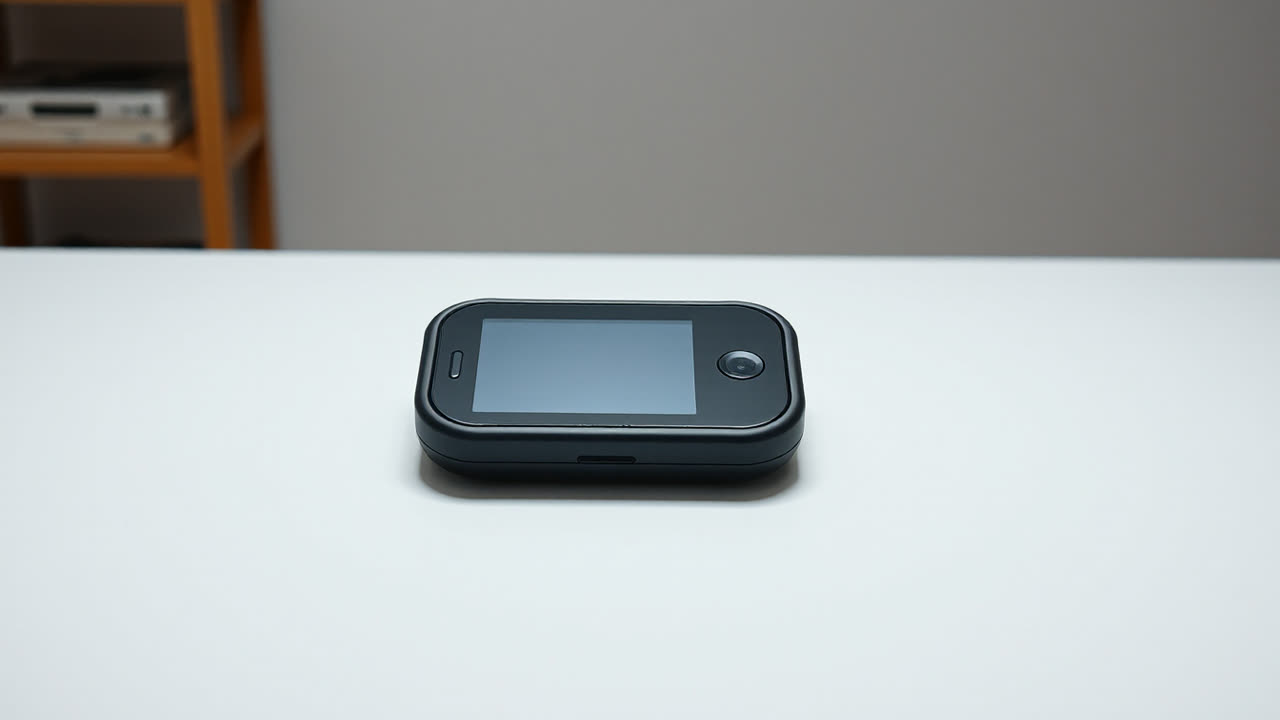
Meta's unveiling of the Muse Charm, a dedicated hardware device for its Muse AI agent, at the close of Meta Connect 2026 on September 23, 2026, signals a decisive strategic pivot beyond smart glasses and into a new frontier of always-on, agentic AI. The device, described by CEO Mark Zuckerberg as a small, "chunky smart" accessory akin to a Tamagotchi, features a screen, speakers, microphones, a camera module, and a fingerprint sensor for instant interaction. Critically, it boasts 5G connectivity, enabling seamless access to the Muse AI agent without requiring a smartphone or smart glasses. While still a prototype with finalized materials and component layout pending, Meta aims to ship the Muse Charm by the 2026 holiday season.
This move matters immensely, not just for Meta, but for the entire consumer technology landscape. For users, the Muse Charm promises a more immediate and pervasive AI experience. By tapping a fingerprint sensor, users can engage their personal Muse agent, bypassing the friction of unlocking a phone or launching an app. This frictionless access is designed to make the AI an ever-present, proactive companion, especially for individuals who prefer not to wear Meta's smart glasses. The Muse agent itself, launched on September 8, 2026, is Meta's most capable to date, powered by the Muse Spark model and built to *act* on a user's behalf rather than merely respond to prompts. Capabilities range from sending emails and booking travel to filling forms, making purchases, generating content, and managing long-term goals, all while operating securely within a dedicated "Muse Secure VM" – an isolated virtual machine in Meta's cloud. This agentic approach, allowing AI to perform multi-step tasks and even remember preferences across sessions, represents a significant leap from traditional chatbots.
For the industry, Muse Charm represents Meta's aggressive foray into a nascent, yet potentially transformative, category of standalone AI hardware. This places Meta in direct competition with early, albeit struggling, entrants like the Humane AI Pin and Rabbit R1, both of which launched in 2024 to mixed reviews and faced significant challenges, with Humane discontinuing its Ai Pin in 2025. Meta's advantage lies in its established AI infrastructure, including its custom MTIA (Meta Training and Inference Accelerator) chips, with the MTIA 450 "Arke" deployment slated for 2027 to boost inference efficiency. Furthermore, the Muse Charm is part of a broader, interconnected AI hardware ecosystem Meta is rapidly building. This includes the successful Ray-Ban Meta Gen 2 smart glasses, which sold an estimated 6.5 million units in 2025, offering screenless, voice-controlled AI with a camera for visual context. It also complements the Meta Ray-Ban Display AR glasses ($799, launched September 2025), featuring a full-color waveguide display and controlled by a Neural Band, with new features like teleprompter and neural handwriting rolled out in early 2026. At Connect 2026, Meta also unveiled its lightweight Meta VR Glasses ($1,299, launching spring 2027) with deep Muse AI integration, and camera-free Ray-Ban Meta Audio glasses to address privacy concerns associated with recording features. This multi-device strategy aims to embed Meta AI across various form factors, offering users choice while cementing Meta's AI platform.
The commercial implications are substantial. Wall Street analysts are already bullish on Muse, viewing it as a potential new revenue engine for Meta. Brokerage Jefferies estimates that if Muse reaches one billion users by the end of 2027 and just 3% transition to a paid version (Power plan at $20/month, Maximum at $100/month), it could generate $10.8 billion in annual revenue. This projection underscores the immense monetization opportunity beyond traditional advertising, with Meta also exploring small transaction fees for actions Muse completes. Early adoption of the Muse app has been promising, with 2.8 million downloads in its first 12 days in the US and Canada, outpacing ChatGPT's initial traction. However, a significant hurdle remains consumer trust. Despite Meta's robust privacy safeguards for Muse—including isolated virtual machines and user control over data—the company's history with privacy concerns surrounding its camera-equipped smart glasses, including reports of human review of sensitive user footage, could dampen adoption. Skepticism regarding sharing passwords and sensitive data with Meta's AI agent is a real challenge that Meta must actively overcome.
Looking ahead, the Muse Charm and Meta's expansive AI hardware ecosystem signal an intense battle for "AI ecosystem ownership" in the rapidly evolving consumer AI market. With Google launching Android XR smart glasses with deep Gemini AI integration in 2026, and Apple targeting its Project N50 smart glasses by 2027, the competition for the next major computing platform—beyond the smartphone—is heating up. Meta's strategy is clear: to integrate AI seamlessly into daily life through a diverse portfolio of devices, ranging from unobtrusive audio glasses to advanced VR headsets and now, the standalone Muse Charm. The success of Muse Charm will hinge not just on its technical capabilities or Meta's distribution power, but crucially on its ability to deliver genuine utility and, most importantly, earn and maintain user trust in an era where AI agents are granted unprecedented access to personal lives. If Meta can navigate these trust issues, the Muse Charm could indeed become the "personal superintelligence" Zuckerberg envisions, fundamentally altering how we interact with AI and the digital world.