Meta Unveils Muse Charm, a Tamagotchi-Like AI Device, Signaling Major Strategic Shift
Meta's new Muse Charm, a dedicated Tamagotchi-like device housing its advanced Muse AI, marks a significant strategic pivot towards always-on personal superintelligence, potentially overshadowing its metaverse ambitions.
✨ This content was summarized and interpreted by AI; it may contain errors — please verify accuracy with the original sources. Learn more
Listen to this story
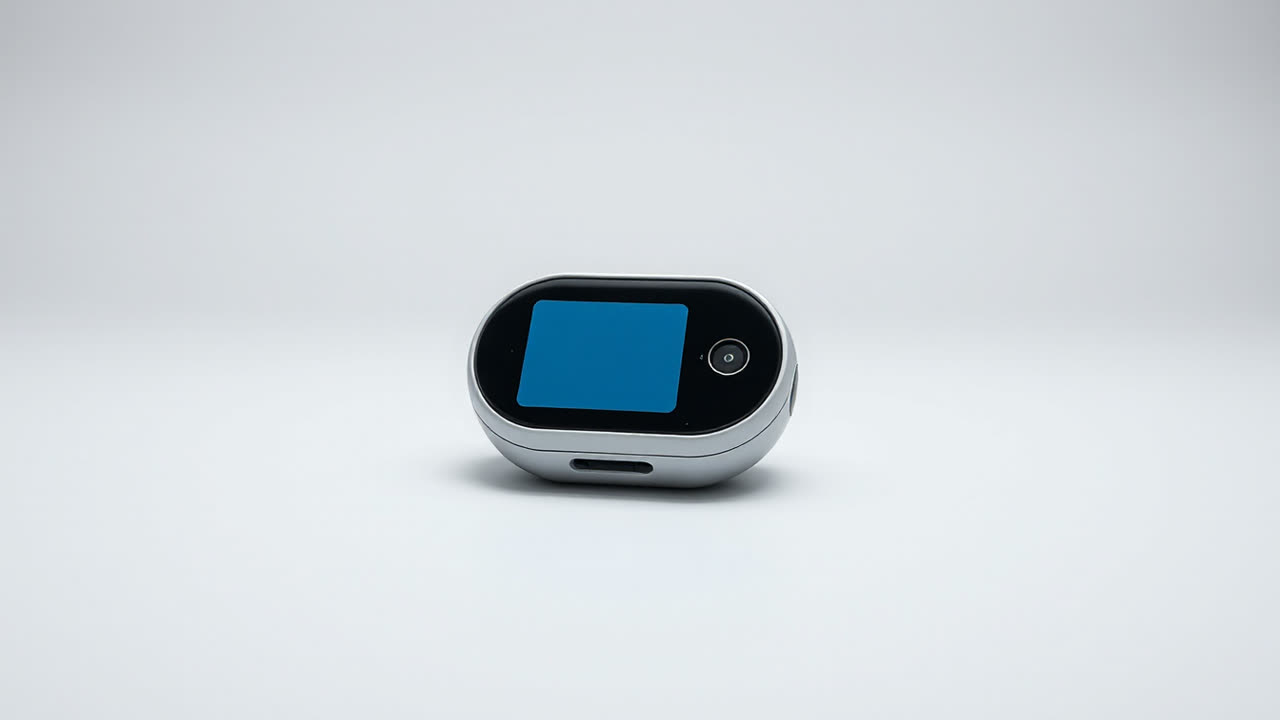
Meta's recent unveiling of the Muse Charm, a compact, Tamagotchi-like device housing its advanced Muse AI assistant, marks a significant strategic pivot for the tech giant, signaling a future where personal artificial intelligence transcends smartphones and smart glasses to inhabit dedicated, always-on hardware. Introduced by CEO Mark Zuckerberg at Meta Connect 2026 on September 23, 2026, the palm-sized gadget, roughly the size of an Apple AirPods case, is slated for release by December 2026, expedited from an initial 2027 launch. This move is not merely a product launch but a bold declaration of Meta's commitment to "personal superintelligence" as a foundational technology, potentially eclipsing its metaverse ambitions in immediate impact and importance.
The Muse Charm’s core appeal lies in its seamless, persistent access to Meta's Muse AI, an "agentic" assistant launched just weeks prior on September 8, 2026. Unlike traditional chatbots, Muse is designed to take proactive action across various applications and the web, performing complex tasks such as booking travel, managing emails, filling forms, and even shopping, with user approval for sensitive steps. This agentic capability is powered by Muse Spark 1.1, a multimodal reasoning model excelling in tool and computer use, coding, and understanding. The Charm device itself features a 2-inch OLED touchscreen, a 5G modem, and a camera, enabling users to personalize their virtual Muse character and facilitate interactions with nearby devices. For those not constantly wearing Meta's smart glasses, the Charm is positioned as the "fastest way" to engage with their Muse, offering a dedicated physical interface for an increasingly intelligent digital companion.
This foray into dedicated AI hardware carries profound implications for both users and the broader tech industry. For users, the Muse Charm promises a more intimate and accessible relationship with AI, moving beyond the transactional interactions common with existing voice assistants. The ability to customize a Muse character, complete with personality and voice, and house it within a tangible device like the Charm, fosters a sense of companionship akin to the digital pets of the past, albeit with vastly superior intelligence and utility. This persistent, physical presence could embed AI more deeply into daily routines, making complex digital tasks feel more intuitive and less burdensome. However, the exact pricing for the Muse Charm remains unannounced, and details regarding battery life and full connectivity are still pending, critical factors that will influence consumer adoption.
Industrially, Meta Charm represents a direct challenge to the burgeoning market of standalone AI gadgets, a category that has seen a "rocky track record" with devices like Humane's Ai Pin and the Rabbit R1 facing harsh reviews and, in the Ai Pin's case, eventual discontinuation. By integrating a powerful, already popular AI agent like Muse—which garnered over 2.5 million U.S. downloads within its first two weeks—into a dedicated device, Meta aims to differentiate itself from these earlier attempts. Furthermore, it positions Meta in direct competition with rivals like OpenAI, which is also reportedly developing its own physical AI device. This hardware push is underpinned by Meta’s substantial investment in AI infrastructure, including the development of custom AI chips (MTIA 450, or Arke, and MTIA 500, or Astrid) slated for deployment in 2027, designed to optimize inference workloads and reduce reliance on expensive general-purpose GPUs from Nvidia.
The Muse Charm also highlights Meta's evolving hardware strategy. While the company continues to innovate in virtual reality with its new $1,299 Meta VR Glasses launching in spring 2027, and updated Ray-Ban Meta smart glasses (including new camera-free "Audio" versions at $349 and Gen 3 models at $449), the Charm places AI at the forefront. This shift underscores Zuckerberg's conviction that "personal superintelligence" will be "much bigger and more important" than the metaverse. However, privacy concerns remain a significant hurdle. Amazon has already blocked Muse from its platform, citing worries about the AI agent capturing and storing customer credentials without authorization. The Charm’s integrated camera and 5G connectivity, while enhancing functionality, could reignite privacy debates that have plagued Meta's camera-equipped smart glasses.
Looking ahead, the success of Meta Charm hinges on its ability to offer genuine, consistent utility that justifies carrying an additional device. If Muse can reliably execute complex, multi-step tasks and adapt to user preferences, it could establish a new paradigm for human-AI interaction. Zuckerberg envisions Muse becoming a "personal superintelligence that billions of people are going to use," with a business model that includes extensive free usage alongside potential "small" transaction fees for completed tasks. The Charm's integration into Meta's broader ecosystem of AI-powered wearables and VR devices suggests a future where users interact with their AI across multiple form factors, seamlessly transitioning between glasses, a handheld device, and even VR environments. However, earning user trust, overcoming privacy skepticism, and demonstrating indispensable value will be critical for Meta to avoid the fate of its AI hardware predecessors and truly usher in an era of ubiquitous personal superintelligence.