Meta Unveils Quest 3 Mixed Reality Headset and Ray-Ban Meta Smart Glasses
Meta introduced a significant evolution in its wearable technology at Meta Connect, unveiling the Meta Quest 3 virtual reality headset and the second generation of Ray-Ban Meta Smart Glasses, alongside a commitment to a future of camera-free smart eyewear.
✨ This content was summarized and interpreted by AI; it may contain errors — please verify accuracy with the original sources. Learn more
Listen to this story
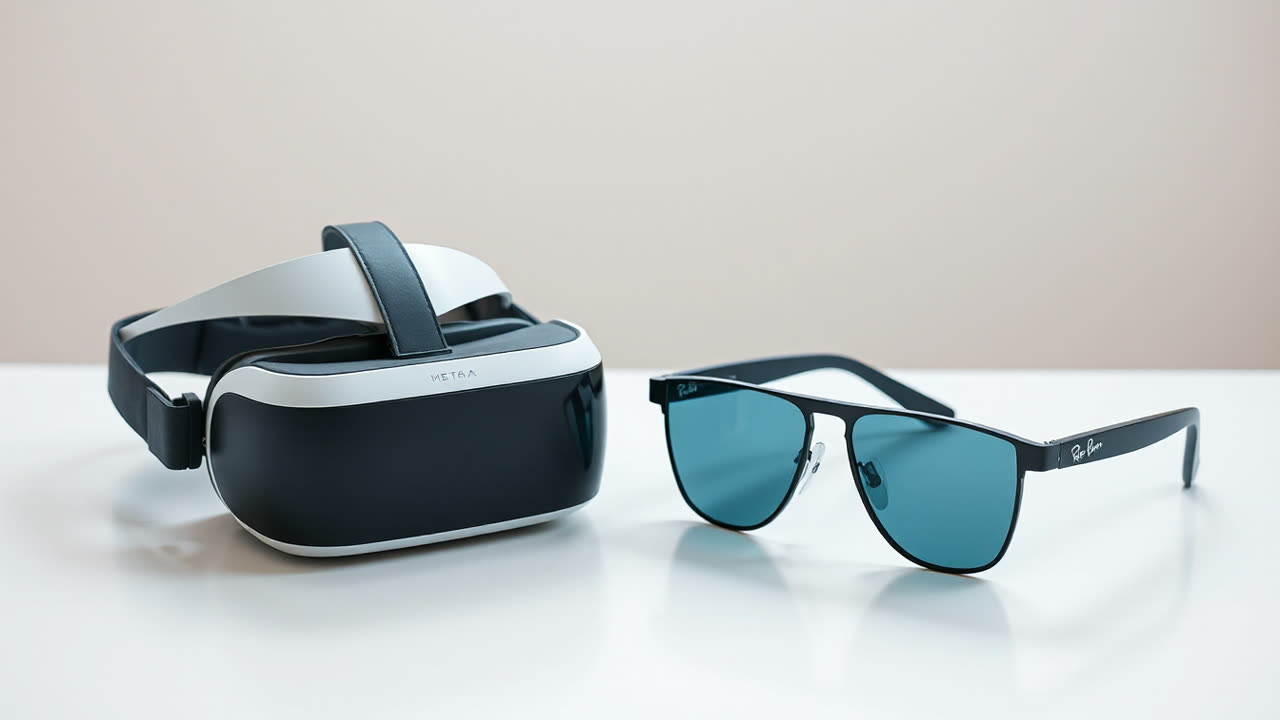
Meta introduced a significant evolution in its wearable technology at Meta Connect, unveiling the Meta Quest 3 virtual reality headset and the second generation of Ray-Ban Meta Smart Glasses, alongside a commitment to a future of camera-free smart eyewear. The Meta Quest 3, a mixed-reality device, launched with a starting price of $499.99 for the 128GB model, featuring a 40% slimmer optical profile than its predecessor, the Quest 2, and double the graphical processing power thanks to its new Snapdragon XR2 Gen 2 chip. Its enhanced display boasts a resolution of 2064 x 2208 pixels per eye, representing a nearly 30% increase in resolution over the Quest 2, delivering sharper visuals and a more immersive experience. The headset integrates full-color passthrough, enabling users to seamlessly blend virtual objects with their physical surroundings, a critical step towards true mixed reality, and features redesigned Touch Plus controllers for improved ergonomics and haptic feedback.
Simultaneously, the second generation of Ray-Ban Meta Smart Glasses debuted, starting at $299, marking a substantial upgrade over the original Stories glasses. These new smart glasses incorporate a 12MP ultrawide camera, significantly improved audio quality from open-ear speakers with extended bass, and five microphones for superior call clarity. A standout feature is the ability to livestream directly to Instagram and Facebook, alongside Meta AI integration for hands-free control and information retrieval. Battery life has also seen an improvement, offering up to four hours of continuous use and a portable charging case providing up to 32 hours of additional charge. While the prompt references "Ray-Ban Meta Gen 3" and "camera-free glasses," the announced product was the second generation, which does include a camera. Meta has, however, expressed a long-term vision for truly camera-free or more discreet smart glasses as part of its broader AR roadmap, aiming to address privacy concerns and expand utility beyond mere capture. This strategic direction signals an understanding of the social friction that cameras on smart glasses have historically generated, hinting at future iterations that prioritize audio, AI, and subtle display technologies.
These releases are pivotal for Meta's long-term strategy, solidifying its commitment to the metaverse and its vision for ambient computing. The Quest 3, positioned as a more accessible mixed-reality device compared to high-end rivals like the Apple Vision Pro (priced at $3,499), aims to democratize access to immersive experiences. While the Vision Pro offers higher resolution and more advanced eye-tracking, the Quest 3's affordability and robust gaming library make it a compelling choice for a broader consumer base, potentially accelerating VR adoption. The improved passthrough capabilities of the Quest 3 are particularly significant, allowing developers to create more sophisticated mixed-reality applications that blend digital content with the real world, moving beyond purely virtual environments. This blurs the lines between VR and AR, paving the way for a more integrated computing experience.
The Ray-Ban Meta Smart Glasses, on the other hand, represent Meta's foray into everyday augmented reality, albeit in a more subtle form. By integrating advanced audio, AI, and subtle capturing capabilities into a stylish form factor, Meta is attempting to normalize wearable tech. The enhanced audio quality and Meta AI integration transform the glasses into a personal assistant and communication hub, allowing users to interact with their digital world without pulling out a smartphone. This move is critical for Meta as it seeks to embed its AI and social platforms more deeply into users' daily lives, creating a persistent, hands-free interface for its ecosystem. The ability to livestream directly from the glasses also taps into the creator economy, offering a novel way to share experiences authentically and spontaneously.
Looking ahead, Meta's trajectory is clear: a gradual, multi-pronged approach to building the metaverse. The Quest 3 lays the groundwork for advanced mixed reality, while the Ray-Ban Meta Smart Glasses cultivate user comfort and utility in everyday AR. The eventual introduction of truly camera-free smart glasses, or at least models with highly discreet and context-aware sensors, would address persistent privacy concerns that have plagued earlier smart glass ventures. Future iterations of the Quest line are expected to further refine mixed-reality capabilities, potentially incorporating more advanced eye and hand tracking, higher resolution displays, and a wider field of view. For the Ray-Ban Meta line, we can anticipate more sophisticated AI integration, potentially incorporating subtle heads-up displays for contextual information, and further advancements in audio and power efficiency. The industry impact is profound: Meta is not just selling devices; it is building an ecosystem designed to shift computing paradigms from handheld screens to spatial interfaces, making interaction with digital information more intuitive and seamlessly integrated into the physical world. The success of these offerings will largely depend on Meta's ability to foster a robust developer community and convince users of the practical, everyday value of living at the intersection of the physical and digital.