Meta Unveils Radical VR Glasses, Prioritizing Comfort and Social Integration
Meta has unveiled new VR Glasses that clip onto ears like conventional eyewear, marking a radical strategic pivot towards mainstream immersive technology adoption by prioritizing comfort and social integration over bulky headsets, potentially democratizing spatial computing for everyday use.
✨ This content was summarized and interpreted by AI; it may contain errors — please verify accuracy with the original sources. Learn more
Listen to this story
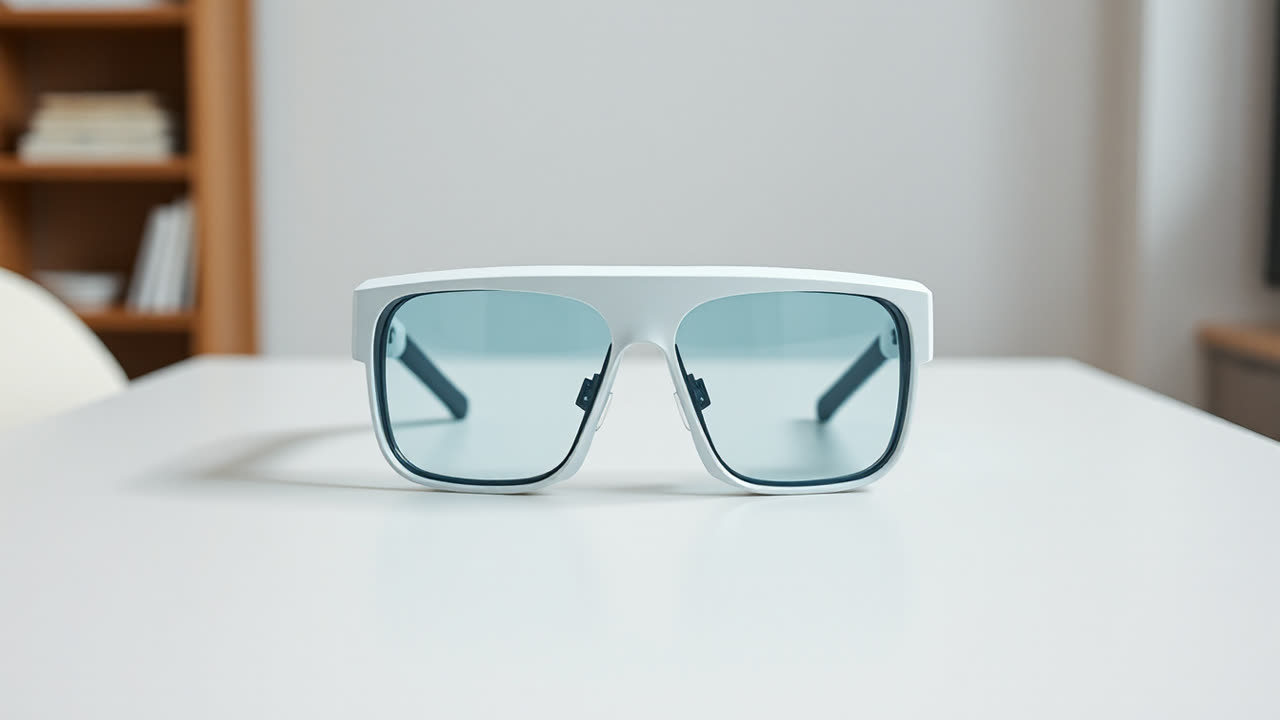
Meta's unveiling of its new VR Glasses, a radical departure from traditional head-mounted displays, signals a pivotal strategic pivot towards mainstream adoption of immersive technology, prioritizing comfort and social integration over the bulky form factors that have long characterized virtual reality. Unlike the encompassing Quest headsets, these new glasses clip onto the ears like conventional eyewear, yet promise immersive displays for media consumption and gaming, effectively blurring the lines between discrete personal entertainment and socially acceptable wearables. This innovative design directly addresses one of VR's most significant hurdles: its alienating appearance and physical discomfort during extended use.
The shift from a head-strapped device to ear-mounted glasses represents a critical evolution in Meta's hardware philosophy, moving beyond the "face computer" paradigm towards a more subtle, integrated computing experience. While specific technical specifications for the new VR Glasses remain under wraps, the core innovation lies in miniaturization and optical engineering that allows for immersive visuals within a lightweight, glasses-like frame. This is a monumental challenge, as current high-fidelity VR typically requires substantial optics and processing power, leading to devices like the Meta Quest 3, which weighs 515 grams, or the Apple Vision Pro, which comes in at 600-650 grams. The new Meta VR Glasses, by their very nature, would need to be dramatically lighter, likely in the sub-100 gram range to truly mimic traditional eyewear, necessitating breakthroughs in display technology, battery life, and spatial computing engines. This form factor suggests a potential move away from foveated rendering requiring eye-tracking, or at least a highly optimized version, to maintain a sleek profile.
The impact on users could be transformative. The primary barrier to widespread VR adoption has not been the lack of compelling content but the friction of the hardware itself. Many consumers find current VR headsets too heavy, too isolating, and too awkward for casual use, limiting their appeal to dedicated gamers and early adopters. These new VR Glasses, by offering a familiar and unobtrusive form factor, could unlock entirely new use cases and user segments. Imagine watching a movie on a virtual big screen during a commute or engaging in a light gaming session without feeling detached from your surroundings or drawing undue attention. This could democratize immersive content consumption, integrating it seamlessly into daily life rather than relegating it to dedicated "VR sessions."
From an industry perspective, this launch marks Meta's aggressive push to define the future of spatial computing and challenge the perception that AR glasses are the sole path to mainstream adoption. While Meta has been developing its true AR glasses, codenamed "Project Nazare," which are still years away from consumer release and face immense technological hurdles, these VR Glasses serve as a crucial interim step. They leverage Meta's existing expertise in VR display technology while tackling the form factor challenge head-on. This strategy positions Meta to potentially capture a broader market segment than Apple, whose Vision Pro, while technically impressive, carries a premium price tag of $3,499 and remains a bulkier, albeit powerful, "spatial computer." The Meta VR Glasses, if priced competitively, could offer an accessible entry point into immersive viewing that the Vision Pro, with its tethered battery pack and significant weight, currently does not.
Comparing it to the prior generation, such as the Meta Quest 3, the new VR Glasses represent a radical divergence rather than an iterative upgrade. The Quest line focuses on full immersion, room-scale tracking, and robust gaming, often requiring dedicated space and time. The VR Glasses, conversely, appear to prioritize portability, social acceptance, and casual immersive experiences. This isn't a replacement for the Quest line but a complementary product designed for different contexts and user needs. It also stands in stark contrast to Meta's own Ray-Ban Meta Smart Glasses, which primarily offer camera, audio, and AI assistant functionalities without immersive visual displays. The new VR Glasses slot into a new category, offering visual immersion where smart glasses offer augmented audio/camera, and VR headsets offer full virtual reality.
Looking ahead, the success of Meta's VR Glasses will hinge on several critical factors: the quality of the immersive display within such a compact form factor, battery life, and the development of compelling content specifically tailored for this new usage paradigm. If Meta can deliver a genuinely "good enough" immersive experience that doesn't compromise on comfort or battery life, these glasses could become a staple for personal media consumption and casual gaming, much like wireless earbuds revolutionized audio. This move also sets the stage for future convergence, where these VR Glasses could eventually evolve into full AR glasses as display and projection technologies mature, bridging the gap between today's bulky headsets and the ultimate vision of seamless, everyday spatial computing. Meta's long-term metaverse vision relies on ubiquitous, accessible hardware, and these VR Glasses represent a bold, calculated leap towards making that vision a more tangible reality for the everyday consumer.