Microsoft's New Surface Mouse Integrates Haptic Feedback and Dedicated AI Button for a Paradigm Shift in Interaction
Microsoft's second-generation Surface Mouse, launching next month, introduces haptic feedback and a customizable action button for Copilot, fundamentally changing digital workspace interaction.
✨ This content was summarized and interpreted by AI; it may contain errors — please verify accuracy with the original sources. Learn more
Listen to this story
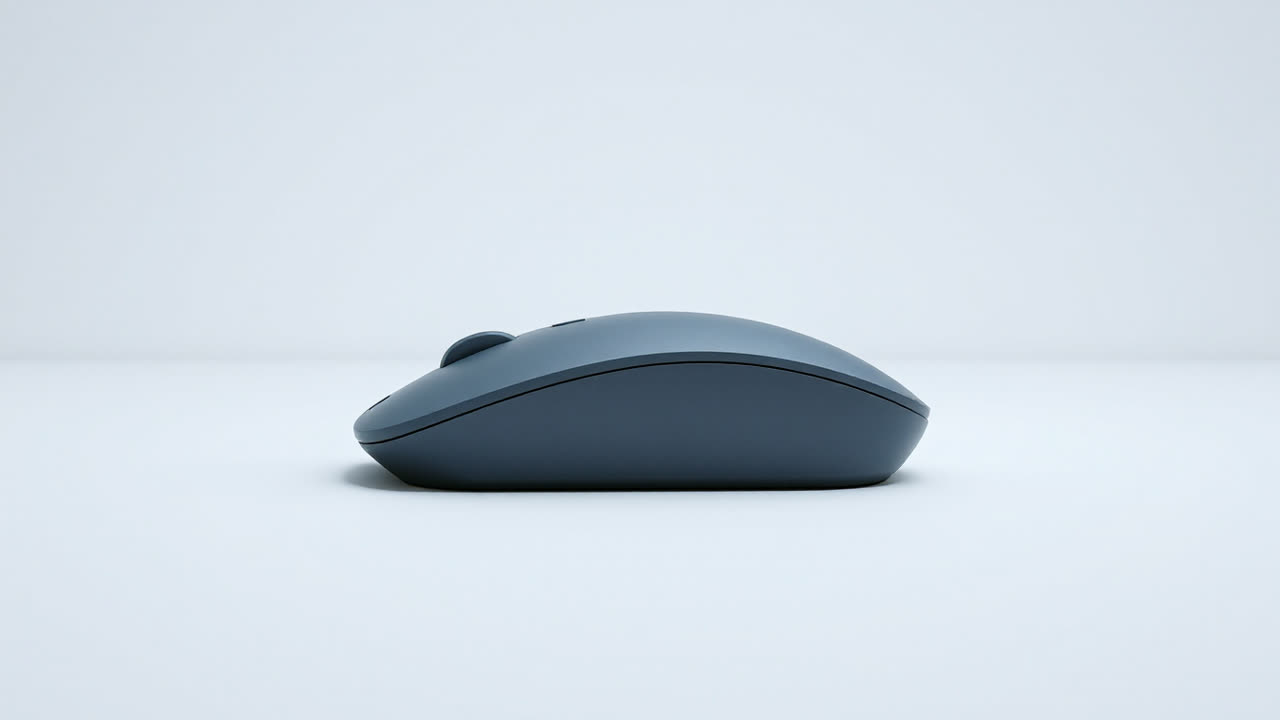
Microsoft’s upcoming second-generation Surface Mouse, slated for release next month, introduces a significant paradigm shift in peripheral interaction with its integrated haptic feedback and a dedicated, customizable action button primarily designed for quick access to Copilot. This evolution marks a pivotal moment, moving beyond mere pointer control to embed a richer, more tactile experience directly into the user’s hand, fundamentally altering how individuals engage with their digital workspaces and AI assistants.
The inclusion of haptic feedback is arguably the most striking feature, transforming the mouse from a passive input device into an active, responsive interface. Unlike the simple vibrations found in some gaming mice, the haptics in the Surface Mouse are expected to offer nuanced tactile sensations, potentially signaling alerts, confirming actions, or even providing contextual cues within applications. This could manifest as a subtle click when snapping windows, a gentle thrum for notification alerts, or a distinct vibration pattern to confirm a Copilot command has been received and processed. Such granular feedback enhances user awareness and reduces the reliance on visual cues, improving efficiency and potentially decreasing cognitive load. For accessibility, haptic feedback could offer non-visual indications for users with visual impairments, broadening the device’s utility beyond the mainstream.
The customizable action button, pre-configured for Copilot, underscores Microsoft's aggressive push to integrate AI into every facet of its ecosystem. This dedicated button streamlines access to the AI assistant, allowing users to invoke Copilot without navigating menus or memorizing keyboard shortcuts, thereby making AI assistance a more fluid and integral part of the workflow. While initially focused on Copilot, the button's customizability suggests future flexibility, enabling users to assign it to other frequently used functions, macros, or applications, catering to diverse professional needs. This move positions the Surface Mouse as an AI-first peripheral, a critical component in Microsoft's vision of ambient computing where AI is always at the user's fingertips.
This new Surface Mouse represents a significant leap from its predecessors, which, while aesthetically pleasing and ergonomically sound, largely adhered to conventional mouse functionalities. The prior generation of Surface Mouse, for instance, offered precise tracking and comfortable design but lacked any form of haptic feedback or a dedicated, intelligent action button. The new model elevates the interaction experience, moving beyond incremental improvements in tracking or battery life to introduce entirely new sensory input and AI integration.
In the broader market, the Surface Mouse’s haptic capabilities place it in direct competition with high-end productivity and gaming mice that have experimented with tactile feedback, though often with different goals. Devices like the Logitech MX Master series excel in ergonomics, multi-device connectivity, and advanced scrolling, but have not yet deeply integrated haptic feedback for system-wide interaction. Apple’s Force Touch trackpads on MacBooks offer haptic feedback for contextual actions, demonstrating the potential for such technology in personal computing, but this has not yet translated into a dedicated Apple mouse. Gaming mice from brands like Razer and Corsair often include haptics, but these are typically for in-game immersion rather than productivity or system feedback. Microsoft's strategic move to bring sophisticated haptics to a general-purpose productivity mouse, coupled with AI integration, carves out a unique niche.
The implications for the industry are profound. Microsoft's endorsement of haptic feedback in a mainstream peripheral could spur broader adoption across the PC hardware landscape. Other peripheral manufacturers may follow suit, accelerating innovation in tactile interfaces and potentially leading to a new standard for how users interact with software. Furthermore, the tight integration with Copilot signals a future where hardware is increasingly designed to facilitate AI interaction, making dedicated AI buttons or gestures a common feature across keyboards, mice, and other input devices. This could drive software developers to explore new ways to leverage haptic feedback for enhanced user experiences within their applications, from creative suites to enterprise tools.
Looking ahead, the Surface Mouse with haptic feedback and an AI action button is likely just the beginning of Microsoft’s ambient intelligence strategy for hardware. We can anticipate further refinement of haptic patterns for different system events and applications, potentially leading to an "audio-haptic language" that provides rich, non-visual information. Future iterations might incorporate advanced sensors for gesture recognition or even biometric authentication, further blurring the lines between physical interaction and digital command. The success of this mouse will undoubtedly influence the design of future Surface devices and a broader range of Microsoft-branded peripherals, solidifying AI as not just a software layer, but a fundamental component of hardware design. This launch is not merely about a new mouse; it's about Microsoft laying down a marker for the future of human-computer interaction, where AI is an ever-present, tactile, and intuitive partner.