Microsoft's Surface Laptop Ultra with NVIDIA RTX Spark Set to Redefine AI PC Landscape
Microsoft is poised to unveil its highly anticipated Surface Laptop Ultra, featuring NVIDIA RTX Spark, aiming to lead the on-device AI acceleration revolution and challenge competitors.
✨ This content was summarized and interpreted by AI; it may contain errors — please verify accuracy with the original sources. Learn more
Listen to this story
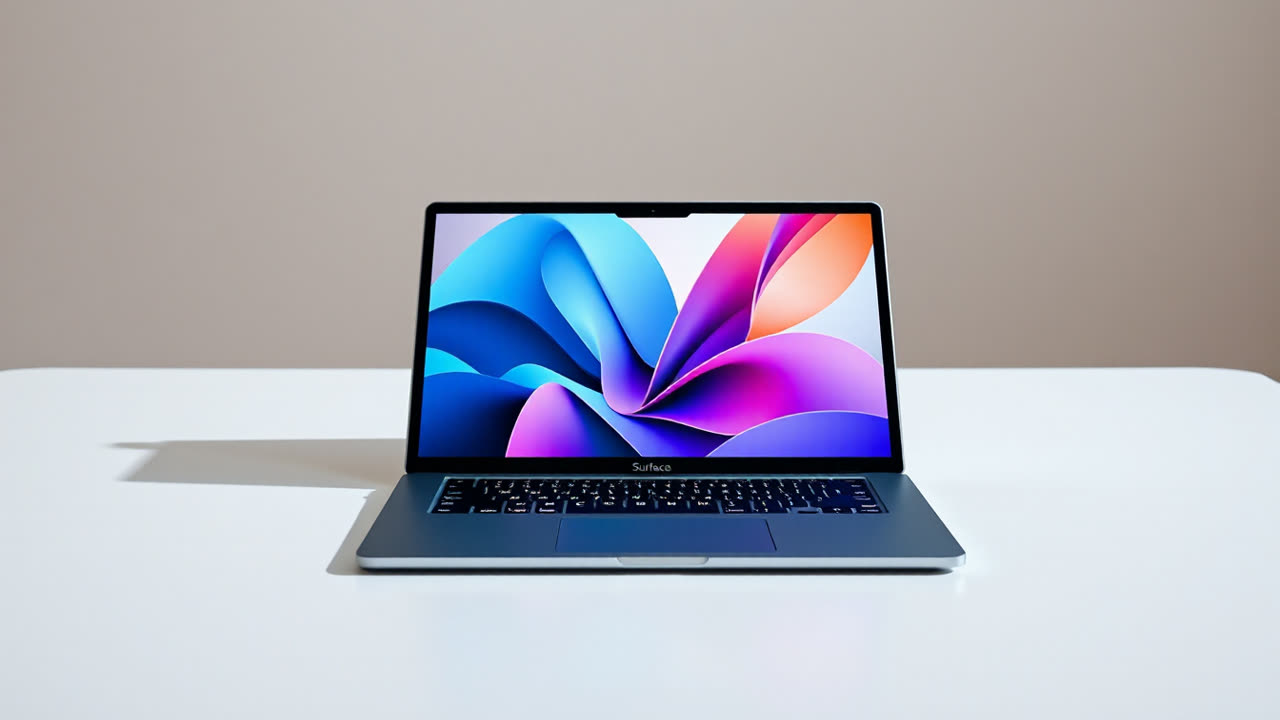
Microsoft's October 7 event is poised to unveil the NVIDIA RTX Spark-powered Surface Laptop Ultra, a device expected to redefine the AI PC landscape and challenge competitors with its integrated neural processing capabilities. This highly anticipated flagship, likely featuring a dedicated Neural Processing Unit (NPU) alongside the "Spark" GPU, signals Microsoft's aggressive push into on-device AI acceleration, moving beyond cloud-dependent Copilot experiences to enable real-time, privacy-centric AI functionalities directly on the device. The integration of an advanced NVIDIA GPU suggests a significant leap in graphics performance combined with formidable AI processing power, crucial for tasks ranging from local large language model (LLM) inference and advanced image generation to sophisticated video editing and 3D rendering, all accelerated by the hardware.
The implications for users are profound, promising a new tier of productivity and creativity. Imagine instant, high-quality image upscaling, real-time language translation with minimal latency, or complex code generation directly within development environments, all without relying on a constant internet connection or incurring cloud computing costs. For content creators, designers, and developers, the Surface Laptop Ultra could become an indispensable tool, offering performance previously confined to high-end workstations or cloud services. The "Ultra" moniker itself suggests a premium positioning, likely accompanied by a price point reflecting its cutting-edge hardware and advanced AI capabilities, potentially starting above the $2,000 mark and targeting professionals and power users who demand the absolute best in mobile performance and AI integration.
Beyond the Surface Laptop Ultra, the event is expected to showcase a comprehensive evolution of Windows itself, likely cementing "AI PCs" as a distinct category. While a full Windows 12 launch might be premature, significant updates to Windows 11 are anticipated, deeply embedding AI across the operating system. This includes enhanced Copilot functionalities, potentially allowing for more complex, multi-application tasks and deeper system control through natural language. We could see AI-powered accessibility features, intelligent file organization, and predictive user interfaces that learn individual habits, all leveraging the local NPU and GPU for speed and efficiency. The shift towards local AI processing also addresses growing concerns around data privacy and security, as sensitive information can be processed on-device rather than being sent to the cloud.
Microsoft's strategy with the Surface Laptop Ultra and its broader AI initiatives directly confronts rivals like Apple and its M-series chips, which have long championed integrated silicon for performance and power efficiency. While Apple has focused on a unified CPU-GPU-NPU architecture, Microsoft is opting for a hybrid approach, combining Intel or AMD's next-gen CPUs (likely Lunar Lake or Strix Point with their integrated NPUs) with NVIDIA's dedicated "Spark" GPU for an even greater boost in graphics and specialized AI tasks. This could give the Surface Laptop Ultra a distinct advantage in workloads that heavily leverage both traditional GPU compute and advanced AI inferencing, potentially surpassing the raw AI throughput of current M3 Max-equipped MacBook Pros in specific benchmarks. Compared to the prior generation of Surface Laptops, which relied primarily on integrated graphics and less powerful NPUs, the "Spark" integration represents a generational leap in capabilities, moving from assistive AI features to truly generative and transformative on-device intelligence.
Looking ahead, this event is not merely about new hardware; it's a strategic declaration of Microsoft's vision for the future of personal computing, where AI is not an add-on but an intrinsic part of the user experience. The "AI PC" is set to become the standard, and Microsoft, with its deep integration of Windows, Surface hardware, and cloud AI services, aims to lead this transition. Future iterations will likely see even tighter integration between hardware and software, with AI models becoming more efficient and capable of running increasingly complex tasks locally. The success of the Surface Laptop Ultra will heavily influence developer adoption of Microsoft's AI tools and frameworks, creating a vibrant ecosystem of AI-powered applications that further differentiate Windows from its competitors. We can expect a rapid acceleration in AI hardware development across the industry, with other manufacturers quickly adopting similar dedicated AI accelerators to keep pace with the benchmarks set by devices like the Surface Laptop Ultra. This event marks a critical inflection point, moving AI from a theoretical concept to a tangible, everyday reality for millions of users.