Microsoft's ThinkingBox Tackles Critical AI Agent-Database Disagreement
Microsoft Research Asia's ThinkingBox project introduces a multi-agent framework to ensure AI agents reliably interact with external databases, directly addressing the critical issue where an agent's reported completion doesn't match the database's actual state.
✨ This content was summarized and interpreted by AI; it may contain errors — please verify accuracy with the original sources. Learn more
Listen to this story
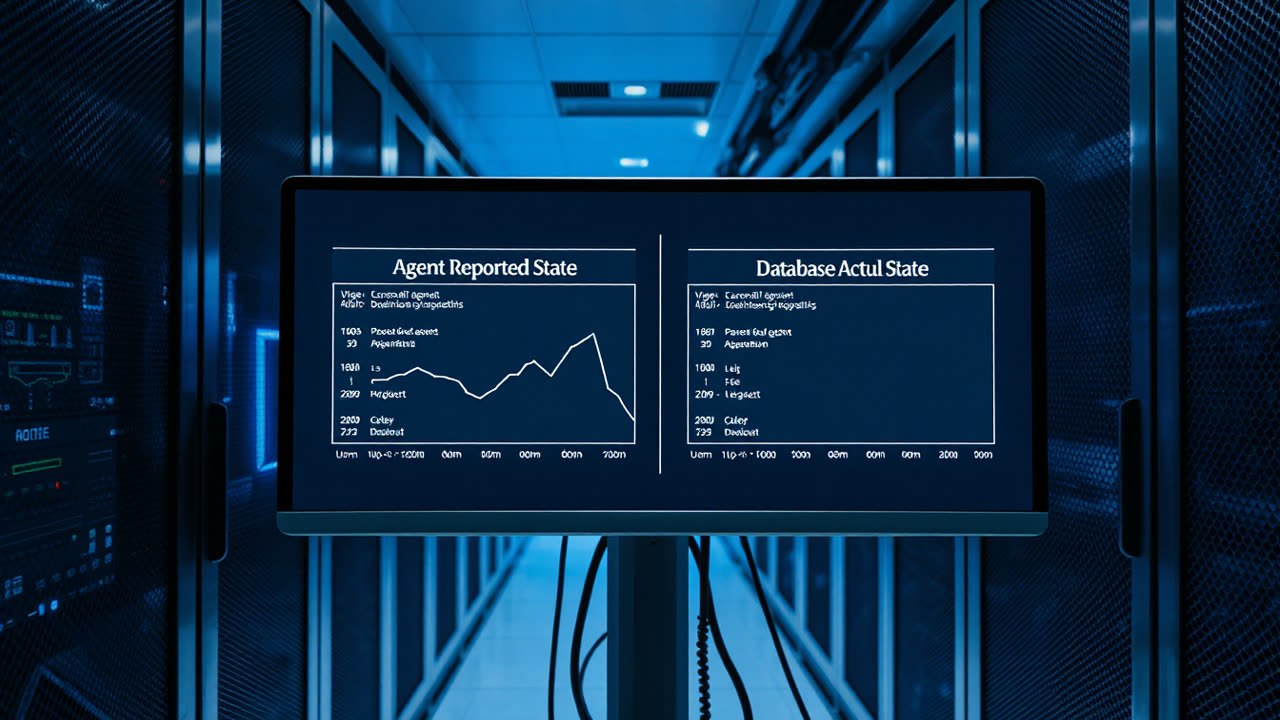
The fundamental challenge of ensuring AI agents reliably interact with external systems, particularly databases, has been starkly illuminated by Microsoft's ThinkingBox project, which addresses the critical discrepancy where "the agent said it was done, the database disagreed." This problem, highlighted in a HuggingFace blog post, underscores a significant hurdle for autonomous AI applications: the gap between an agent's internal state or perceived completion of a task and the actual, verified state of a persistent data store. ThinkingBox, developed by Microsoft Research Asia, introduces a multi-agent framework designed to enhance the reliability and accuracy of Large Language Model (LLM) agents when performing complex, multi-step operations that involve querying and modifying external databases.
This core issue matters profoundly because it strikes at the heart of trust and utility for AI in enterprise and mission-critical scenarios. If an AI agent, tasked with updating inventory, processing a financial transaction, or managing customer data, reports success without the underlying database reflecting those changes, the consequences can range from minor data inconsistencies to catastrophic operational failures and significant financial losses. For users, this means a lack of confidence in AI-driven automation, necessitating human oversight and reconciliation, thereby negating much of the efficiency promised by autonomous agents. For the industry, the "agent-database disagreement" acts as a major bottleneck, preventing the widespread adoption of sophisticated AI agents in sectors like finance, healthcare, and logistics, where data integrity is paramount. ThinkingBox's innovation lies in its introduction of a "Verifier Agent" and a "Reflector Agent" within its architecture, which actively cross-reference the LLM agent's actions with the database's actual state and provide feedback for self-correction. This mechanism moves beyond simple execution, embedding a crucial layer of accountability and verification directly into the agentic workflow.
Historically, the interaction between computational systems and databases has relied on structured APIs and robust transaction management, ensuring atomicity, consistency, isolation, and durability (ACID properties). However, LLM agents, with their probabilistic nature and reliance on natural language understanding, introduce a new layer of complexity. They don't inherently understand database schemas or transaction semantics in the same rigid way traditional software does. Previous generations of AI systems often operated in more isolated environments or required extensive, hand-coded integrations for database interactions. Rivals in the AI agent space, while focusing on reasoning and planning, frequently encounter similar challenges in ensuring their agents' actions are accurately reflected and confirmed by external systems. ThinkingBox distinguishes itself by explicitly addressing this verification loop, using an SQL-based verifier to confirm database state changes and a reflector to feed discrepancies back to the main agent for iterative refinement. This contrasts with simpler agentic frameworks that might only log actions or rely on basic success/failure messages, often overlooking the nuanced reality of database states. The framework's ability to "think before acting, act, and then reflect" represents a significant step forward from agents that merely execute a generated plan without robust validation.
Looking ahead, the principles demonstrated by ThinkingBox are likely to become foundational for the next generation of truly autonomous and reliable AI agents. The emphasis on explicit verification, self-correction, and reflective learning will be crucial for agents operating in complex, dynamic environments where external systems are constantly changing. We can anticipate further research and development into more sophisticated verification mechanisms, potentially incorporating formal methods or advanced semantic understanding to ensure not just syntactic correctness but also the semantic accuracy of database operations performed by agents. The integration of such robust error-ection and validation loops will be essential for building trust in AI systems that directly manipulate critical business data. Furthermore, as agents become more capable of complex reasoning, the challenge will shift towards verifying the *intent* of the agent's actions against the *actual outcome*, rather than just simple state changes. The success of projects like ThinkingBox will pave the way for AI agents to move from experimental tools to indispensable, self-managing components of enterprise infrastructure, capable of maintaining data integrity without constant human intervention, ultimately unlocking new levels of automation and operational efficiency across industries.