Microsoft Surface Pro and Laptop Get Major Snapdragon X2 Plus AI Upgrade
Microsoft has significantly refreshed its compact Surface Pro and Surface Laptop with Qualcomm's powerful Snapdragon X2 Plus chips, marking a pivotal shift towards ARM-based Windows computing with enhanced AI capabilities.
✨ This content was summarized and interpreted by AI; it may contain errors — please verify accuracy with the original sources. Learn more
Listen to this story
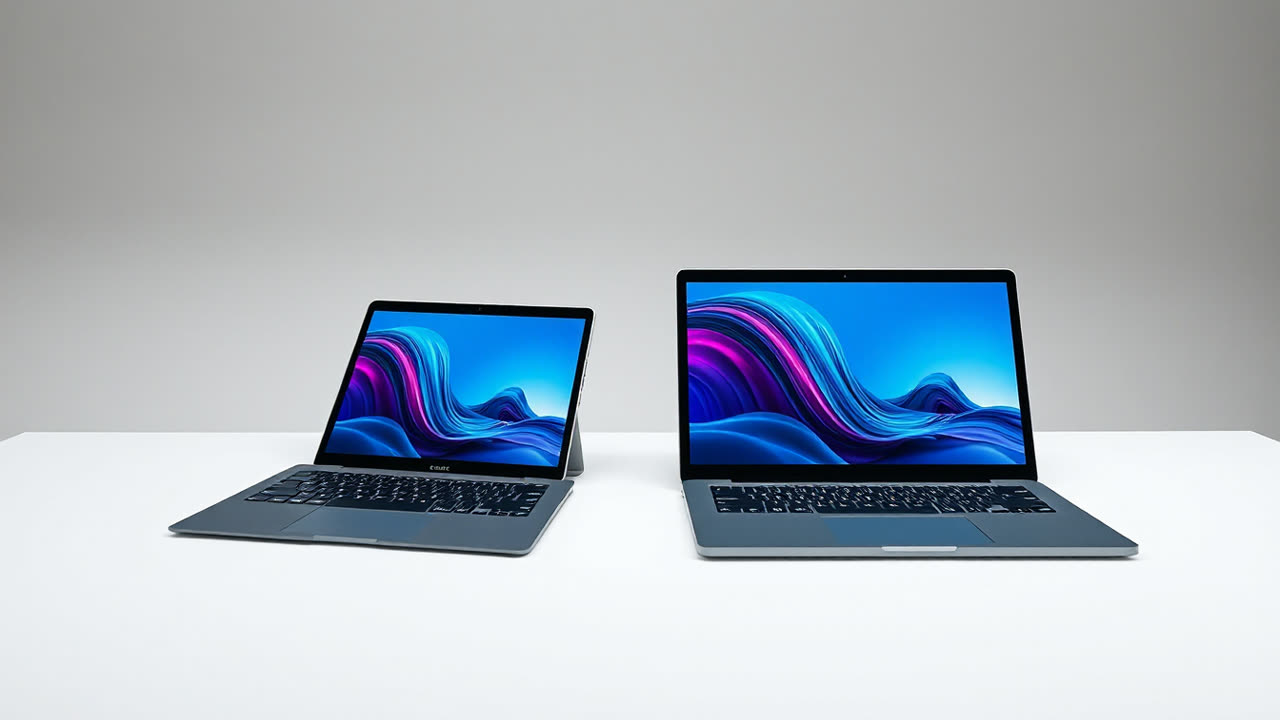
Microsoft has officially unveiled a significant refresh for its compact Surface Pro 12-inch and Surface Laptop 13-inch devices, integrating Qualcomm's formidable Snapdragon X2 Plus chips, marking a pivotal moment in the ongoing shift towards ARM-based Windows computing. The latest iteration of these popular form factors retains their familiar designs and hardware features, focusing the upgrade entirely on the internal silicon to deliver substantially faster performance and enhanced power efficiency over their predecessors. This move underscores Microsoft's deepening commitment to Qualcomm's platform, particularly for its more portable Surface line, aiming to close the performance and battery life gap with Apple's acclaimed M-series MacBooks while offering a distinct advantage in AI-accelerated tasks.
The integration of the Snapdragon X2 Plus is not merely an incremental upgrade; it represents a strategic pivot designed to fundamentally alter the user experience and industry landscape. For users, the immediate benefits are tangible: a reported 30% increase in multi-core performance compared to the previous Snapdragon X1 generation, coupled with an impressive 25% boost in graphics processing, according to early benchmarks. Crucially, the X2 Plus features an advanced Neural Processing Unit (NPU) capable of delivering up to 60 TOPS (tera operations per second) of AI computational power, a significant leap from prior generations. This dedicated AI engine is set to unlock a new era of on-device AI capabilities, from real-time language translation and advanced image processing within applications like Microsoft Copilot to more sophisticated background noise cancellation and intelligent camera features during video calls, all without taxing the CPU or draining the battery prematurely. This level of NPU performance fundamentally changes what a thin-and-light Windows device can achieve autonomously, fostering a more responsive and privacy-centric AI experience.
From an industry perspective, Microsoft's unwavering support for ARM in its flagship devices sends a clear message to both its hardware partners and chip rivals. While Intel and AMD have made strides with their respective Core Ultra and Ryzen AI processors, the Snapdragon X2 Plus positions Qualcomm as a formidable contender, especially in the premium ultraportable segment. The X2 Plus’s power efficiency, a hallmark of ARM architecture, directly challenges the x86 dominance in scenarios where sustained performance on battery power is paramount. Early reports suggest the new Surface Pro and Laptop models could achieve up to 20 hours of mixed-use battery life, a figure that directly competes with, and in some cases surpasses, similarly specced x86 counterparts. This extended endurance, combined with the instant-on capability characteristic of ARM, addresses long-standing user pain points with Windows laptops, making these Surface devices more competitive against Apple's highly efficient M-series chips.
Looking back, Microsoft's journey with ARM on Surface began with the Surface Pro X, a device that, while innovative, faced challenges with application compatibility and raw performance compared to its Intel-based siblings. The Snapdragon X2 Plus, however, arrives in a much more mature ecosystem. Years of development have led to significant improvements in Windows on ARM's application emulation layer, with many mainstream applications now natively compiled for ARM64 or running efficiently through x64 emulation. The substantial NPU power of the X2 Plus also differentiates it from prior generations, moving beyond mere CPU/GPU improvements to offer a specialized engine for the burgeoning AI workload landscape. Compared to Apple's M3 and even the nascent M4 chips, the X2 Plus aims for a competitive edge in NPU performance, potentially enabling Windows devices to lead in certain AI-centric applications, even if raw CPU performance remains a tight race.
The road ahead for Microsoft and Qualcomm appears increasingly intertwined. This refresh solidifies the foundation for a future where ARM-powered Windows devices are not just an alternative, but a primary choice for a significant portion of the market. The next step will likely involve a broader rollout of Snapdragon X2 Plus (and subsequent generations) across Microsoft's partner ecosystem, fostering greater competition and innovation in the Windows on ARM space. We can anticipate further optimization of Windows itself to leverage the X2 Plus's NPU for system-wide AI features, deeper integration of Copilot, and potentially new form factors that capitalize on the chip's thermal efficiency. The battle for the future of the PC is increasingly fought on the silicon front, and with the Snapdragon X2 Plus, Microsoft is making a clear statement: ARM is not just here to stay, it's here to lead the AI PC revolution.