Microsoft Unifies Copilot AI into a Single 'Super App'
Microsoft is consolidating its distinct consumer and commercial Copilot AI assistants into a singular 'super app' interface, aiming to redefine productivity and user interaction across its ecosystem.
✨ This content was summarized and interpreted by AI; it may contain errors — please verify accuracy with the original sources. Learn more
Listen to this story
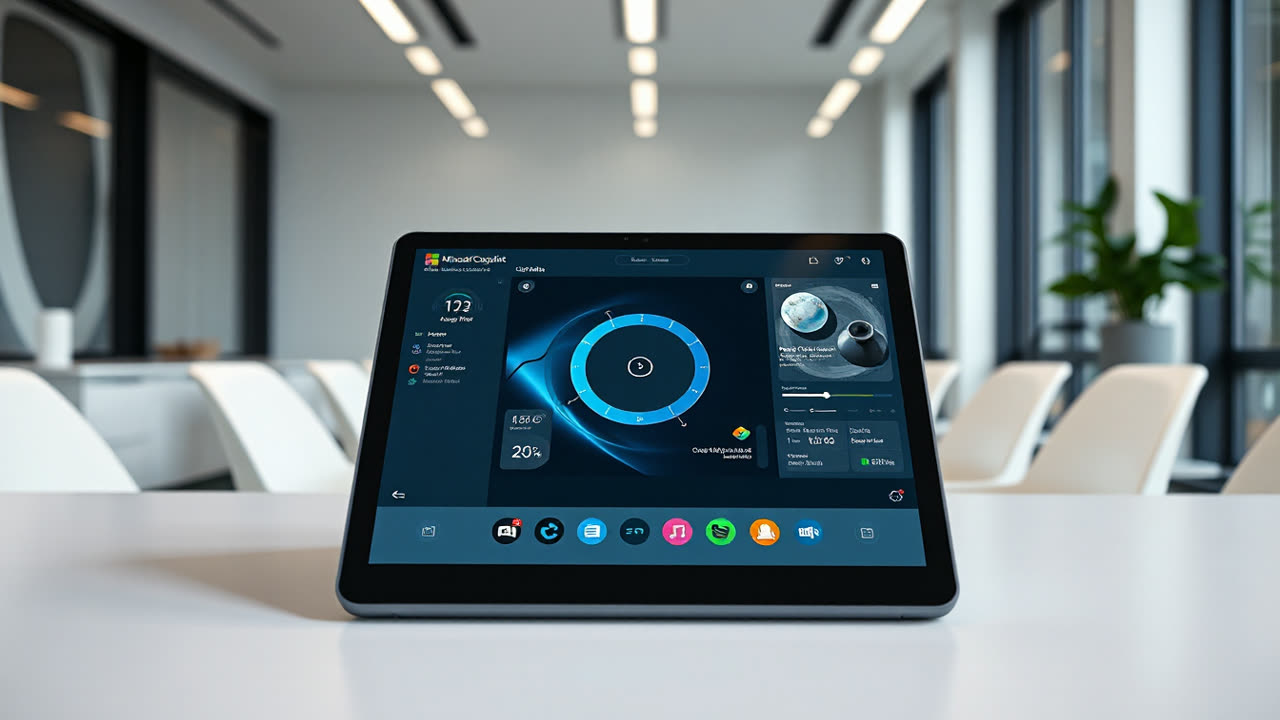
Microsoft is actively consolidating its consumer and commercial Copilot AI assistants into a singular "super app" interface, a strategic move poised to redefine productivity and user interaction across its vast ecosystem. This integration, beginning with the distinct Copilot and Microsoft 365 Copilot applications, aims to streamline access for both personal and work accounts, presenting a unified AI experience previously bifurcated across different platforms. The company's vision extends beyond mere amalgamation, hinting at a future where this consolidated Copilot acts as a central neural network for all Microsoft services, from Windows to Edge, and the entire Microsoft 365 suite.
The significance of this consolidation cannot be overstated, particularly for enterprise users. Historically, businesses have grappled with the fragmented landscape of AI tools, often requiring separate subscriptions and interfaces for personal AI assistance versus robust, secure, and compliance-driven AI within their productivity suites. By merging Microsoft 365 Copilot, which offers capabilities like drafting documents in Word, analyzing data in Excel, and generating presentations in PowerPoint, with the broader consumer-facing Copilot, Microsoft is creating a single gateway to AI that understands context across professional and personal domains. This could dramatically reduce the learning curve and friction associated with adopting AI tools, making advanced functionalities more accessible to a wider user base. For instance, a user might seamlessly transition from asking Copilot to summarize personal emails to generating a quarterly report draft using confidential company data, all within the same application interface, albeit with appropriate data separation and security protocols for commercial use. This unified approach could significantly boost productivity by minimizing context switching and leveraging a deeper understanding of user intent across their digital life.
The impact on the industry is equally profound. Microsoft's "super app" strategy directly challenges the current paradigm of specialized AI applications. While numerous startups and tech giants offer AI tools for specific tasks—be it writing, image generation, or data analysis—Microsoft is betting on the convenience and power of an all-encompassing AI. This move positions Copilot as a central operating system for intelligence, rather than just an add-on feature. Rivals like Google, with its Gemini AI integrated across its Workspace suite, and Apple, with its evolving on-device AI capabilities, are pursuing similar integration strategies, but Microsoft's entrenched position in the enterprise market gives Copilot a unique advantage. The ability to natively tap into the vast data generated within Microsoft 365, governed by enterprise-grade security and compliance, offers a compelling proposition that standalone AI tools struggle to match. Furthermore, the unification simplifies Microsoft's own development and deployment efforts, allowing for faster iteration and consistent feature rollouts across its user base.
This isn't Microsoft's first foray into unified AI assistants. Earlier attempts, such as Cortana, struggled to gain significant traction, often hampered by limited integration and a lack of compelling use cases beyond basic voice commands. The current Copilot, however, benefits from a decade of advancements in large language models (LLMs) and generative AI, making it far more capable and versatile. The shift from a reactive assistant to a proactive, generative co-pilot fundamentally changes the user experience. Unlike its predecessors, Copilot is designed to actively assist in content creation, data analysis, and task automation, rather than merely responding to direct prompts. This generational leap in AI capability is the bedrock upon which the "super app" vision is built. The current iteration of Copilot, available across various platforms, demonstrates impressive capabilities, such as summarizing long documents, generating code snippets, and even creating images from text prompts. The move to a single app aims to consolidate these diverse functions into a cohesive, intuitive experience.
Looking ahead, the "super app" will likely evolve into a truly ambient AI, anticipating user needs and proactively offering assistance across devices and contexts. Expect deeper integration with Windows 12 (or future iterations), turning the operating system itself into an intelligent layer. This could manifest as Copilot automatically suggesting relevant files based on your current meeting, drafting email responses based on your calendar, or even optimizing system performance based on your usage patterns. Further down the line, Microsoft could open up the Copilot "super app" to third-party developers, creating an ecosystem of AI-powered plugins and services that extend its capabilities even further, much like an app store for intelligence. The challenge will be maintaining user trust and privacy amidst such deep integration, ensuring that the convenience of a unified AI does not come at the cost of data security or personal autonomy. Microsoft's success will hinge on its ability to balance powerful, proactive AI with robust control and transparency for users, cementing Copilot's role not just as an assistant, but as an indispensable digital partner.