Millions of Home Networks Vulnerable Due to Router Security Oversights
Despite advanced features, millions of home networks remain exposed to cyber threats due to widespread neglect of basic router security configurations, often fixable in minutes.
✨ This content was summarized and interpreted by AI; it may contain errors — please verify accuracy with the original sources. Learn more
Listen to this story
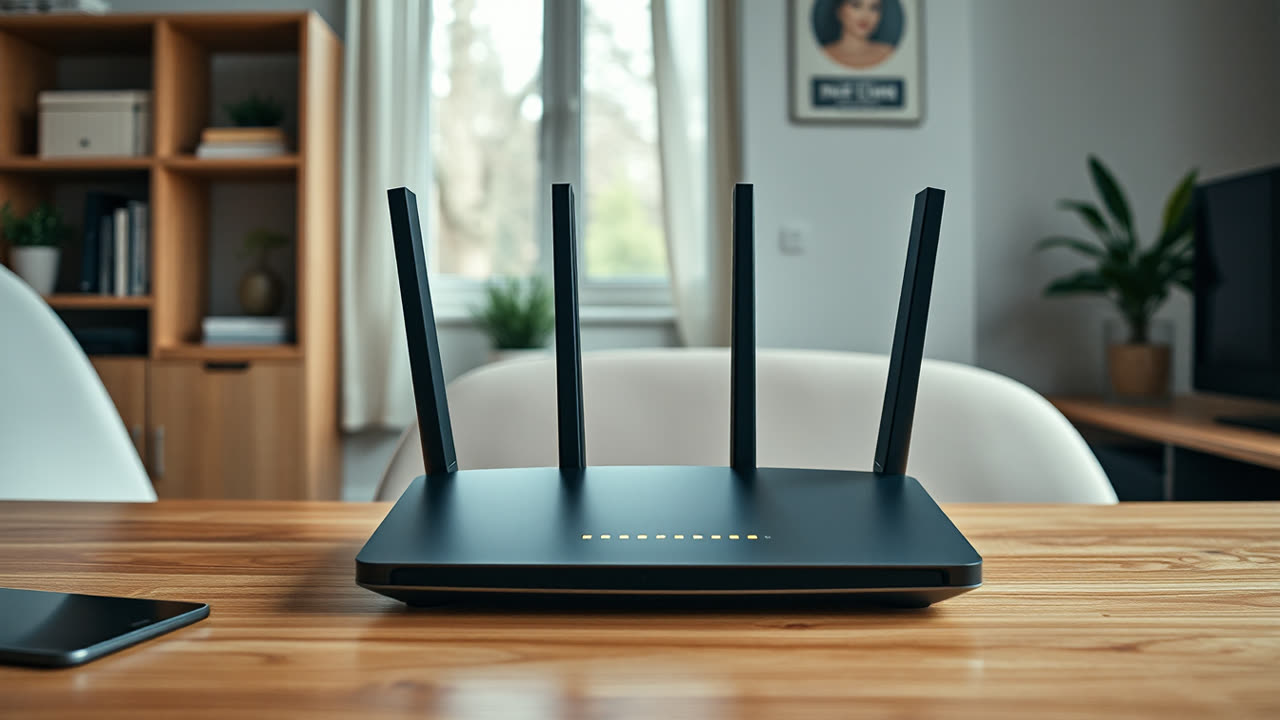
The pervasive misconception that "out-of-the-box" internet routers offer sufficient security leaves millions of home networks vulnerable to an array of sophisticated cyber threats, yet often, just a few minutes of configuration can drastically fortify a household's digital perimeter. This critical oversight transforms a foundational piece of internet infrastructure into a potential Achilles' heel, enabling attackers to compromise personal data, launch further attacks, or conscript devices into botnets without the user's knowledge. The core issue isn't a lack of inherent capability in most modern routers, but rather a widespread user reluctance or ignorance regarding simple, impactful security hygiene that can be implemented in under ten minutes.
The immediate impact of these overlooked vulnerabilities is profound and multifaceted. An unsecured router acts as an open door, allowing unauthorized access to every device connected to the home network—from smart TVs and security cameras to personal computers and smartphones. Attackers can exploit default credentials, unpatched firmware, or insecure settings like Wi-Fi Protected Setup (WPS) to gain entry, subsequently intercepting traffic, injecting malware, or even rerouting internet requests to malicious sites (DNS hijacking). For instance, the widespread use of default usernames and passwords, often easily found online or common across product lines, remains a significant entry point for malicious actors. A 2023 report highlighted that millions of devices still utilize easily guessable or factory-set credentials, making them prime targets for automated attacks. Furthermore, outdated firmware, which often contains critical security patches, leaves routers susceptible to known exploits. Router manufacturers frequently release updates to address newly discovered vulnerabilities, but users rarely apply them, leaving gaping security holes. Disabling WPS, a feature designed for convenience, is another quick win, as it has historically been plagued by design flaws allowing brute-force attacks on the PIN. Enabling WPA3 encryption, where supported, over older WPA2 standards, offers enhanced protection against dictionary attacks and provides individualized data encryption for each connection, even on open networks.
The broader industry implications of this user apathy are substantial. Router manufacturers, while increasingly integrating advanced security features like WPA3 and automatic firmware updates into newer models, face an uphill battle against the legacy of insecure practices and the sheer volume of older, unmanaged devices. The onus often falls on the user, creating a significant weak link in the overall cybersecurity ecosystem. This issue is particularly salient as the number of Internet of Things (IoT) devices in homes explodes. Each smart device—a thermostat, a lightbulb, a refrigerator—represents another potential entry point if the router, the central gateway, is not adequately secured. A compromised router can allow an attacker to pivot from a relatively innocuous smart bulb to sensitive personal data on a laptop. This interconnectedness means that router security is no longer just about protecting a single computer but safeguarding an entire digital household. Compared to a decade ago, when router security discussions primarily revolved around WEP/WPA2 password strength, today's landscape demands a more holistic approach, encompassing firmware integrity, network segmentation (via guest networks), and the disabling of unnecessary services like remote management.
Looking ahead, the trajectory of router security will likely be shaped by several converging forces. There's a growing push for "zero-trust" network architectures to extend into the home, where every device and user must be authenticated and authorized, regardless of their location relative to the network perimeter. Manufacturers are also expected to further automate security, with self-updating firmware becoming a standard feature rather than an optional setting, and AI-driven threat detection becoming more commonplace within the router itself. Companies like Google and Eero already offer routers with more integrated, user-friendly security management and automatic updates, setting a precedent for the industry. The advent of Wi-Fi 7 (802.11be) promises not only faster speeds but also continued advancements in security protocols, building upon WPA3. However, even with these technological leaps, user education remains paramount. The most sophisticated router security features are moot if basic steps like changing default passwords or enabling strong encryption are ignored. Regulatory bodies might also play a larger role, potentially mandating minimum security standards for consumer networking equipment, similar to efforts seen in IoT device security. Ultimately, while technology will continue to evolve, the fundamental principle that a few minutes invested in router security can prevent months of digital headaches will remain a crucial takeaway for the foreseeable future.
FACTS: How to improve your router's security in 10 minutes — Most internet routers are solid out of the box, but that doesn't mean they can't be made more secure. Often, all you need to do is tweak a few settings. (kaynak: Engadget, https://www.engadget.com/2267401/how-to-improve-router-security-10-minutes/)