Minecraft's Future on 'Switch 2': Mouse Support and a Philosophical Shift for Nintendo
Speculation around *Minecraft* on a future 'Switch 2' highlights the potential for official mouse and keyboard support, signaling a significant philosophical shift for Nintendo and a game-changer for players.
✨ This content was summarized and interpreted by AI; it may contain errors — please verify accuracy with the original sources. Learn more
Listen to this story
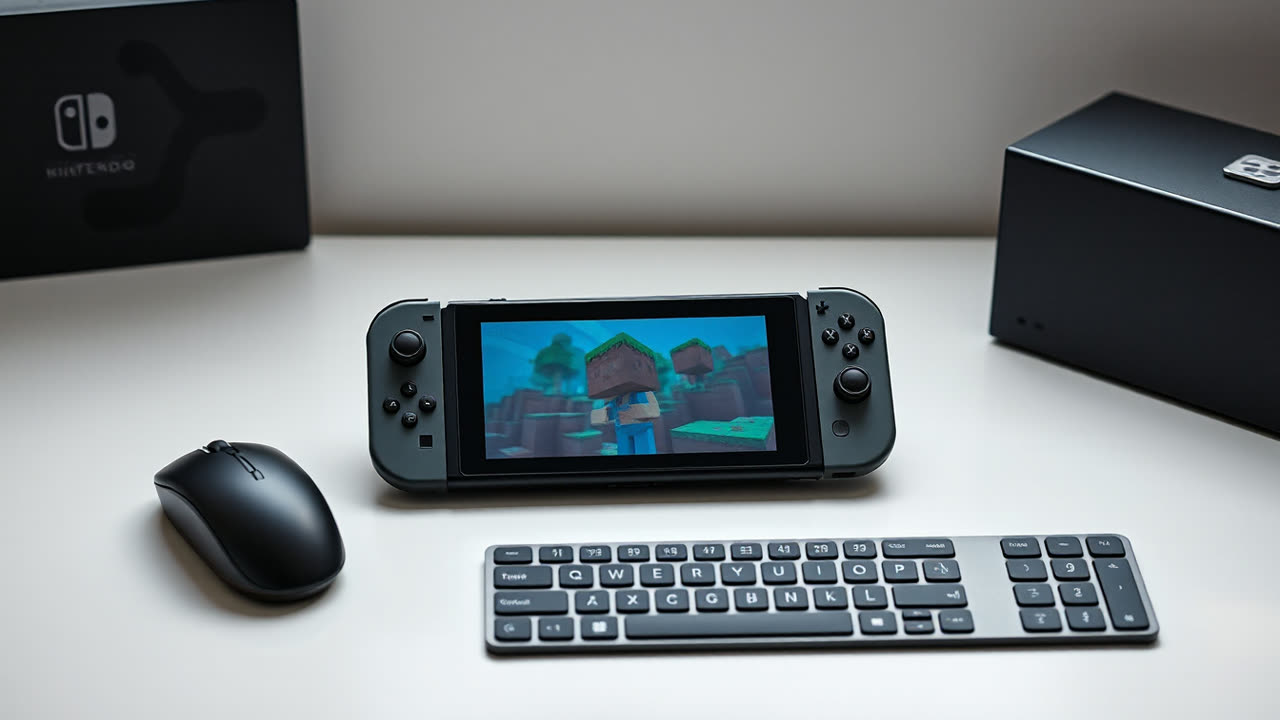
The gaming world eagerly anticipates official details regarding Nintendo's next-generation console, widely speculated as the "Switch 2." While the prompt suggests a definitive October 27 release for *Minecraft* on this unannounced hardware, historical context indicates this date likely refers to the game's launch on the original Nintendo Switch in 2017. As of August 2026, Nintendo has yet to officially unveil a successor to the Switch, making any specific game release dates for a "Switch 2" purely speculative. However, the theoretical prospect of *Minecraft* arriving on a more powerful Nintendo console, especially with the potential for mouse and keyboard support, opens a fascinating discussion about evolving console input paradigms and their profound implications for both players and the industry.
The enduring appeal of *Minecraft* on Nintendo's platform is undeniable. The game has consistently been a top seller on the original Switch, leveraging its portability for on-the-go creative freedom. A next-generation Switch would undoubtedly offer a significant leap in graphical fidelity and processing power, potentially allowing for larger render distances, more complex Redstone contraptions, and smoother performance in densely populated worlds—areas where the current Switch often shows its age. Moving *Minecraft* to a more capable system would not only enhance the visual and technical experience but also potentially enable Mojang to implement features or content updates that are currently constrained by the original Switch's hardware limitations. This matters immensely for users, as it promises a less compromised, more expansive *Minecraft* experience, bridging the gap closer to its PC counterpart in terms of scale and ambition.
The critical, unaddressed question of mouse control for *Minecraft* on a future Switch is where true analytical value emerges. For a game fundamentally built around precise block placement and rapid inventory management, the traditional console joystick and button layout, while functional, inherently limits a player's efficiency and dexterity compared to a mouse and keyboard setup. On PC, mouse input allows for pixel-perfect aiming, essential for intricate building, PvP combat, and navigating complex user interfaces. Introducing native mouse support on a next-gen Switch would be a game-changer for *Minecraft* enthusiasts, offering an unparalleled level of precision previously unavailable on a Nintendo handheld or home console hybrid. This would not only appeal to veteran PC players seeking a portable yet uncompromised experience but also potentially attract new players who find traditional controller input cumbersome for creative titles.
From an industry perspective, official mouse support for a flagship title like *Minecraft* on a new Nintendo console would represent a significant philosophical shift. Nintendo has historically prioritized its unique input methods, from motion controls to touchscreens, often shying away from direct keyboard and mouse integration. While some third-party accessories exist for the current Switch, official, system-level support for mouse input is scarce. Embracing mouse controls would signal Nintendo's recognition of the growing demand for PC-like precision in certain genres, particularly with the proliferation of cross-play. *Minecraft*'s Bedrock Edition already facilitates cross-platform play across various devices, including PC, Xbox, PlayStation, and current Switch. Enabling mouse input on a next-gen Switch would level the playing field for players engaging in cross-platform servers, ensuring that those on Nintendo hardware are not at a competitive disadvantage in scenarios requiring precise aiming or rapid interaction. This move could also pave the way for other PC-centric genres, such as real-time strategy games or complex simulation titles, to find a more comfortable home on Nintendo's platform, expanding its software library beyond traditional console offerings.
Looking ahead, the arrival of *Minecraft* on a hypothetical "Switch 2" would serve as a powerful launch title, demonstrating the new console's capabilities and its commitment to delivering a premium experience for one of the world's most popular games. If Mojang and Nintendo were to implement robust mouse support, it would set a precedent. This could encourage other developers to consider similar input options for their titles, especially for multi-platform releases where a PC version already exists. The challenge, of course, lies in ensuring a seamless user experience, potentially requiring dedicated USB-C ports for peripherals or even Bluetooth mouse compatibility. Furthermore, developers would need to thoughtfully integrate mouse controls into existing UI elements without compromising the core console experience for those who prefer traditional controllers. The future of *Minecraft* on Nintendo's next platform, while still shrouded in the mystery of an unannounced console, holds the promise of a more expansive, precise, and ultimately more versatile creative canvas for millions of players.