Mitsubishi to Mass-Produce 1,000 Humanoid Robots Monthly in Repurposed Auto Plant
Mitsubishi Heavy Industries announces an ambitious plan to produce 1,000 'Highlanders' humanoid robots per month at an existing internal combustion engine plant in Kyoto, signaling a profound strategic shift and unprecedented scale for the burgeoning robotics market.
✨ This content was summarized and interpreted by AI; it may contain errors — please verify accuracy with the original sources. Learn more
Listen to this story
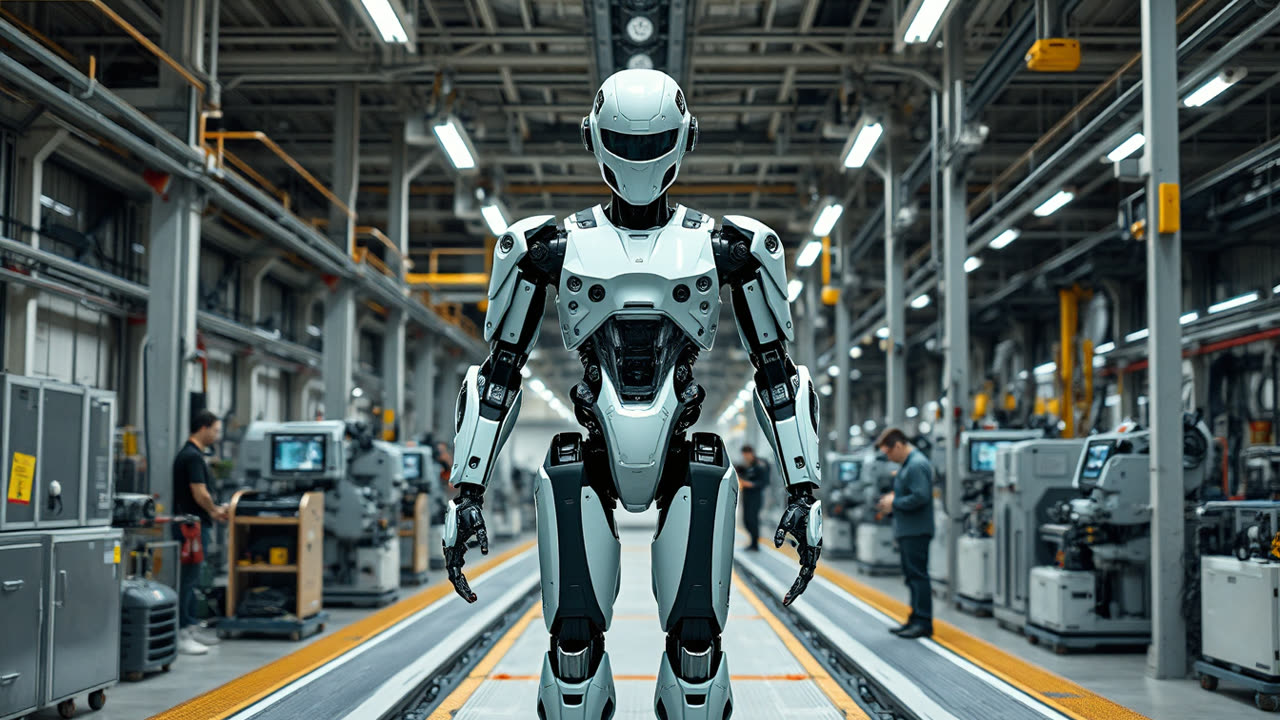
Mitsubishi Heavy Industries (MHI) is set to dramatically accelerate the burgeoning humanoid robot market, with plans to produce an astounding 1,000 units per month of its "Highlanders" model at one of the automaker's internal combustion engine (ICE) plants in Kyoto, Japan. This ambitious manufacturing target, leveraging existing automotive infrastructure, signals a profound strategic shift for Mitsubishi and injects unprecedented scale into a sector previously characterized by bespoke prototypes and limited production runs. The move, if realized, positions Mitsubishi not merely as another contender but as a potential mass-market disruptor, challenging the production aspirations of rivals and fundamentally altering the supply-side dynamics of humanoid robotics.
The decision to repurpose an ICE engine plant in Kyoto for humanoid robot production is a critical strategic maneuver, highlighting a broader industry trend of reallocating legacy manufacturing assets towards future technologies. This adaptive reuse of existing facilities, rather than constructing new ones, offers significant advantages in terms of cost efficiency, speed to market, and the skilled labor pool already familiar with complex assembly lines. For Mitsubishi, a conglomerate with deep roots in heavy industry and manufacturing, the Highlanders represent a calculated diversification beyond its traditional automotive and industrial machinery segments, targeting the immense potential of automation across logistics, elder care, hazardous environments, and even consumer services. While specific capabilities of the Highlanders robot remain under detailed wraps, the aggressive production schedule implies a design focused on practical, replicable tasks suitable for industrial deployment rather than purely research-oriented endeavors.
The entry of Mitsubishi at such a production volume intensifies an already heated global race, pitting it against high-profile players like Tesla with its Optimus, Boston Dynamics' Atlas, and Figure AI's Figure 01. Tesla's Optimus, showcased with increasing dexterity and planned for eventual mass production, aims for cost-effective, general-purpose labor. Figure AI, backed by significant investment from tech giants, has demonstrated impressive manipulation skills and is targeting warehouse and logistics applications, with a recent partnership with BMW for deployment in automotive manufacturing. Boston Dynamics' Atlas, while technologically groundbreaking in its agility and dynamic balance, has historically remained a research platform rather than a commercial product, though recent advancements suggest a push towards practical applications. What distinguishes Mitsubishi's approach is the immediate focus on high-volume manufacturing from the outset, potentially driving down per-unit costs faster than competitors who are still refining designs and scaling production. The estimated 1,000 units per month could quickly make the Highlanders one of the most widely available humanoid robots globally, directly impacting market pricing and accessibility.
This mass production paradigm is poised to have a multifaceted impact on both users and the industry. For industries grappling with persistent labor shortages, particularly in manufacturing, logistics, and elder care, a readily available supply of relatively affordable humanoid robots could provide a transformative solution. Companies could deploy Highlanders to perform repetitive, dangerous, or physically demanding tasks, freeing human workers for more complex, supervisory, or creative roles. This shift could lead to increased operational efficiency, reduced workplace injuries, and potentially lower production costs, which could then be passed on to consumers. However, the rapid introduction of such a large number of humanoid robots also raises critical questions about job displacement, the need for reskilling human workforces, and the ethical implications of autonomous systems in various societal roles. Furthermore, the standardization implied by mass production might initially limit the robots' adaptability to highly specialized tasks, requiring robust software platforms and AI models to enable broad utility.
Looking ahead, Mitsubishi's bold move signals a pivotal moment for the humanoid robotics industry, accelerating its transition from niche research to mainstream industrial adoption. The success of the Highlanders will heavily depend on their unit cost, reliability, ease of integration into existing workflows, and the sophistication of their AI and learning capabilities. Expect to see an intensified focus on software development and AI training as manufacturers vie to make their robots truly versatile and adaptable. The repurposing of automotive plants for robot production could become a template for other legacy industries seeking to pivot towards advanced manufacturing. As production scales across the industry, the next frontier will involve the development of robust regulatory frameworks, safety standards, and public education initiatives to ensure the responsible and beneficial integration of humanoid robots into society. Mitsubishi's commitment to a 1,000-unit monthly pace is not just about building robots; it's about building the foundation for a new era of industrial automation and human-robot collaboration.