Mod Unlocks Future DLSS Feature for NVIDIA RTX 40-Series GPUs, Challenging NVIDIA's Strategy
A recent mod has dramatically unlocked a purported RTX 50-series exclusive feature, "DLSS Multi Frame Generation," for NVIDIA's current-generation RTX 40-series GPUs, demonstrating significant performance uplifts in compatible titles.
✨ This content was summarized and interpreted by AI; it may contain errors — please verify accuracy with the original sources. Learn more
Listen to this story
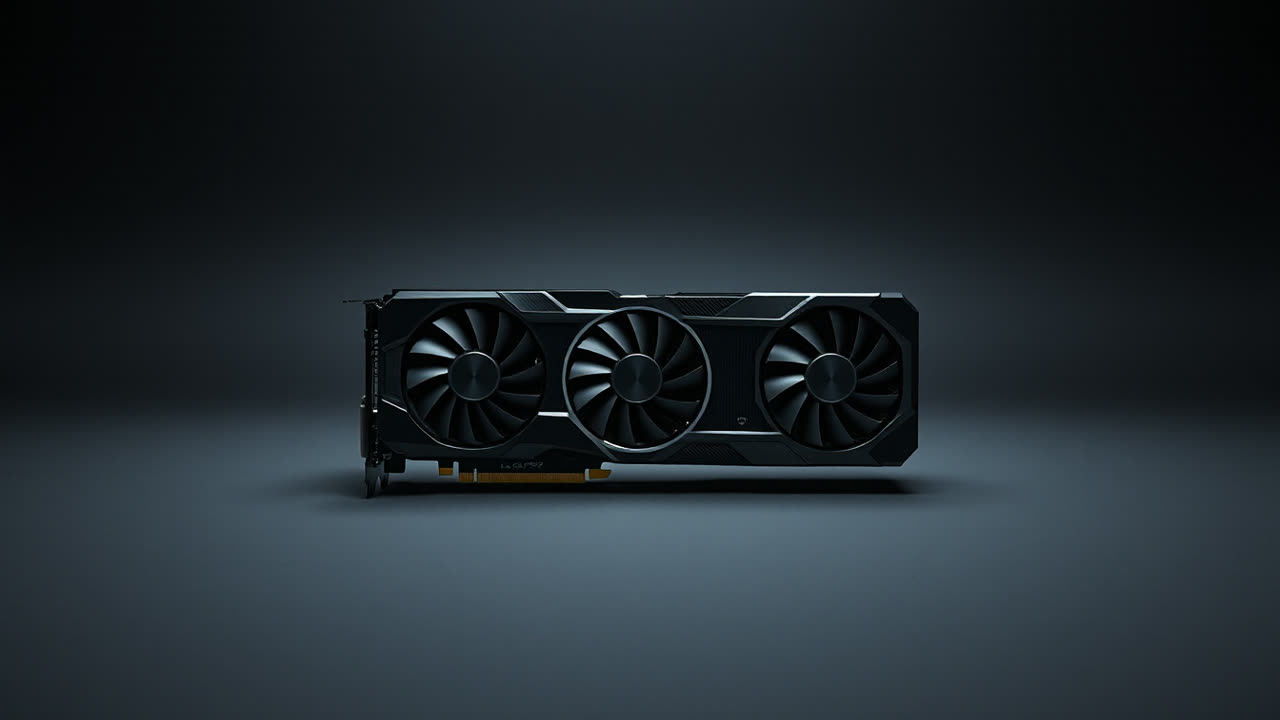
A recent mod has dramatically unlocked a purported RTX 50-series exclusive feature, "DLSS Multi Frame Generation," for NVIDIA's current-generation RTX 40-series GPUs, demonstrating significant performance uplifts in compatible titles. This development, initially highlighted by tech enthusiasts and subsequently validated by independent testing, fundamentally challenges NVIDIA's architectural segmentation strategy, bringing a future-facing rendering technique to a wider user base years ahead of its anticipated official release. The mod, which bypasses hardware checks, effectively extends the capabilities of existing RTX 40-series cards, allowing them to render more interpolated frames than officially supported, thereby boosting frame rates well beyond what native DLSS 3 Frame Generation offers alone. Early benchmarks indicate substantial gains, with titles like *Cyberpunk 2077* seeing frame rates jump from 80-90 FPS to over 150 FPS in some scenarios, provided the underlying GPU has sufficient headroom to generate the initial frames.
This breakthrough carries profound implications for both consumers and the GPU industry. For users, it means an unexpected extension of their hardware's lifespan and performance ceiling. Owners of RTX 40-series cards, which already feature DLSS 3's Frame Generation, can now potentially achieve even higher frame rates, pushing into the realm of ultra-high refresh rate gaming without needing to upgrade to the forthcoming RTX 50-series. This could significantly dampen initial enthusiasm and sales for NVIDIA's next-generation GPUs, especially if "Multi Frame Generation" proves to be a cornerstone feature of the new architecture. The mod's existence also democratizes access to cutting-edge rendering techniques, allowing more gamers to experience smoother gameplay at higher resolutions, potentially delaying their next hardware purchase. This directly impacts the upgrade cycle and the perceived value proposition of future GPU releases.
From an industry perspective, the mod represents a significant security and intellectual property challenge for NVIDIA. The company has historically relied on hardware-level lockout mechanisms to differentiate its product stack and drive upgrades, particularly with features like DLSS 3 Frame Generation, which was initially exclusive to the Ada Lovelace architecture of the RTX 40-series due to its optical flow accelerator requirements. The fact that a mod can circumvent these restrictions and enable what is speculated to be an RTX 50-series feature on older hardware suggests that the underlying capabilities might already exist in the silicon, merely locked by software. This raises questions about the true necessity of hardware exclusivity for certain features and could prompt NVIDIA to re-evaluate its future feature segmentation strategies. While NVIDIA has not officially commented on this specific mod, such bypasses often lead to increased scrutiny and potential countermeasures in future driver updates, creating an ongoing cat-and-mouse game between modders and hardware manufacturers.
Compared to the current official DLSS 3.5, which focuses on Ray Reconstruction for improved ray tracing image quality rather than pure frame generation, this mod pushes the boundaries of output frame rates further. While DLSS 3.5 can be used on older RTX cards (RTX 20-series and newer), its Frame Generation component remains exclusive to RTX 40-series GPUs. The "Multi Frame Generation" mod appears to build upon the existing DLSS 3 Frame Generation, possibly by interpolating additional frames between the AI-generated frames, or by optimizing the process for even greater throughput, effectively creating more "fake" frames to boost the perceived frame rate. Rival technologies like AMD's FSR 3 with Fluid Motion Frames (FMF) and Intel's XeSS also offer forms of frame generation, but they generally operate on a broader range of GPUs, albeit with varying degrees of image quality and performance. FSR 3's FMF, for instance, can work on a wider array of AMD and NVIDIA GPUs, but often faces criticism regarding artifacting, especially in fast-moving scenes, which DLSS Frame Generation generally handles with greater fidelity due to its reliance on dedicated Tensor Cores and optical flow accelerators. The "Multi Frame Generation" mod's success on RTX 40-series cards underscores the potential for NVIDIA's hardware to push these boundaries further, potentially exceeding current official performance even without new silicon.
Looking ahead, the immediate future will likely see a rapid evolution of this mod, with ongoing refinements to improve stability and expand game compatibility. The modding community will undoubtedly work to minimize any potential artifacting or latency issues that might arise from generating such a high volume of interpolated frames. NVIDIA, on the other hand, faces a strategic dilemma. They could ignore the mod, hoping it remains a niche solution, or they could actively try to patch it out through driver updates, risking alienating a segment of their user base. A more constructive, albeit less likely, path might involve NVIDIA officially enabling aspects of this "Multi Frame Generation" on RTX 40-series cards, perhaps through a future driver update, to maintain goodwill and counter the narrative that features are artificially restricted. However, this would directly undermine the allure of the RTX 50-series if the feature is indeed intended as a flagship differentiator. The long-term impact could reshape how GPU manufacturers approach software-defined features and hardware exclusivity, potentially fostering a more open ecosystem where the full capabilities of hardware are more readily accessible, or conversely, leading to more stringent DRM-like measures in future architectures. Either way, this mod has ignited a crucial conversation about the true potential of current-generation GPUs and the future of performance uplift.