Modded NVIDIA RTX 2080 Ti Cards with 22GB VRAM Emerge on eBay for $500, Fueling Local AI Development
A burgeoning grey market for pre-modded NVIDIA RTX 2080 Ti graphics cards, now equipped with an astonishing 22GB of VRAM and selling for approximately $500 on platforms like eBay, primarily from Hong Kong-based vendors, marks a significant response to the insatiable memory demands of local AI enthusiasts.
✨ This content was summarized and interpreted by AI; it may contain errors — please verify accuracy with the original sources. Learn more
Listen to this story
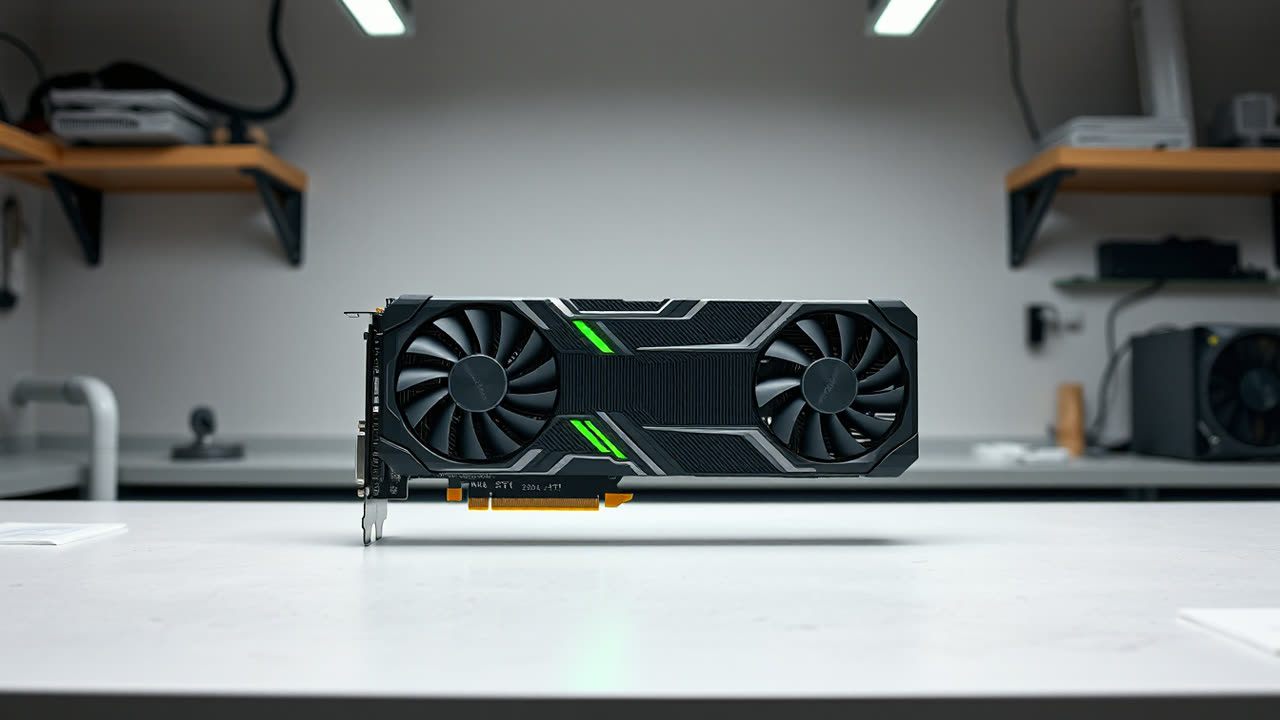
A burgeoning grey market for pre-modded NVIDIA RTX 2080 Ti graphics cards, now equipped with an astonishing 22GB of VRAM and selling for approximately $500 on platforms like eBay, primarily from Hong Kong-based vendors, marks a significant response to the insatiable memory demands of local AI enthusiasts. This novel offering effectively doubles the original 11GB GDDR6 capacity of the RTX 2080 Ti, transforming a five-year-old gaming flagship into a surprisingly potent and cost-effective accelerator for burgeoning artificial intelligence workloads.
The technical feasibility of this modification stems from the RTX 2080 Ti's original board design, which, in some iterations, can accommodate higher-density GDDR6 memory modules than initially installed by NVIDIA. Modders replace the stock 1GB GDDR6 chips with 2GB modules, effectively expanding the total VRAM from 11GB to 22GB. This process, while technically demanding and requiring specialized soldering skills, unlocks substantial new utility for a card that might otherwise be considered past its prime for cutting-edge gaming. The $499-$500 price point for these pre-modded units is particularly striking, placing them in a unique position against both new and used GPU markets. For context, a new NVIDIA RTX 4070 Super, offering 12GB of VRAM, typically retails for around $599, while the RTX 4080 Super with 16GB costs upwards of $999. The flagship RTX 4090, which boasts 24GB of VRAM, commands prices exceeding $1,600. This makes the 22GB modded 2080 Ti an exceptionally attractive proposition for users whose primary bottleneck is VRAM capacity rather than raw computational throughput.
The "why it matters" for this phenomenon is multifaceted, impacting users, the industry, and the evolving landscape of AI development. For individual AI hobbyists, researchers, and developers operating on a budget, 22GB of VRAM is a game-changer. Modern large language models (LLMs) and generative AI models like Stable Diffusion have rapidly escalating VRAM requirements. Running even moderately sized LLMs locally, such as 7B or 13B parameter models, often pushes or exceeds the 12GB-16GB VRAM limits of many contemporary consumer GPUs, forcing users to resort to slower CPU offloading or quantization techniques that compromise model accuracy. A 22GB buffer allows for loading larger models entirely onto the GPU, facilitating faster inference, fine-tuning, and experimentation with higher-resolution image generation without needing to invest thousands in a new professional-grade card or a top-tier RTX 4090. This democratizes access to advanced local AI capabilities, fostering innovation outside of well-funded research labs.
From an industry perspective, this aftermarket trend highlights a significant gap in NVIDIA's consumer product strategy regarding VRAM allocation. While NVIDIA dominates the AI hardware market with its A100 and H100 datacenter GPUs, its consumer RTX line, traditionally geared towards gaming, has been slower to adopt higher VRAM capacities at mid-to-high price points. AMD, with cards like the Radeon RX 7900 XTX offering 24GB of VRAM at a more competitive price point (around $900-$1000), has often been seen as offering better VRAM value, though NVIDIA's CUDA ecosystem remains the preferred choice for many AI frameworks due to its maturity and optimization. The emergence of these modded 2080 Ti cards demonstrates a clear market demand that is currently underserved by official channels. It underscores that for many AI-centric tasks, VRAM capacity often trumps raw generational compute improvements, especially when dealing with model sizes that simply won't fit into smaller memory buffers.
Historically, hardware modifications, particularly for GPUs, have existed within niche enthusiast communities, often focusing on overclocking or minor aesthetic changes. Memory modifications, however, are far more complex and risky. The current trend with the 2080 Ti is distinct because it addresses a fundamental functional limitation for a rapidly growing user base – local AI developers – rather than merely chasing marginal performance gains. While the RTX 2080 Ti’s Turing architecture is older, it still offers robust FP16 and INT8 performance, which is highly relevant for AI inference. Its approximately 34-43 TFLOPS of FP16 performance remains quite capable for many AI tasks when paired with sufficient memory.
Looking ahead, this development suggests several potential trajectories. Firstly, the demand for such pre-modded cards is likely to persist as long as new, high-VRAM GPUs remain prohibitively expensive for individual users and as long as AI models continue to grow in size. This could spur similar modifications for other older GPUs if their PCB designs permit. Secondly, it puts subtle pressure on NVIDIA and AMD to consider more generous VRAM configurations across their mainstream and high-end consumer product stacks. If a five-year-old card can be economically upgraded to 22GB, it highlights a potential reluctance from manufacturers to offer similar VRAM on newer, more expensive GPUs for fear of cannibalizing their professional product lines.
However, purchasing these pre-modded cards is not without risk. Buyers forgo any manufacturer warranty, and the long-term reliability of these custom-modified units can be uncertain due to the complex nature of the memory swap and potential variations in component quality or soldering expertise. There's also the risk of bricked cards or instability under heavy load. Despite these caveats, the sheer value proposition for AI workloads makes these modded 2080 Ti cards a compelling, albeit unofficial, solution. This niche market, driven by ingenuity and economic necessity, serves as a powerful indicator of the evolving hardware needs of the AI revolution, pushing the boundaries of what older silicon can achieve when memory, not just raw speed, becomes the ultimate bottleneck.